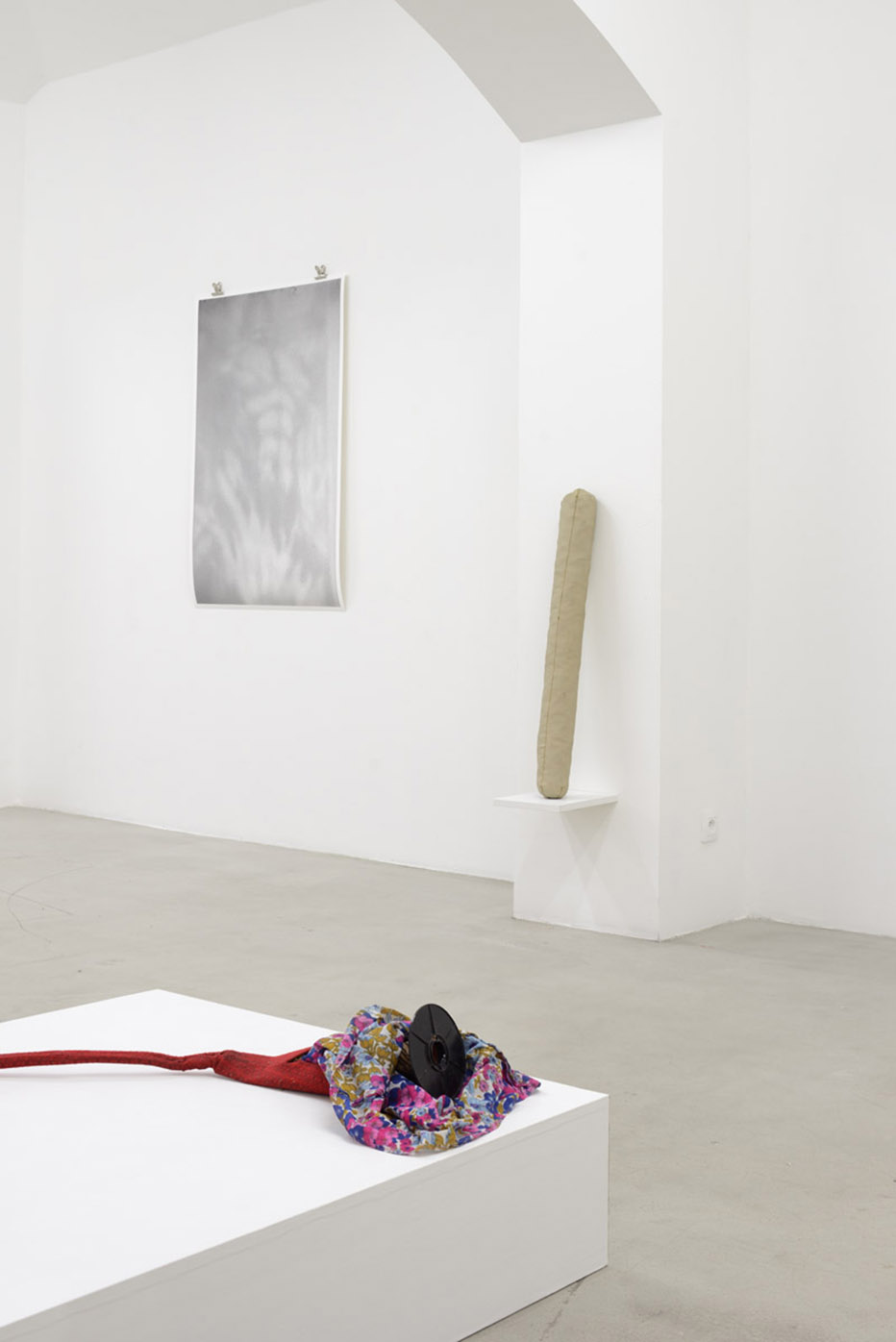
untitled and Country Ufo
series of objects1998
mix media
variable size
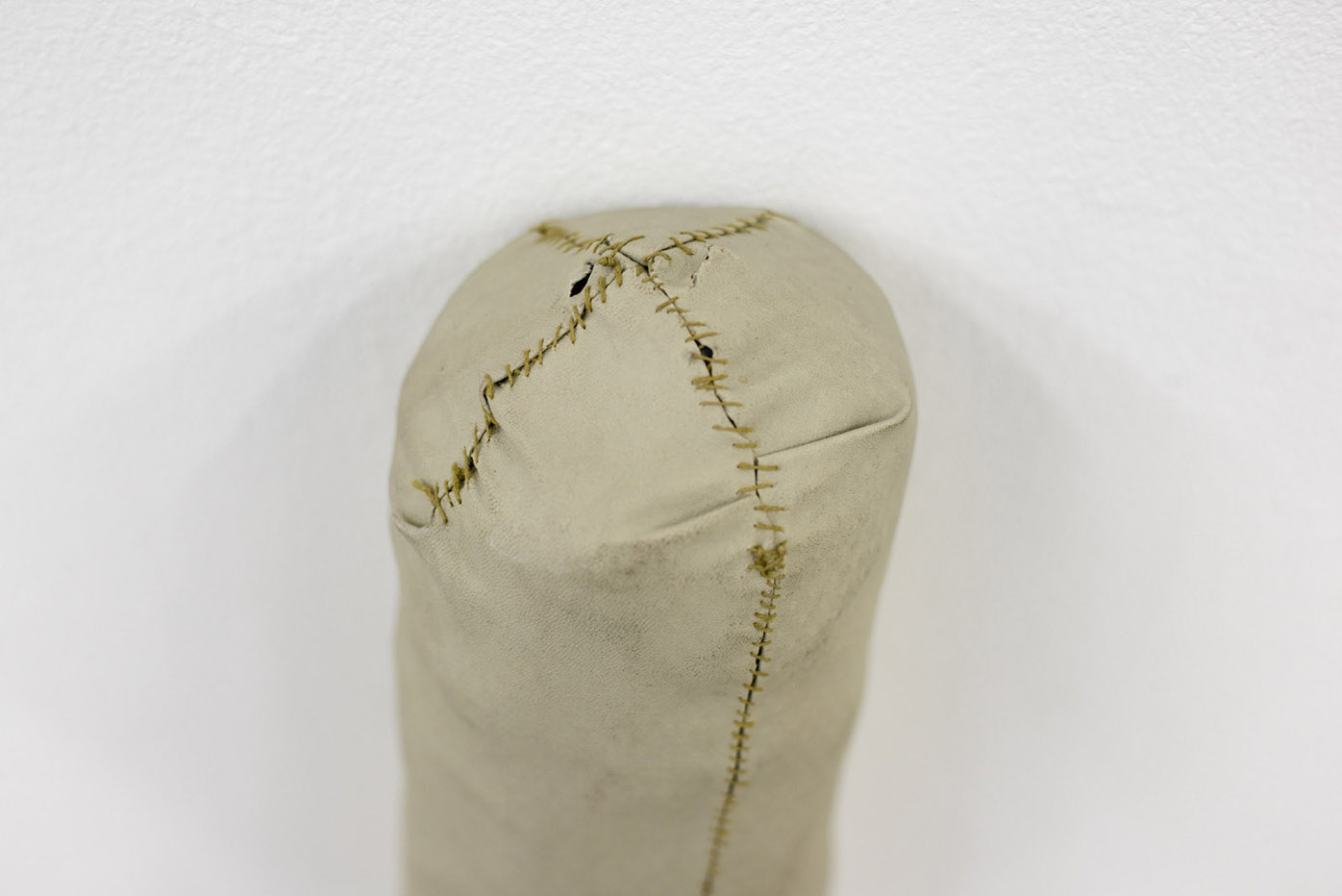
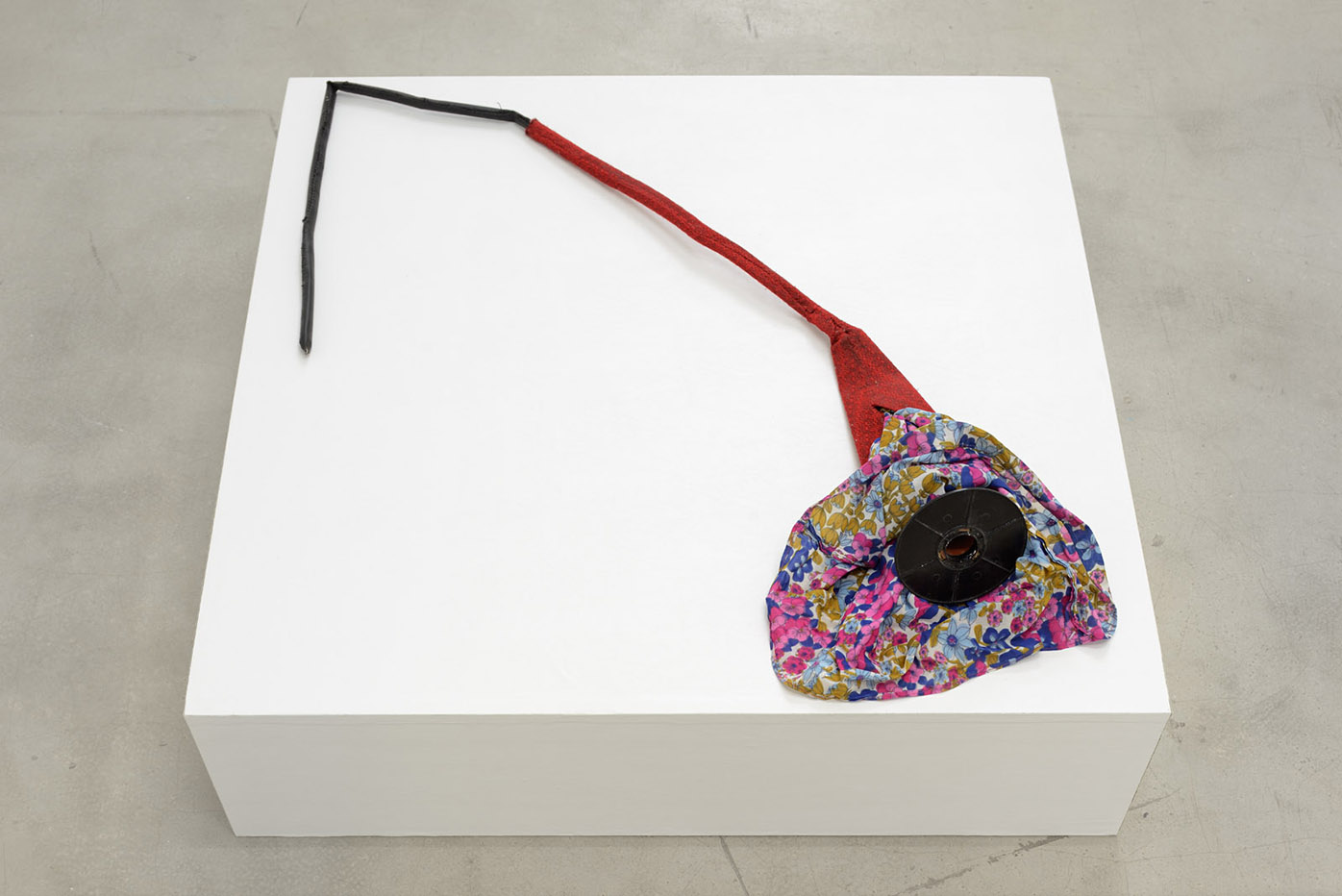
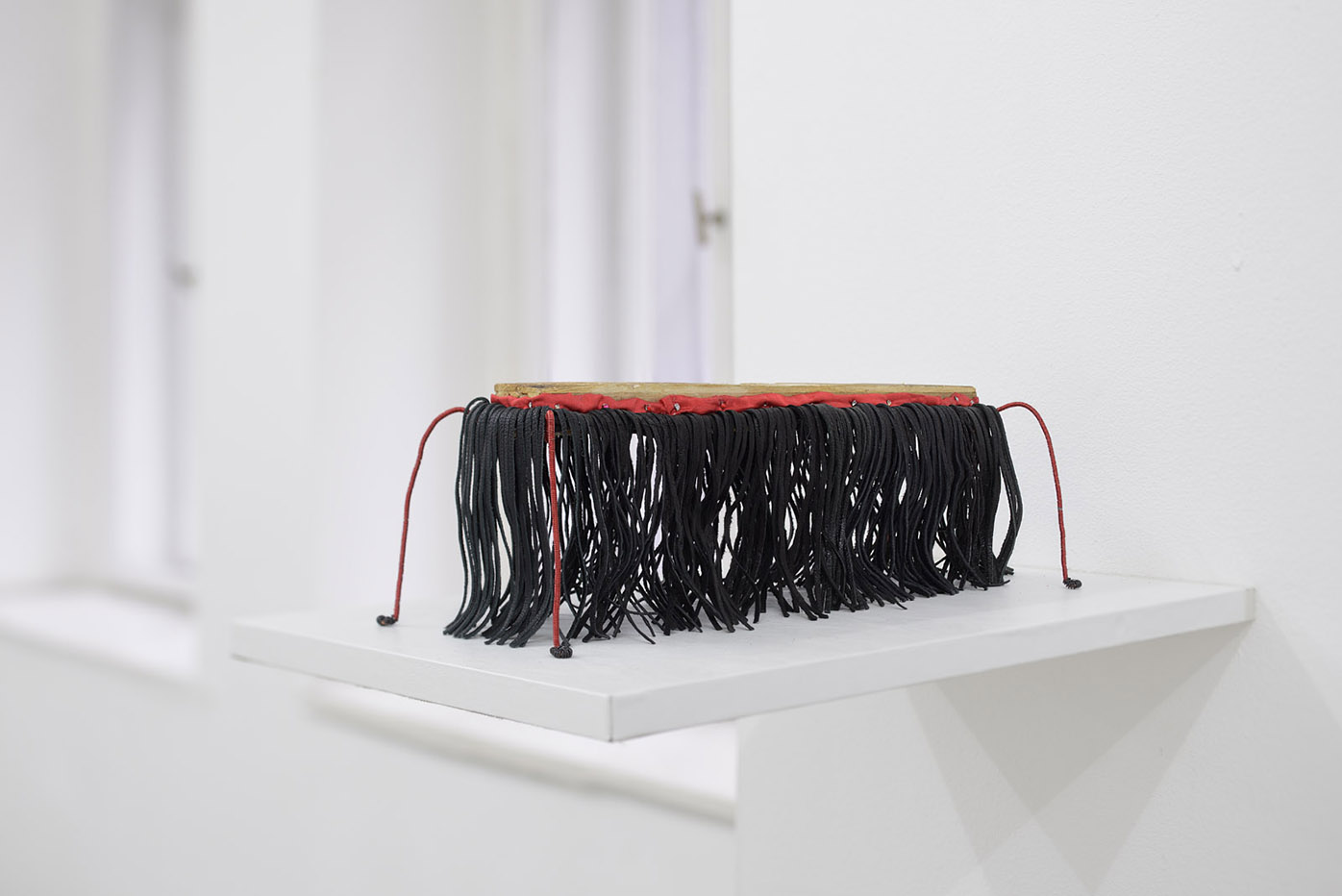
I made these sculptural objects a few months before I started my first year at art academy. In two cases they consist of a wooden object and a branch onto which I attached pieces of artificial leather from old car seats with a needle and thread. At the time my dad was running a scrapyard, so I had relatively free access to this material. In another case, the object consists of polyurethane foam shaped into a cylinder wrapped in light ochre leatherette, probably from the ceiling of one of the Eastern European vehicles that were being consigned to scrapyards by Czechs en masse in the latter half of the 1990s. The series also includes an object reminiscent of a flower that is complicated in terms of materials, comprising a decorative aluminium profile, an old galvanized funnel, part of a plastic spool and a child’s skirt. This is all sewn into black artificial leather and chemlon polyamide upholstery fabric. I made several other similar objects, but they have been irretrievably lost. One of them was a metre-long beam with several shallow chainsaw grooves. It was decorated with a fringe of thin, ornamental tassels. Small, black hairpin legs had also been inserted into the corners, blending with the black leatherette so that the object appeared to levitate. On the occasion of the exhibition The Aspiration of Foreign Bodies (2022), I asked František Hanousek and Jakub Hájek to make a replica. The two artists created a version of the object that was smaller than the original and differed from it in several details.
Rulers
2000two versions of 50 cm long plastic rulers
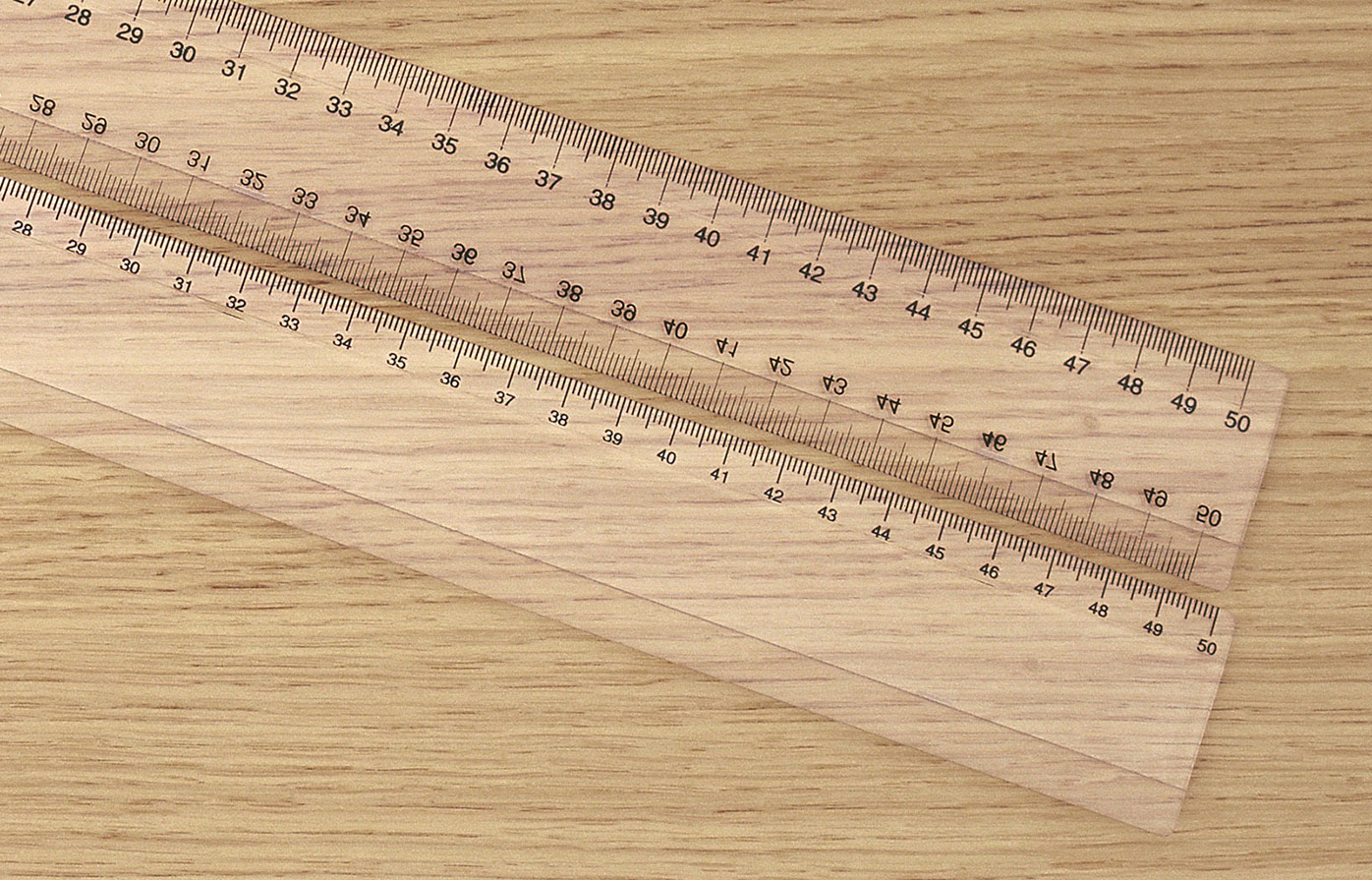
The first version of Rulers was made in 2000, the second in 2005. The first consisted of a set of 50 cm rulers shortened by 2 mm. The length of each millimetre graduation was reduced very slightly, creating a defect imperceptible to the human eye. In the second version, the 50 cm rulers were extended by 5.5 mm. This was a discrepancy that the human eye could notice. Subsequently I gave the rulers out to people, without pointing out the flaw.
Microfiltration
a performance for two people2001
made in collaboration with Marek Ther
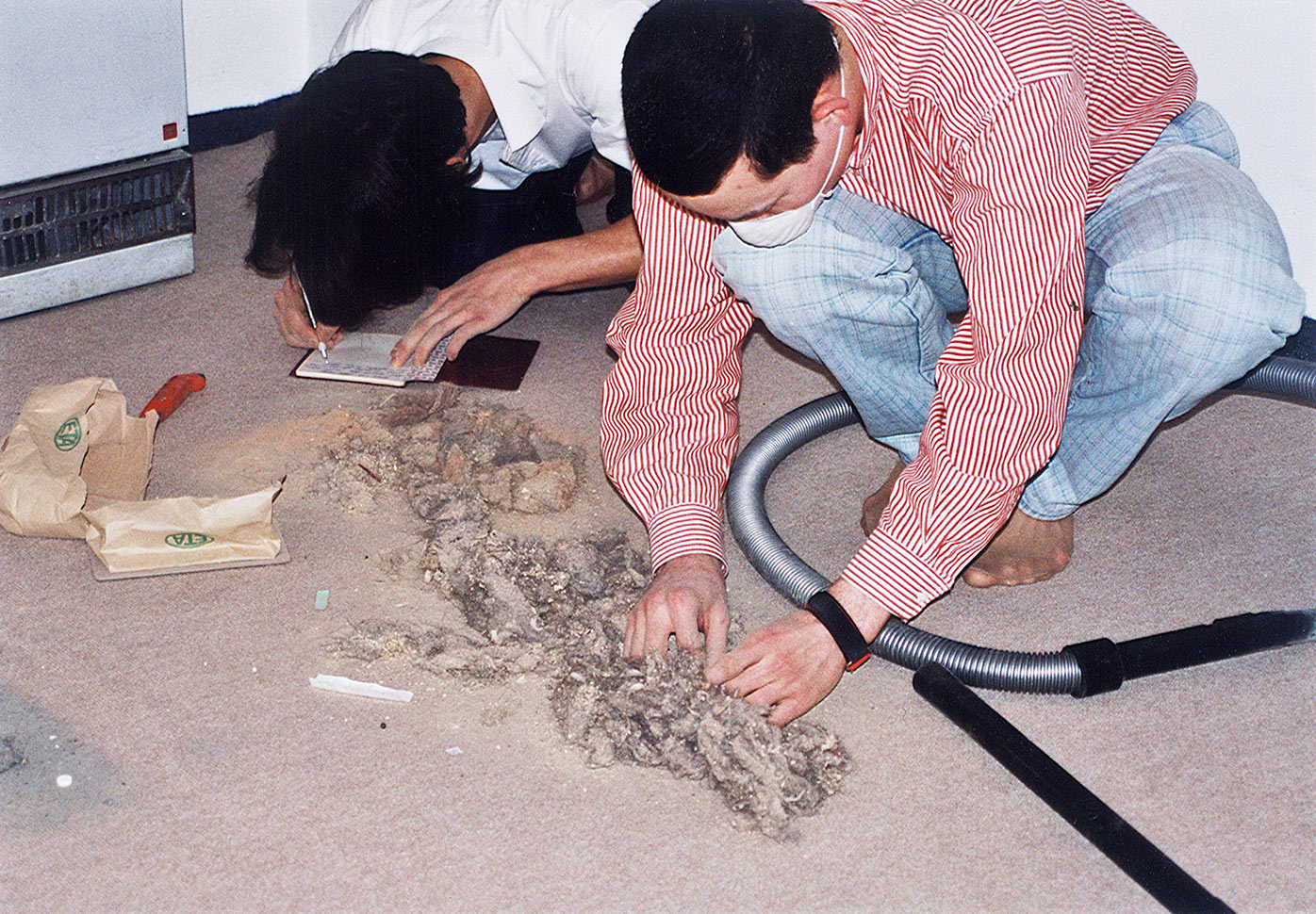
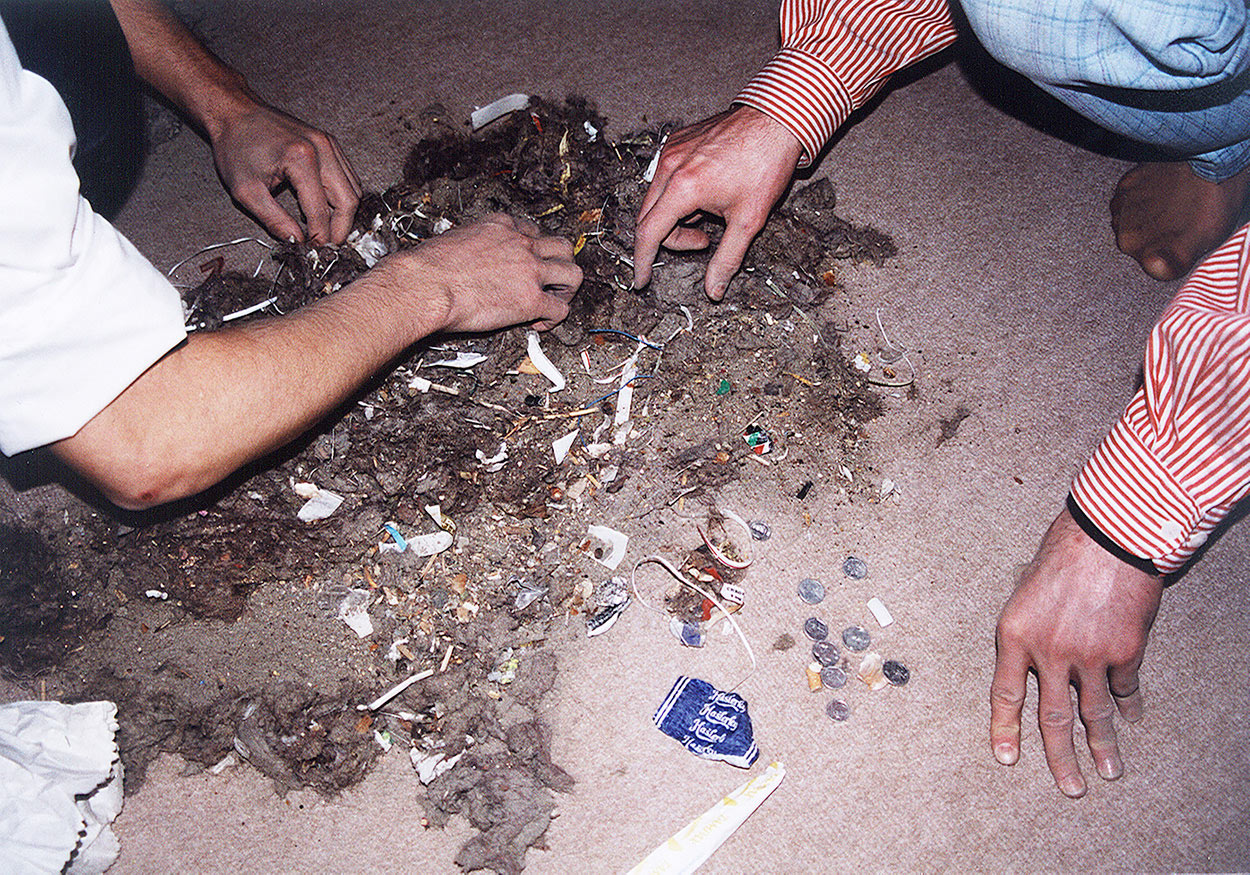
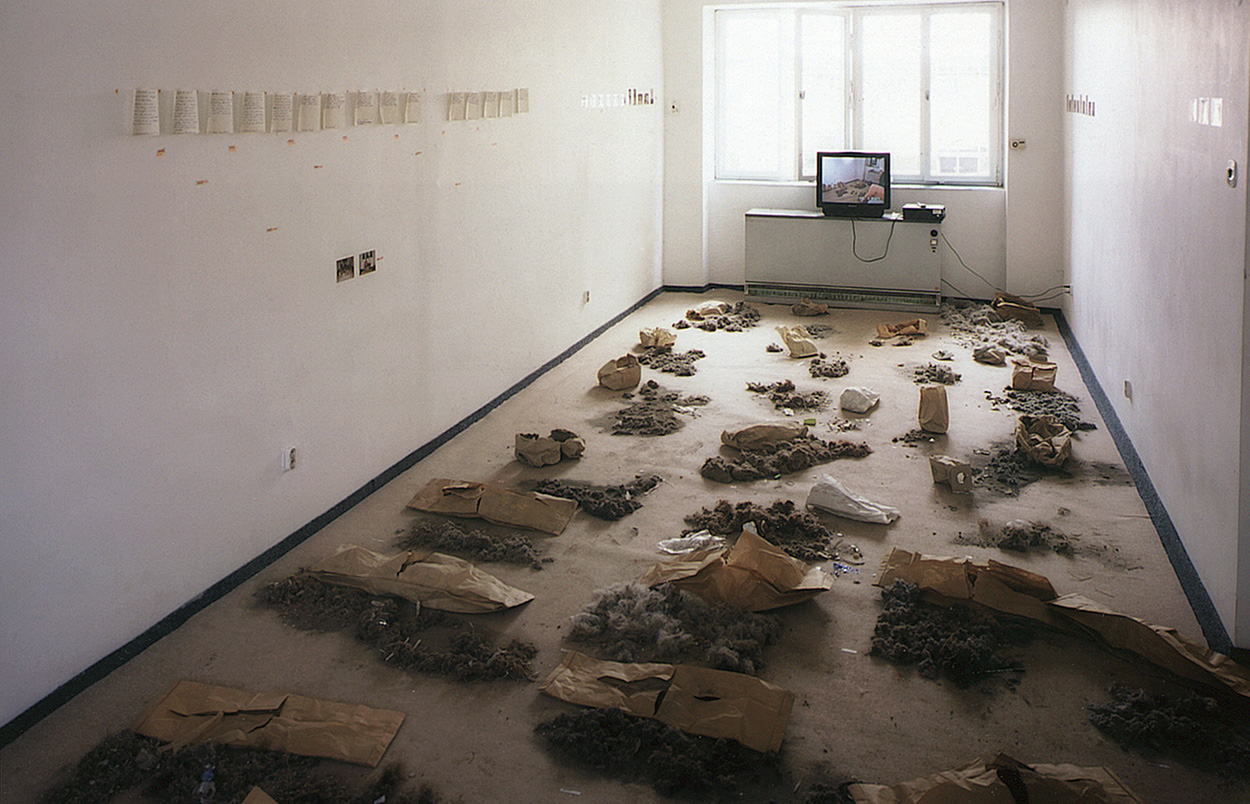
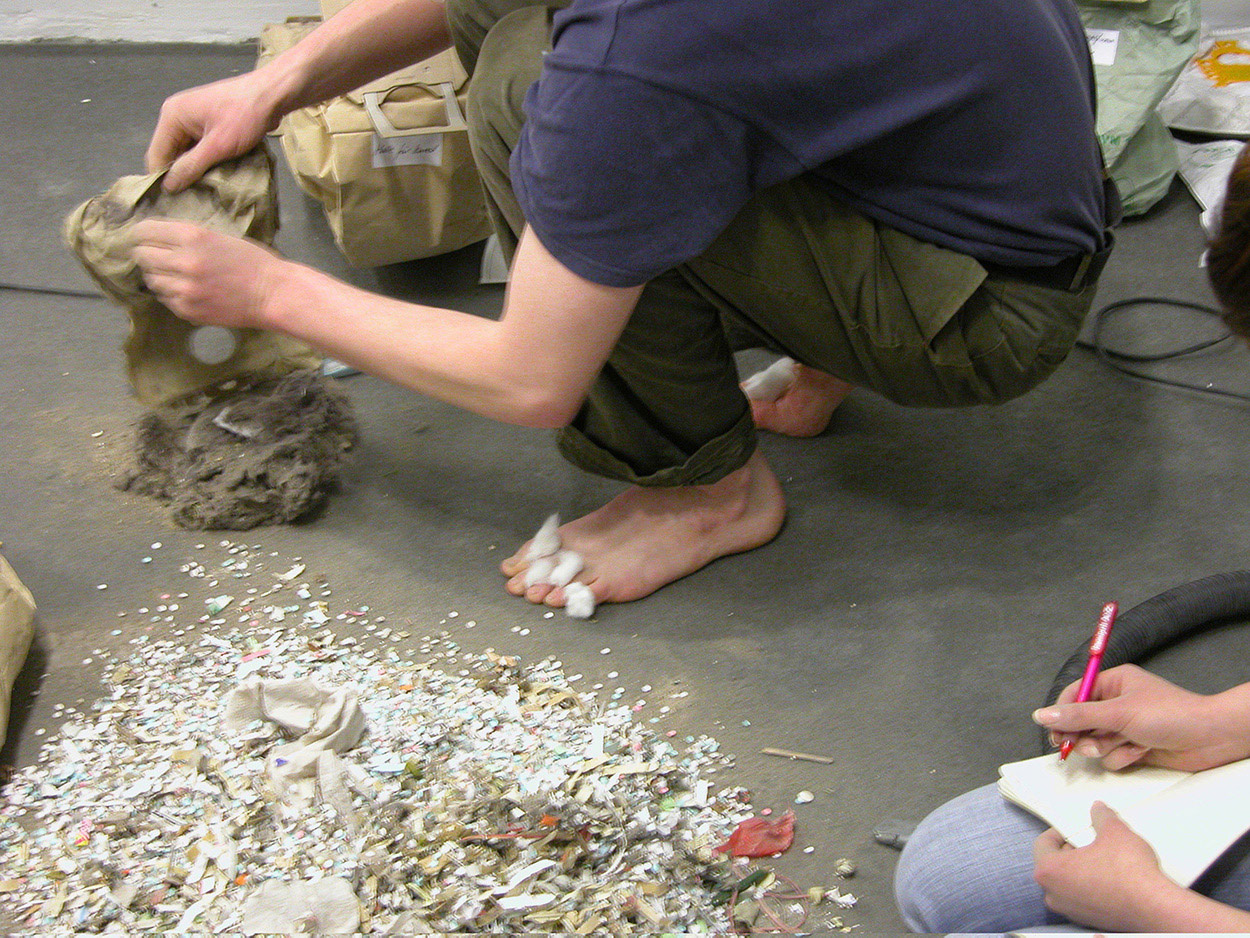
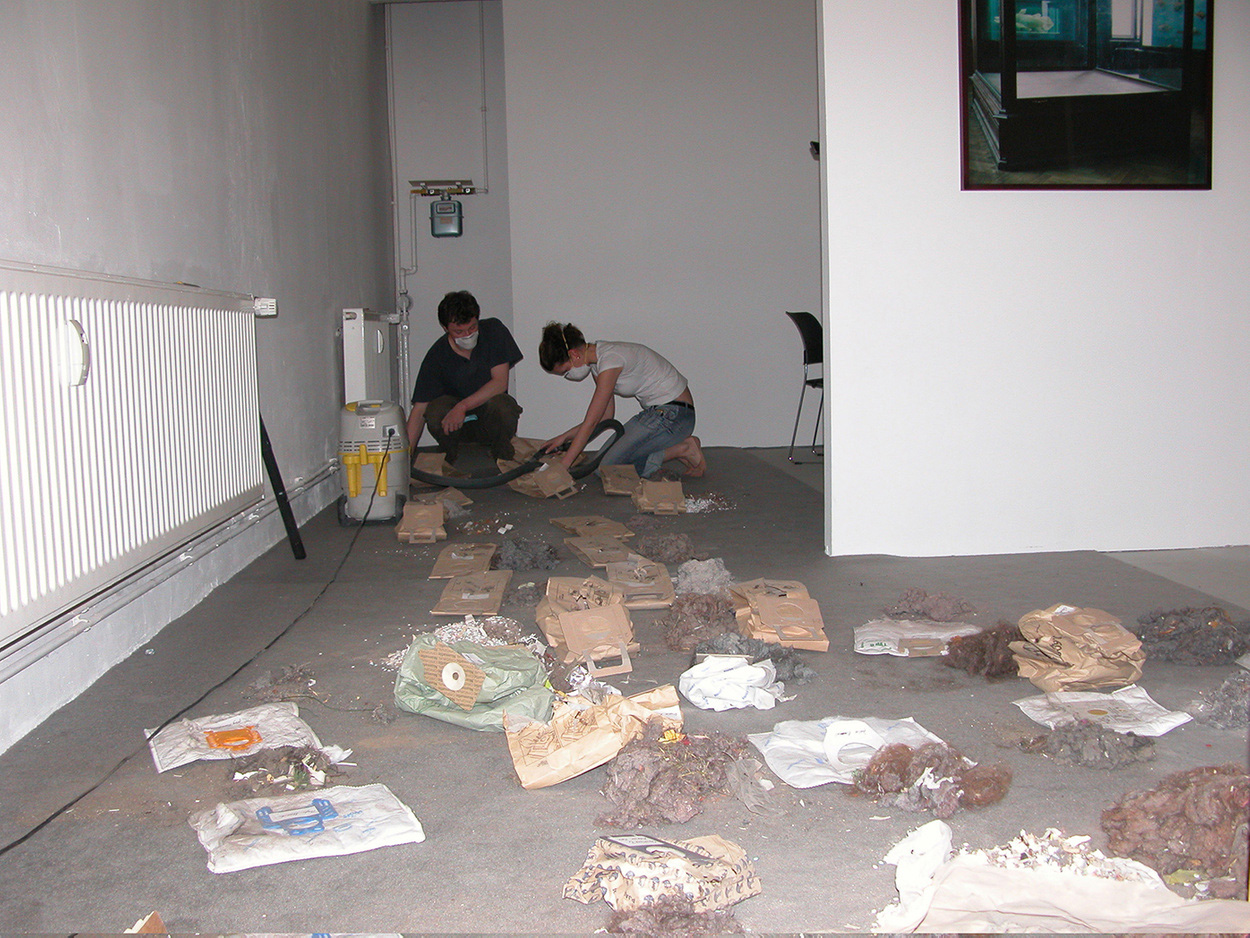
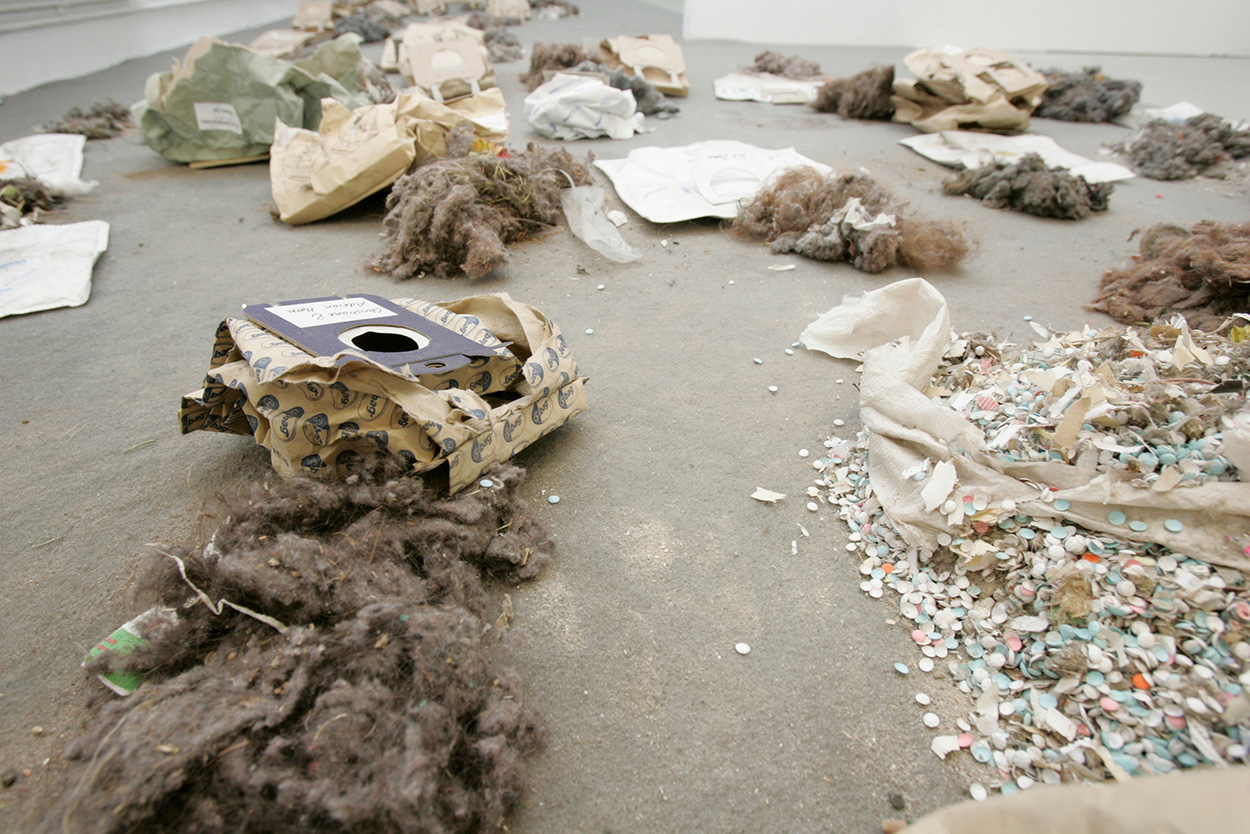
Mark Ther and I collected 16 full vacuum cleaner bags from our friends and acquaintances. At the show opening, we cut the paper dustbags open and spread their contents out on the floor. We used a vacuum cleaner to suck up approximately half of the sixteen nest-like piles of dirt into eight new paper bags. By continuing to reduce the number by half we eventually ended up with a single bag containing samples from all 16 households. A day later we mapped out the entire operation on the walls of the gallery with photographs, information on the contents of each bag and a schematic diagram of their hybridisation.
Wheelbarrow
an object2001
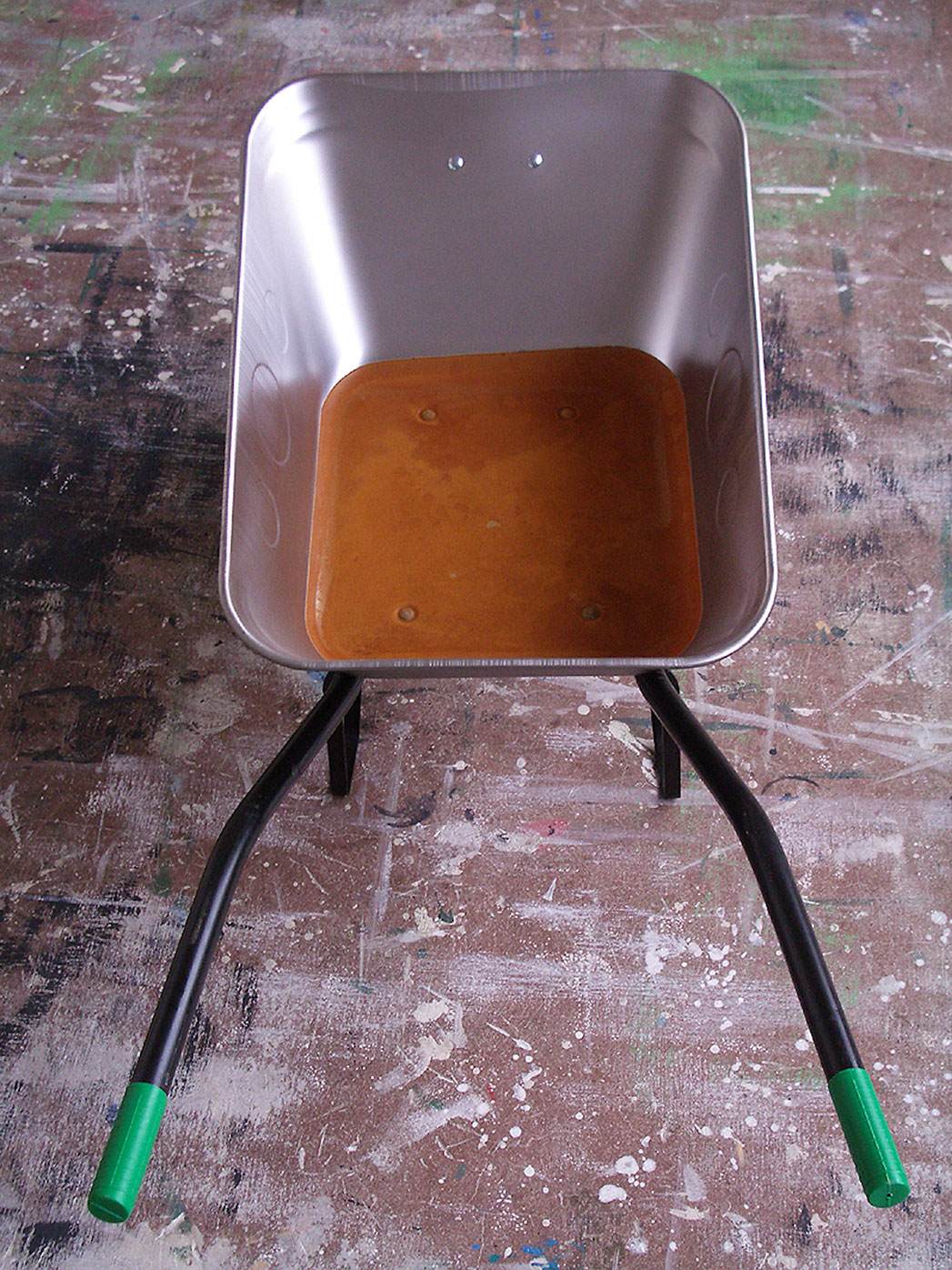
a wheelbarrow with 4 cm of rust at the bottom
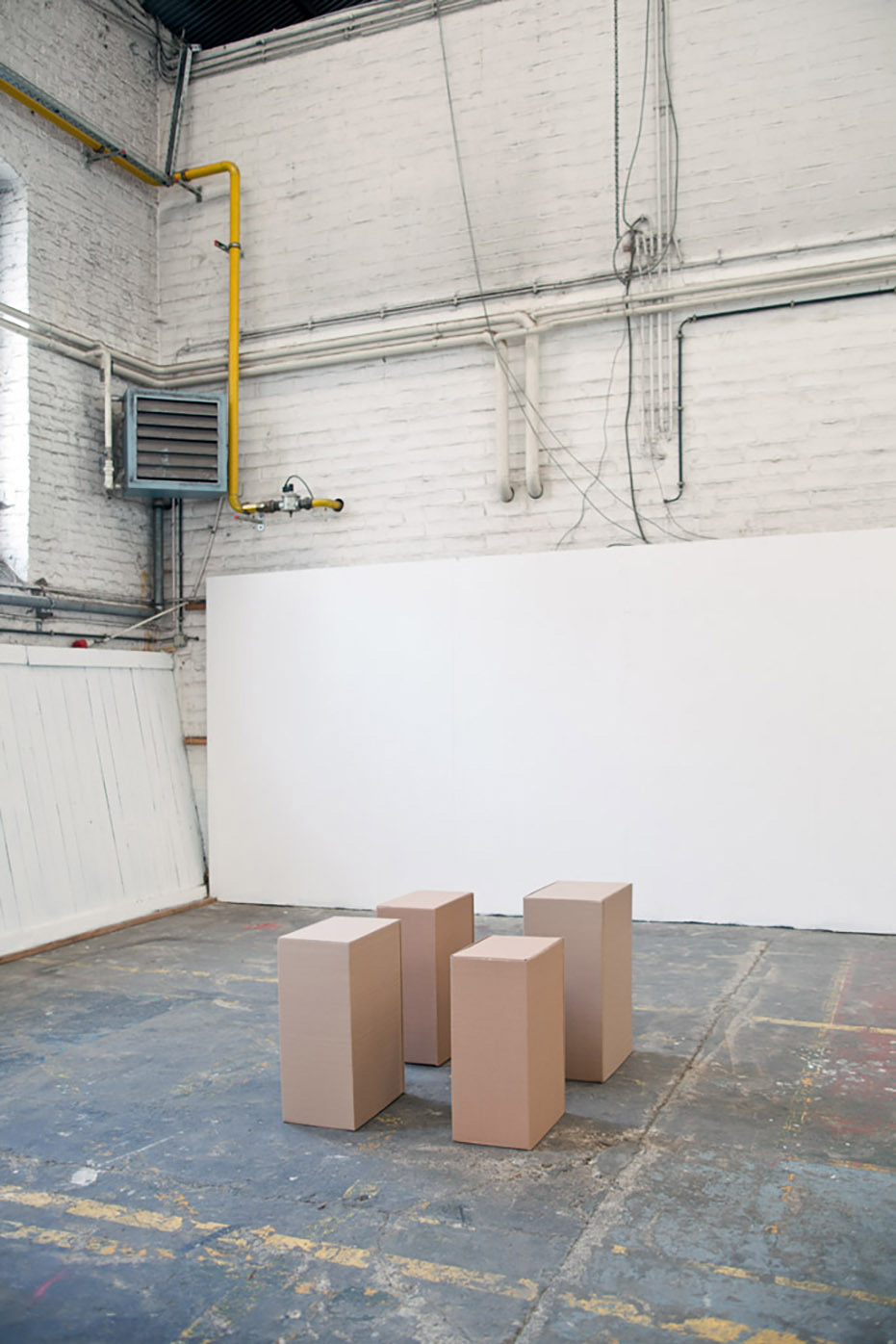
The Volume of Every Member of my Family
20024 paperboard boxes of different sizes
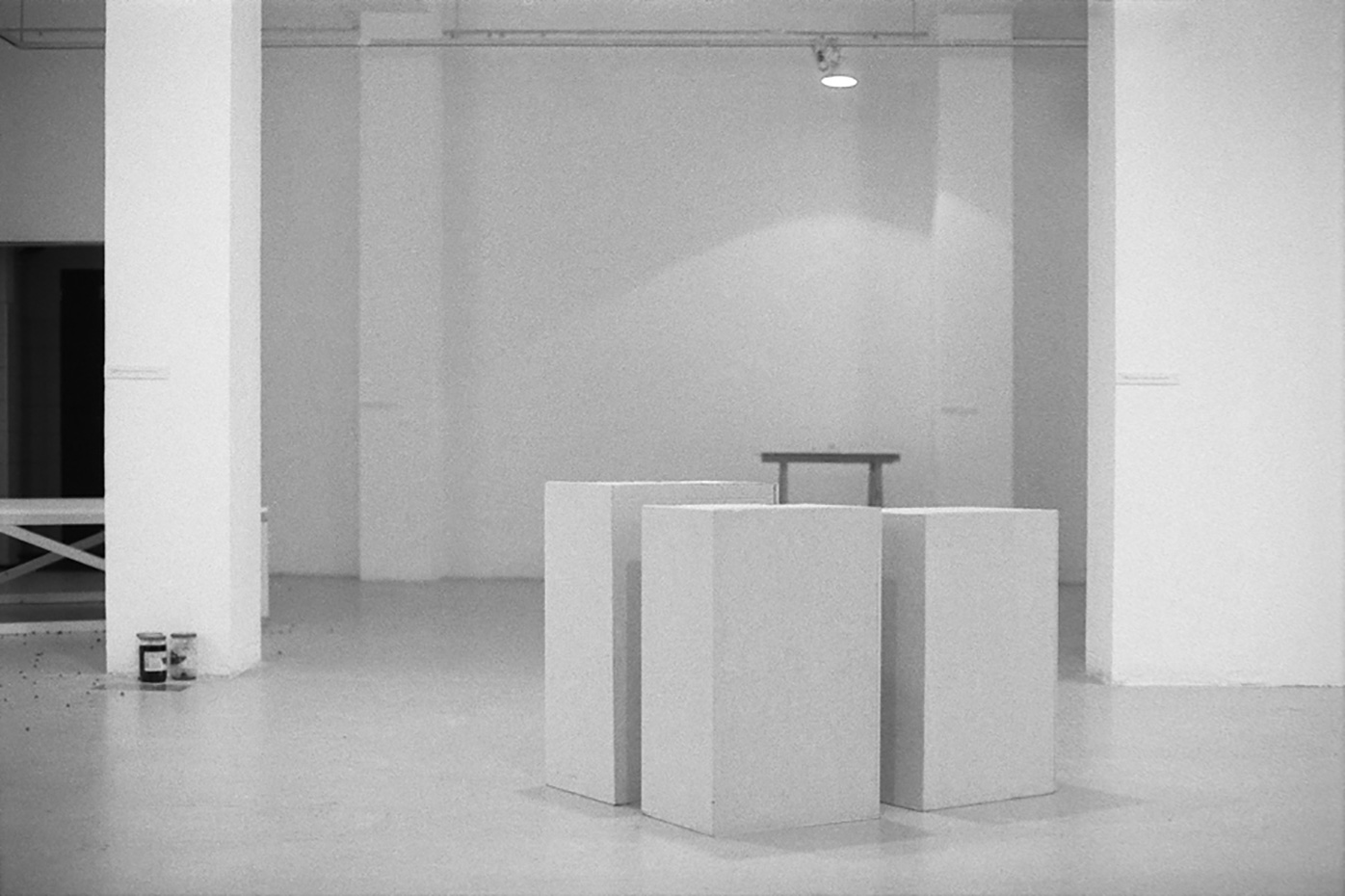
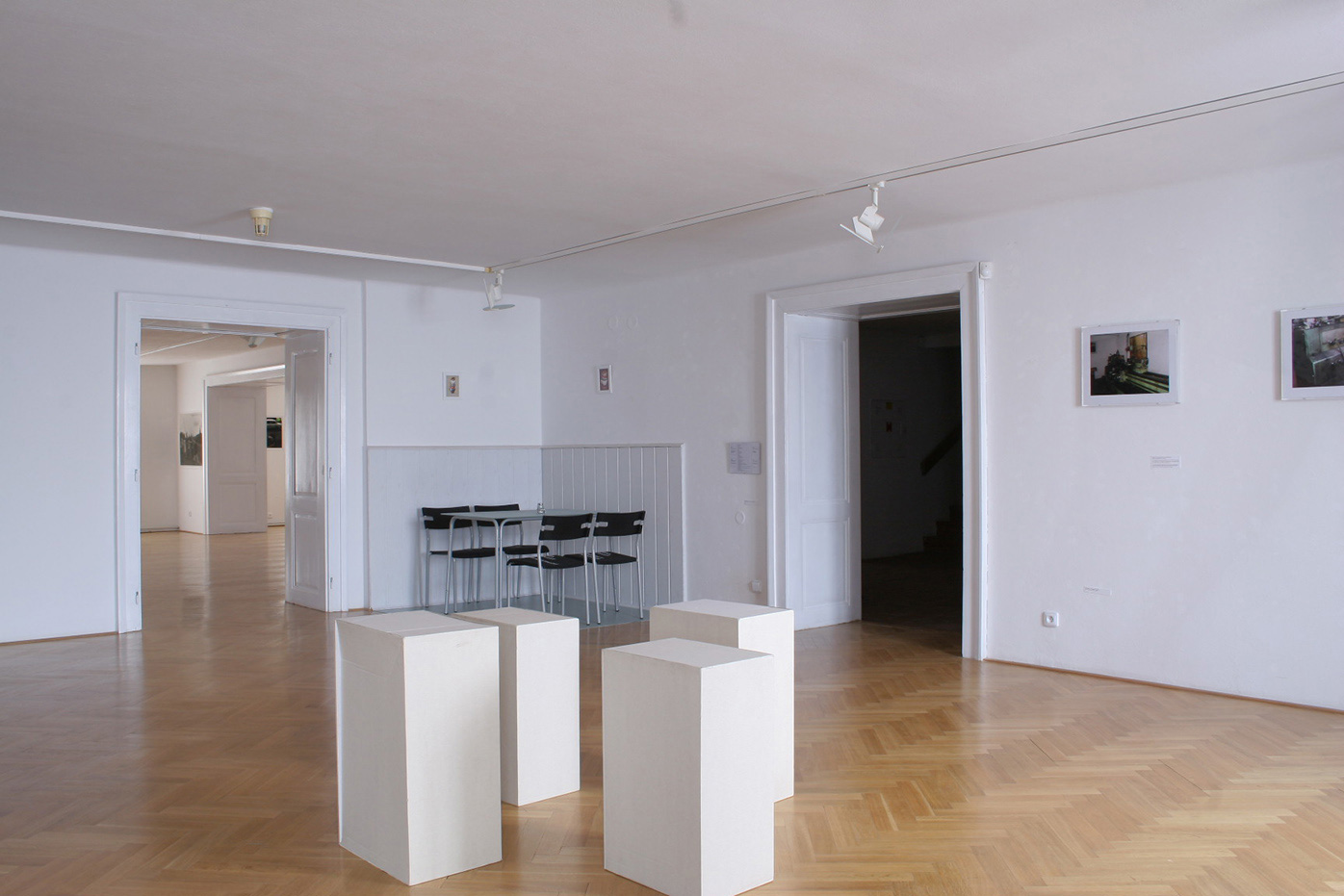
In the summer of 2001, I measured the volumes of all the members of my family in the garden of my parents’ house. One by one, I submerged my sister, mother and father in a tub of cold water and measured the amount of displaced liquid. Using Archimedes’ principle, I subsequently calculated the volumes of our bodies and then reduced them to physical objects: I used white cardboard to make four boxes of varying sizes corresponding to the volumes measured.
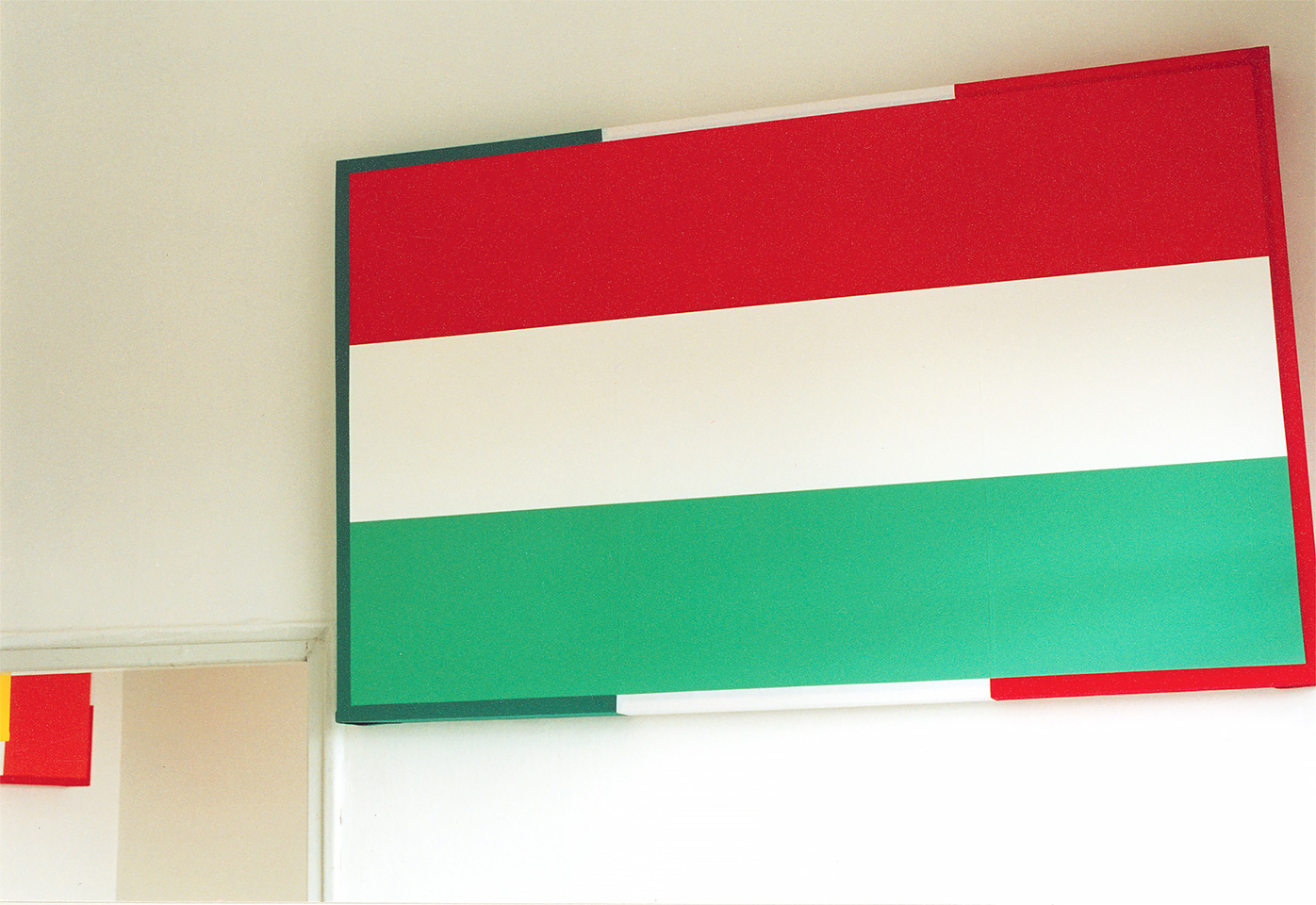
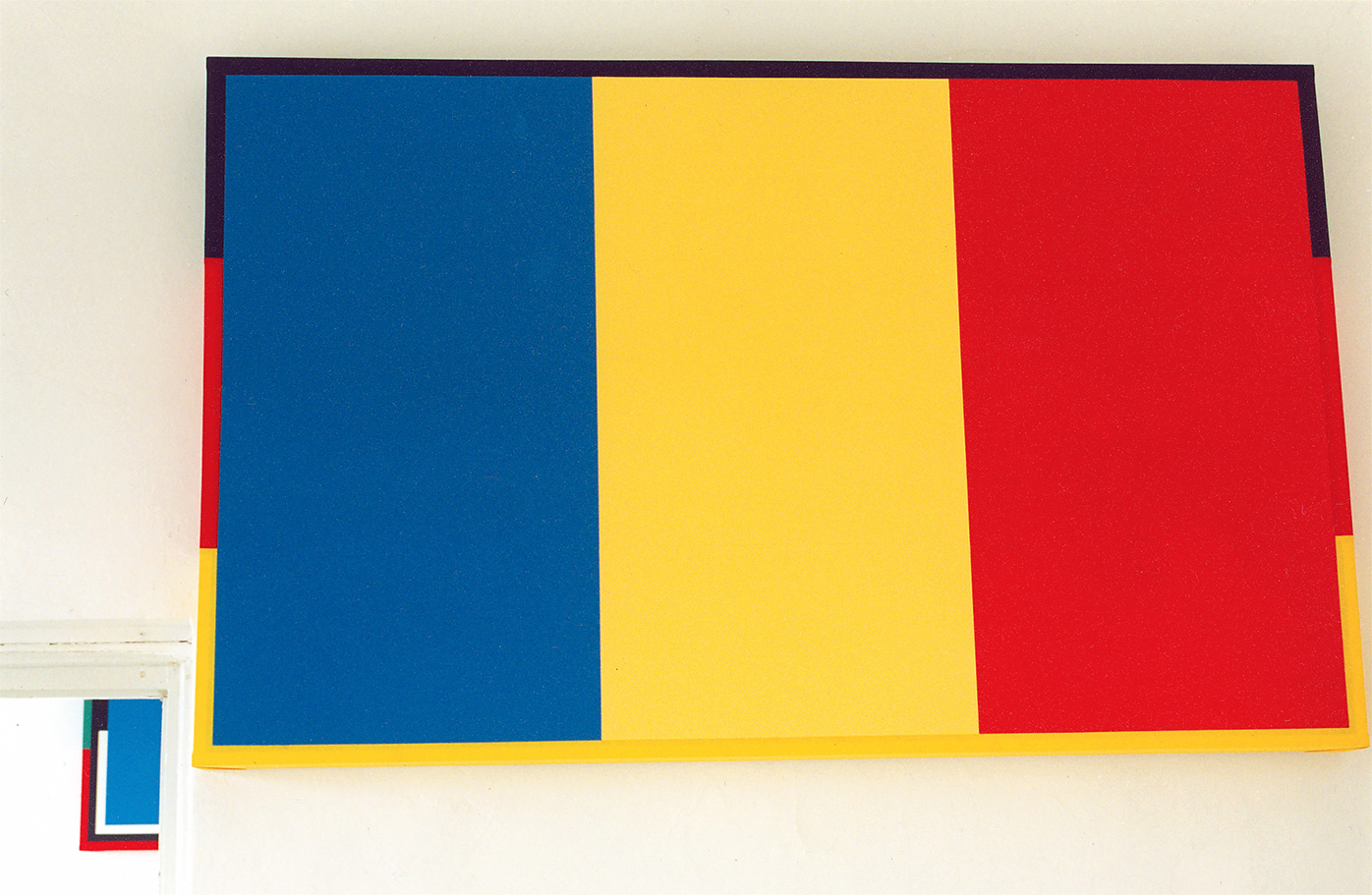
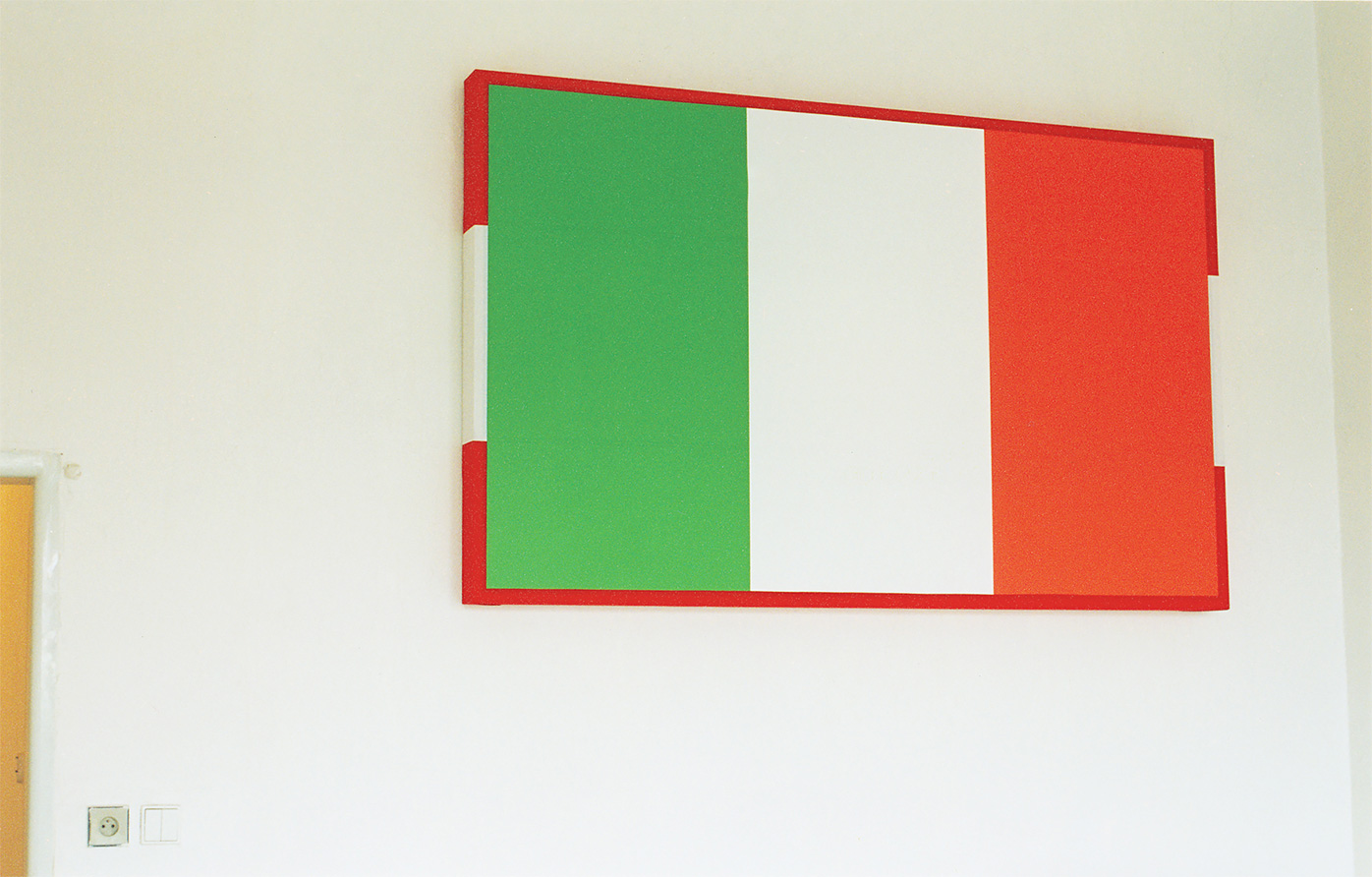
Flags
20026 paintings
Helvetica Concentrated
a computer font2003
created in collaboration with Angela Detanico and Rafael Lain
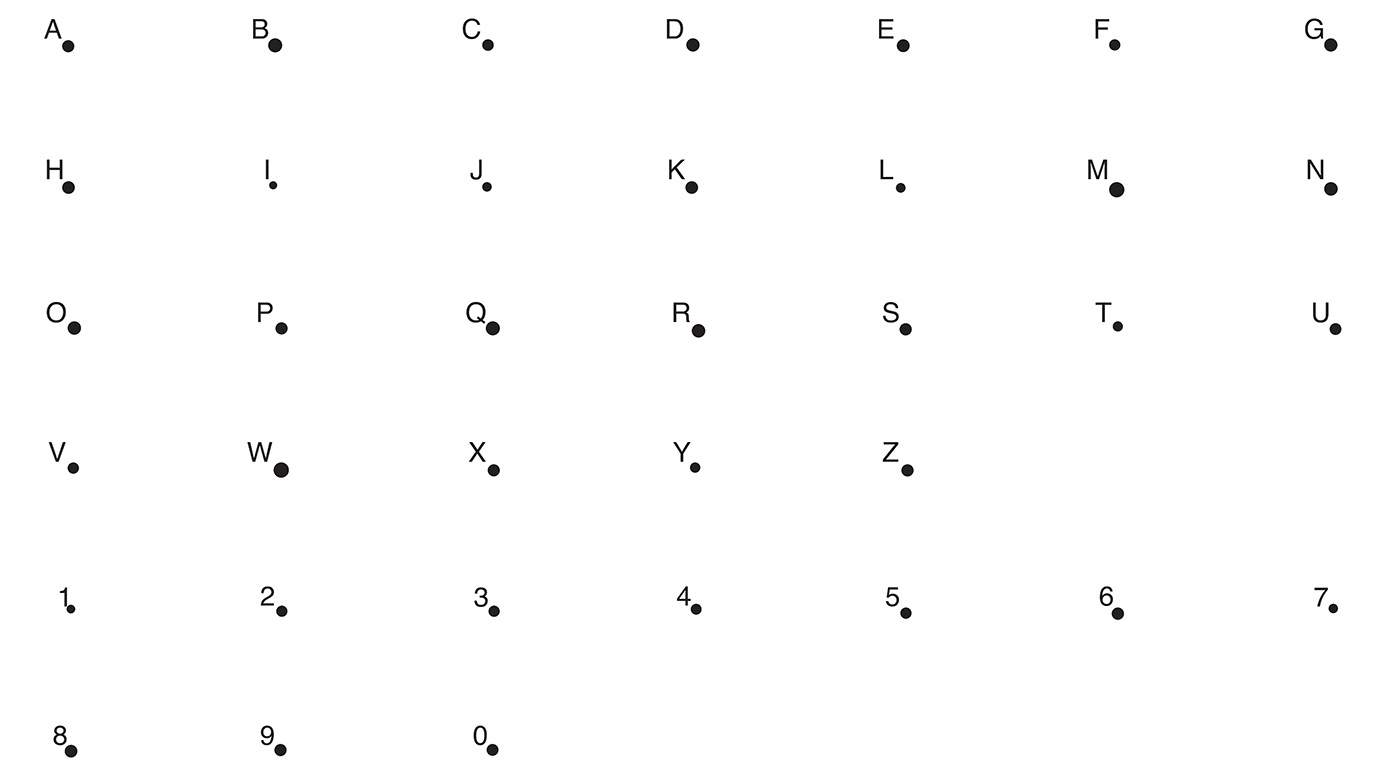
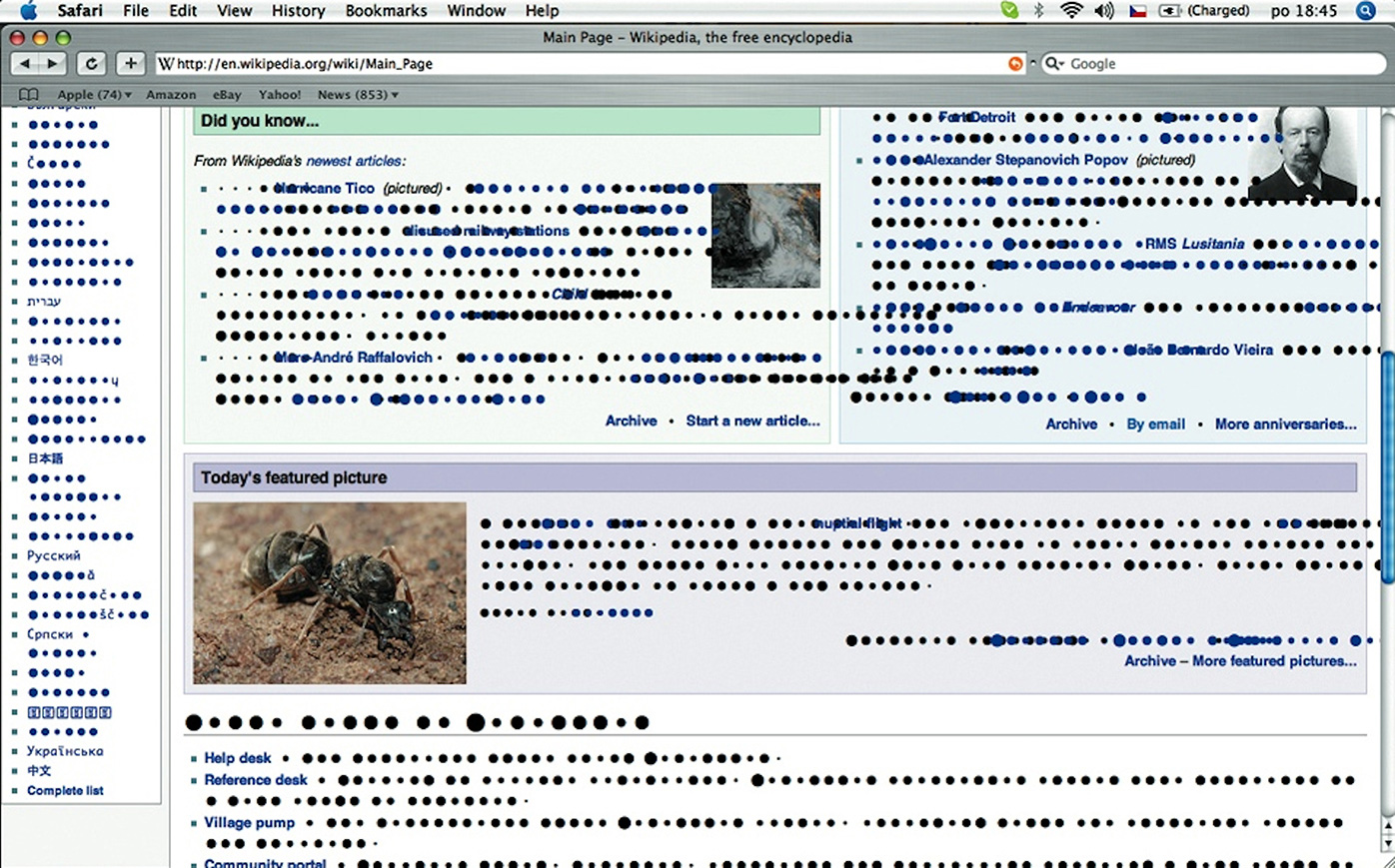
Helvetica Concentrated is a font that takes the form of variously sized black dots. Their diameter is derived from the letters, numbers and symbols of the Helvetica Regular font. Graphic designers and artists currently consider this font to be the height of legibility and intelligibility in typography. One of the reasons for their conviction is the popularity of Macintosh computers in these two professions. And the Helvetica font is the system-wide typeface used by this company’s operating system. Myself, Angela Detanico and Rafael Lain used the AutoCAD program to measure the surface area of each character. We then derived the sizes of each dot from these measurements, producing the symbols of a new font that we termed Helvetica Concentrated. By transforming the codified forms of the different characters of the Roman alphabet into the most perfect form possible, we have at the same time touched upon something of the essence of writing and language - the dream of perfect communication and perfect transmission.
Local Stigma
a video installation2004
4 projections on 4 blank white canvases, 175 x 140 cm each
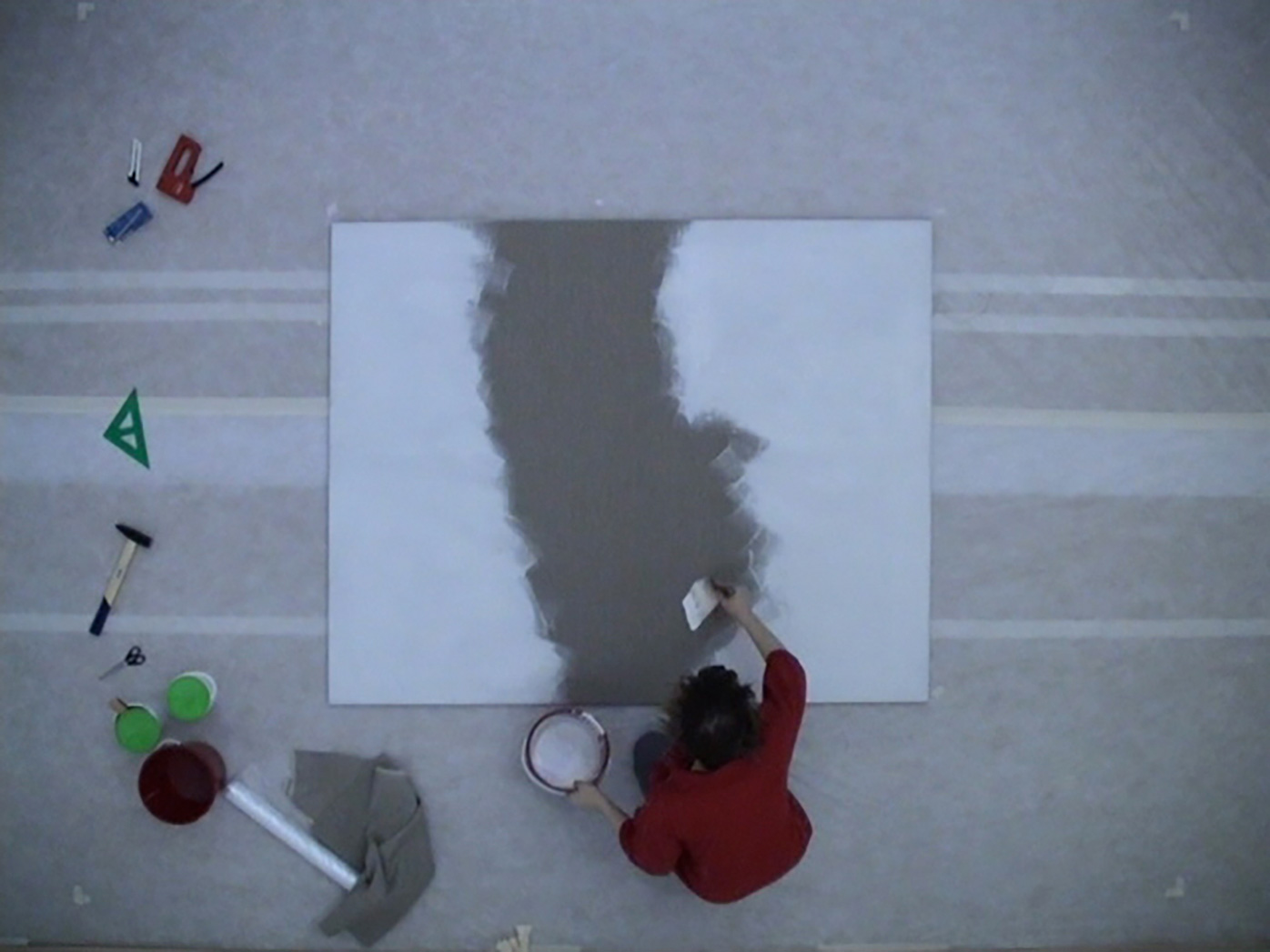
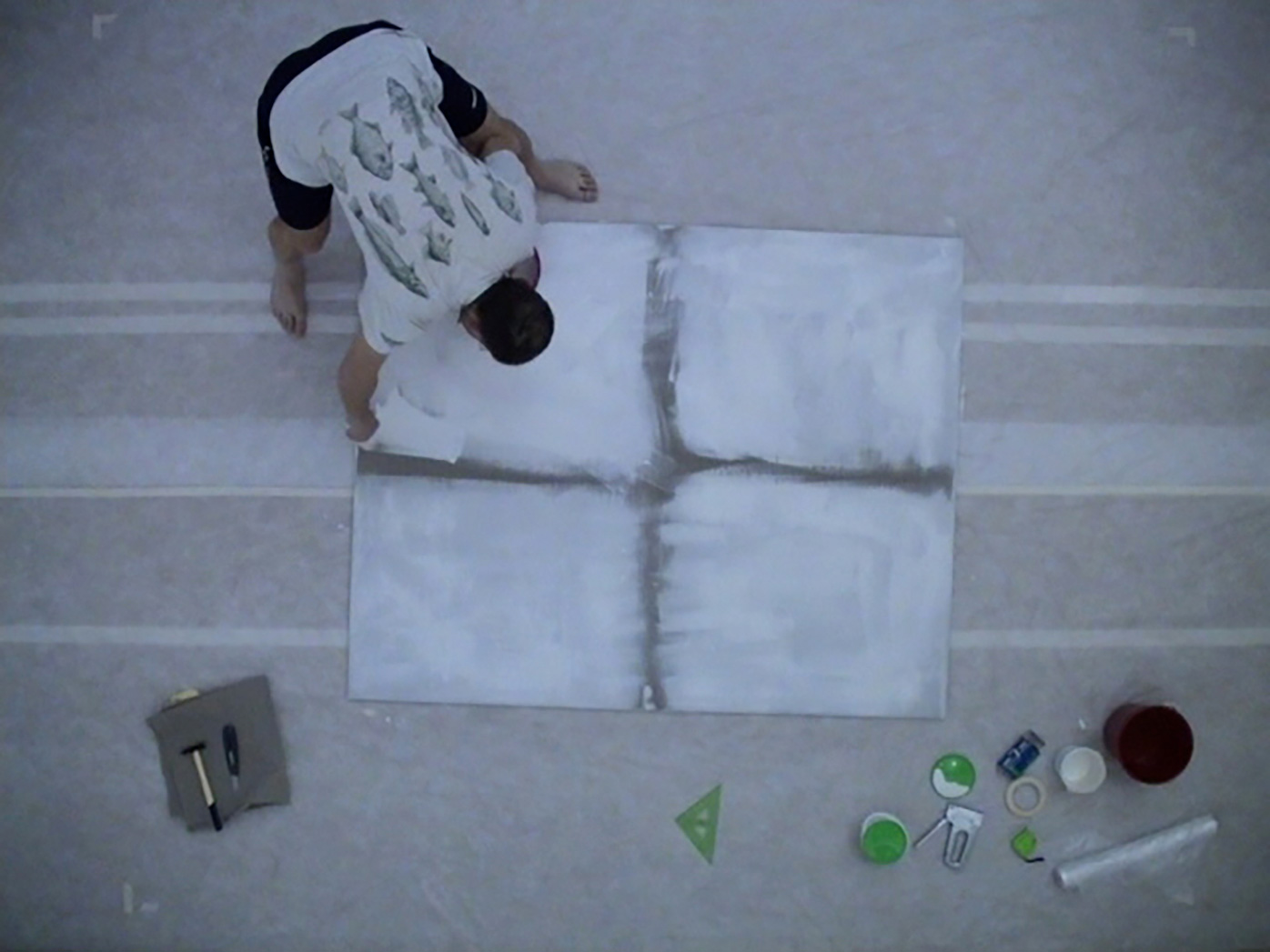
We see someone walking onto a floor covered with white fabric. The person has brought materials for constructing an underframe. Over this they stretch a canvas, next applying an acrylic primer, thus changing the ochre of the canvas to white. The colour of the canvas begins to blend with that of the floor. As it dries, the person departs, carrying away all unnecessary articles. The process of priming and drying the canvas continues until they deem the canvas to be ready.
David Adamec, Patricie Fexová, Milan Salák and Jan Šerých, who took turns in the role of protagonist, were filmed by a camera suspended at a height of almost five metres. In the end, their product served as a screen for the projection of the video recording of their idiosyncratic manufacturing processes.
The video recordings provide an almost laboratory-like testimony of the working methods of the painters concerned - how they construct the frame, stretch the canvas and prime it, the way they organise their working space, what kind of tools they use and how they make time their own.
Each of these factors led me to the idea of observing a selection of artists at work, performing my favourite activity.
DOS (Trade Unions Building)
an action2004
billboard, digital print, 5,1 x 2,4 meters
a billboard in front of a large shopping center, Průhonice, Praha, CZ
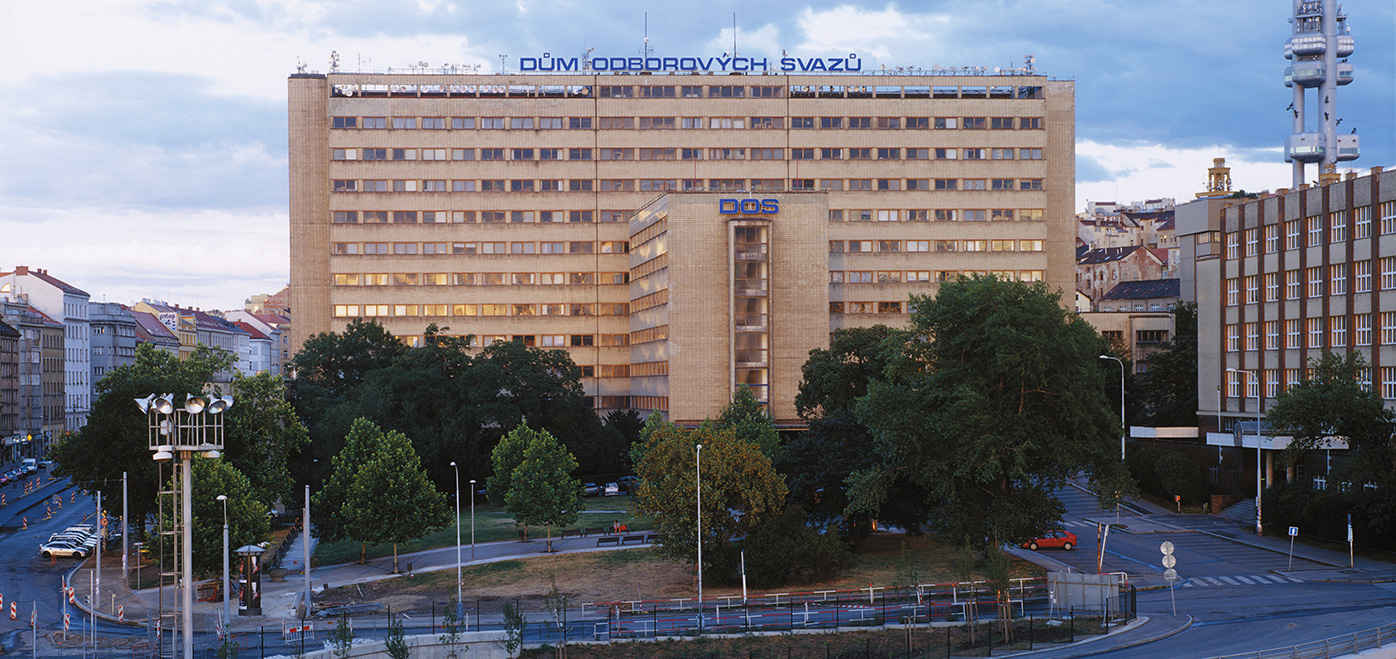
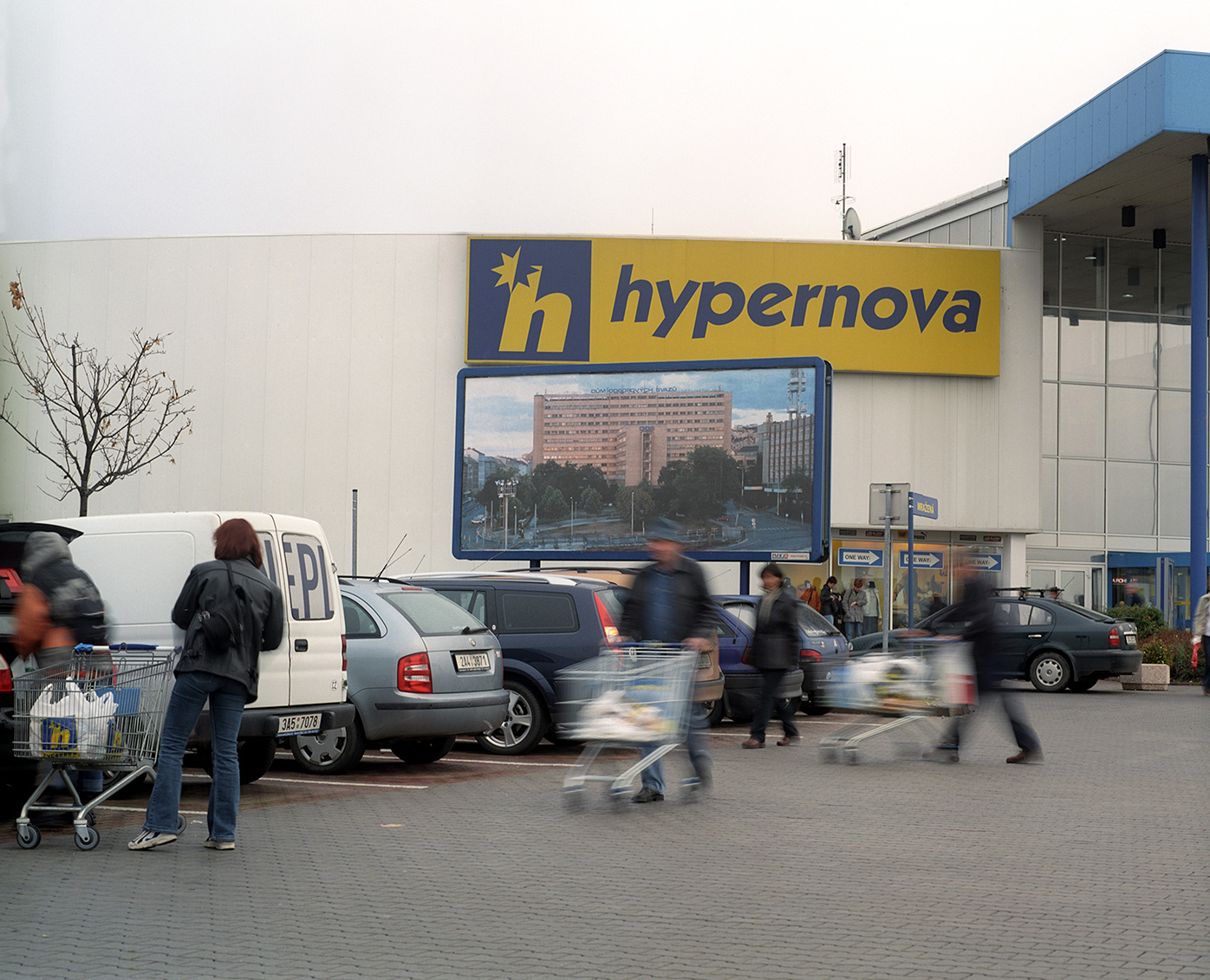
At the start of the last decade I was working in the warehouse of a certain multinational company. At the time, its employees were considering setting up a local trade union branch, but they gave up on the idea for fear of losing their jobs. After this experience, I decided to produce an advert for the Trade Unions Building. I contacted trade union headquarters and suggested we collaborate on the idea as a joint project, but my offer was politely declined. Subsequently I decided to make the advert on my own, at the smallest reasonable scale. Together with a professional photographer, I took a still image of the Trade Unions Building (DOS) in Žižkov. The picture shows the building from the front so that the sign on the roof is clearly visible. I then had the image printed on a billboard opposite the entrance to the Hypernova store in Průhonice.
Pacific Has no Memory
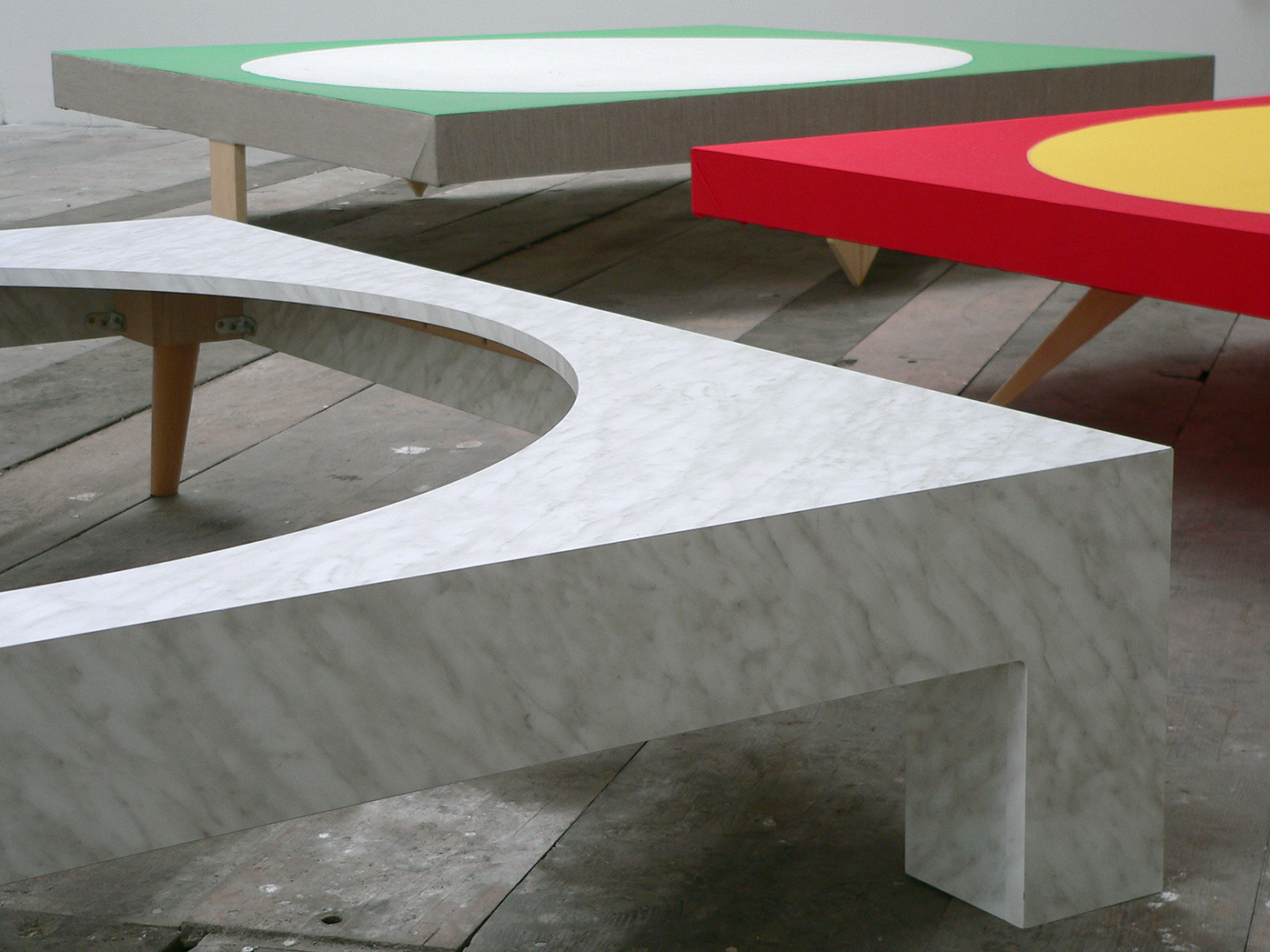
20053 objects
laminated wood frame, sewn cloth on wood frame, acrylic on canvas on wood frame
150 x 150 x 35 cm each
Exchange of Handwriting
a play involving two people2006
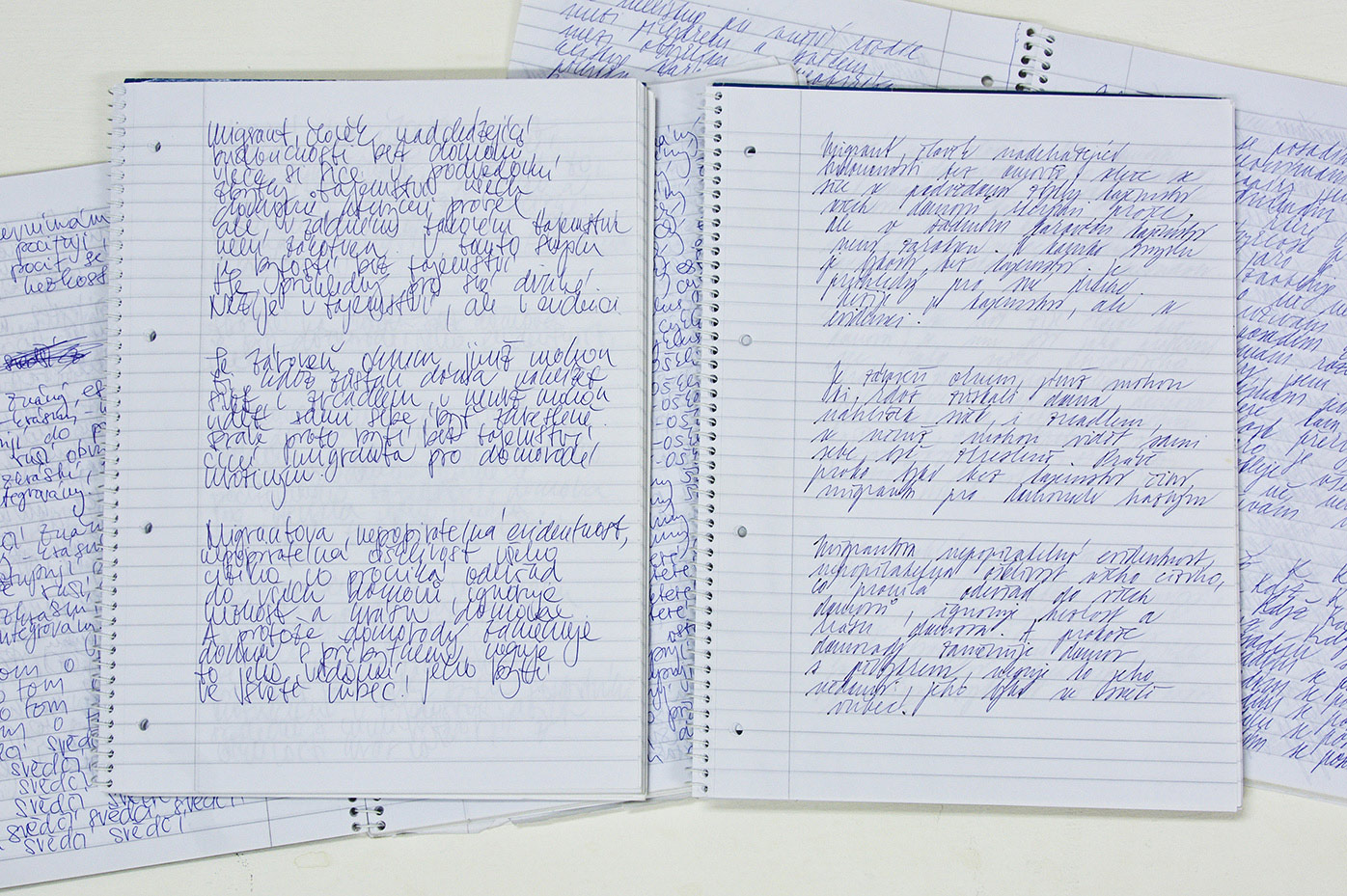
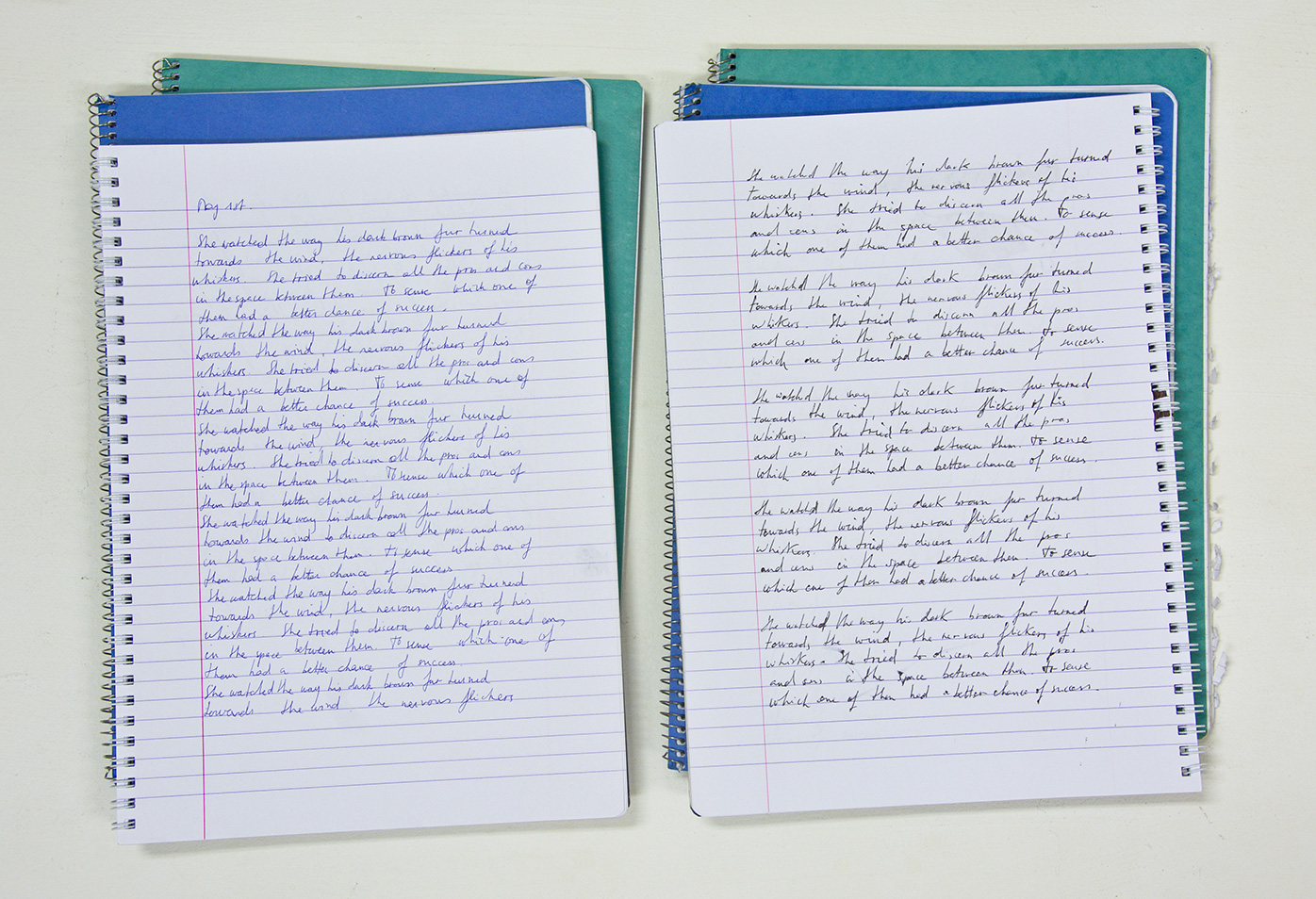
Sometime around 2004 I decided to alter my handwriting, which had not undergone any essential changes since primary school. It more or less corresponded to the standard style of handwriting which I had been taught. All the letters were aligned with the correct slant, all were the same size.
After several initial attempts, this simple objective developed into a game for a man and a woman, the goal being to learn each other’s style of handwriting.
The game does not consist of mastering the other’s handwriting – that’s not even possible – but rather in the effort to transform one’s own. After a certain time, the participants reach their limits, realising that certain elements of handwriting are shaped according to subconscious patterns that cannot be appropriated. Confronted with the impossible, they pose themselves the question, what next? Knowledge is no longer of any use, only physical exertion and hard work - the stereotypical repetition of drawing the same line, again and again. A special physical bond is thus forged between the participants during the exercise.
After undergoing this procedure, my handwriting went through a radical transformation. It is much more legible, for example, than it had been previously.
Two Families of Objects
(first part of the project One Family of Objects, 2007)14 color photographs, Lambda print, 50 x 40 cm
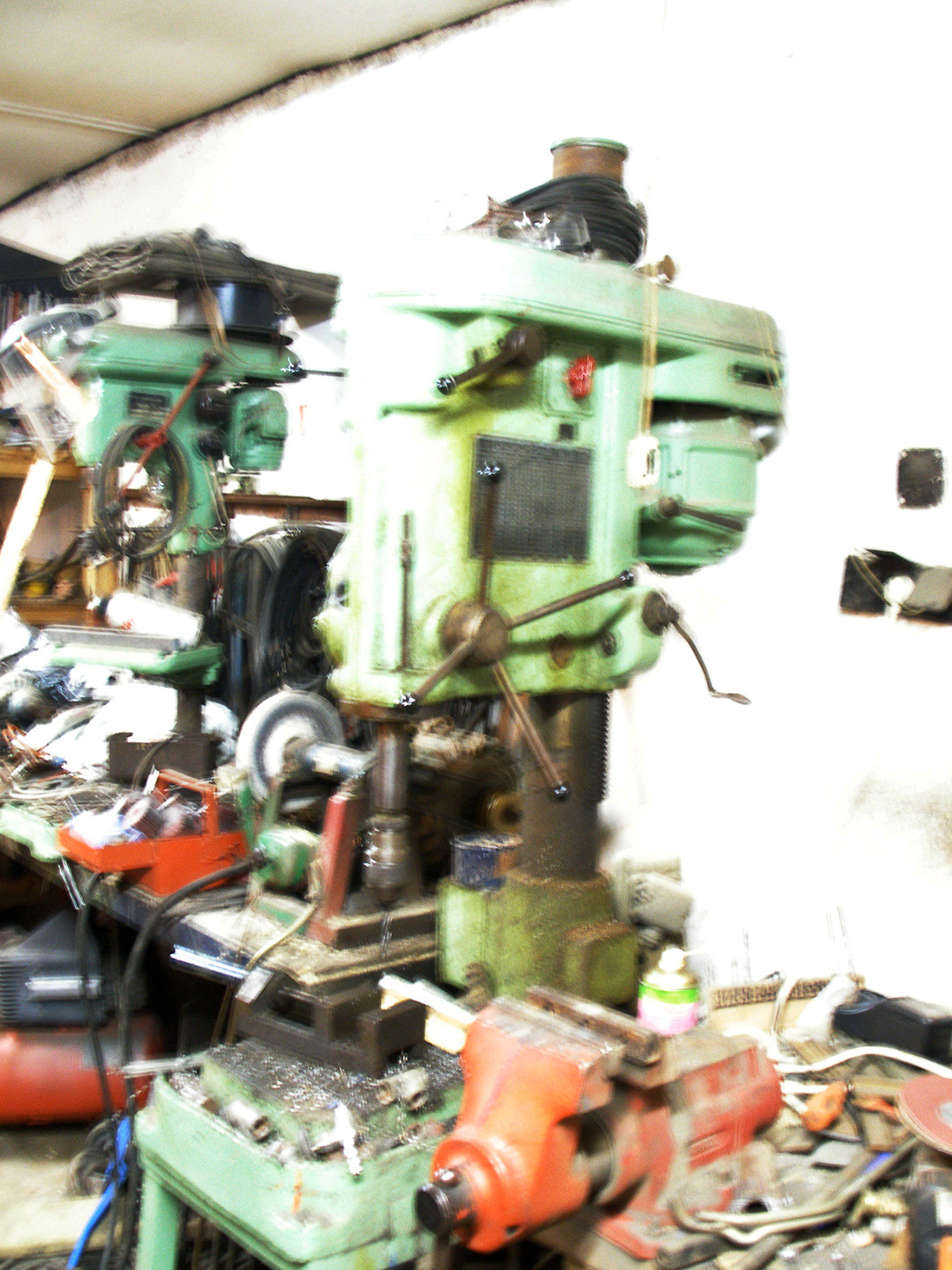
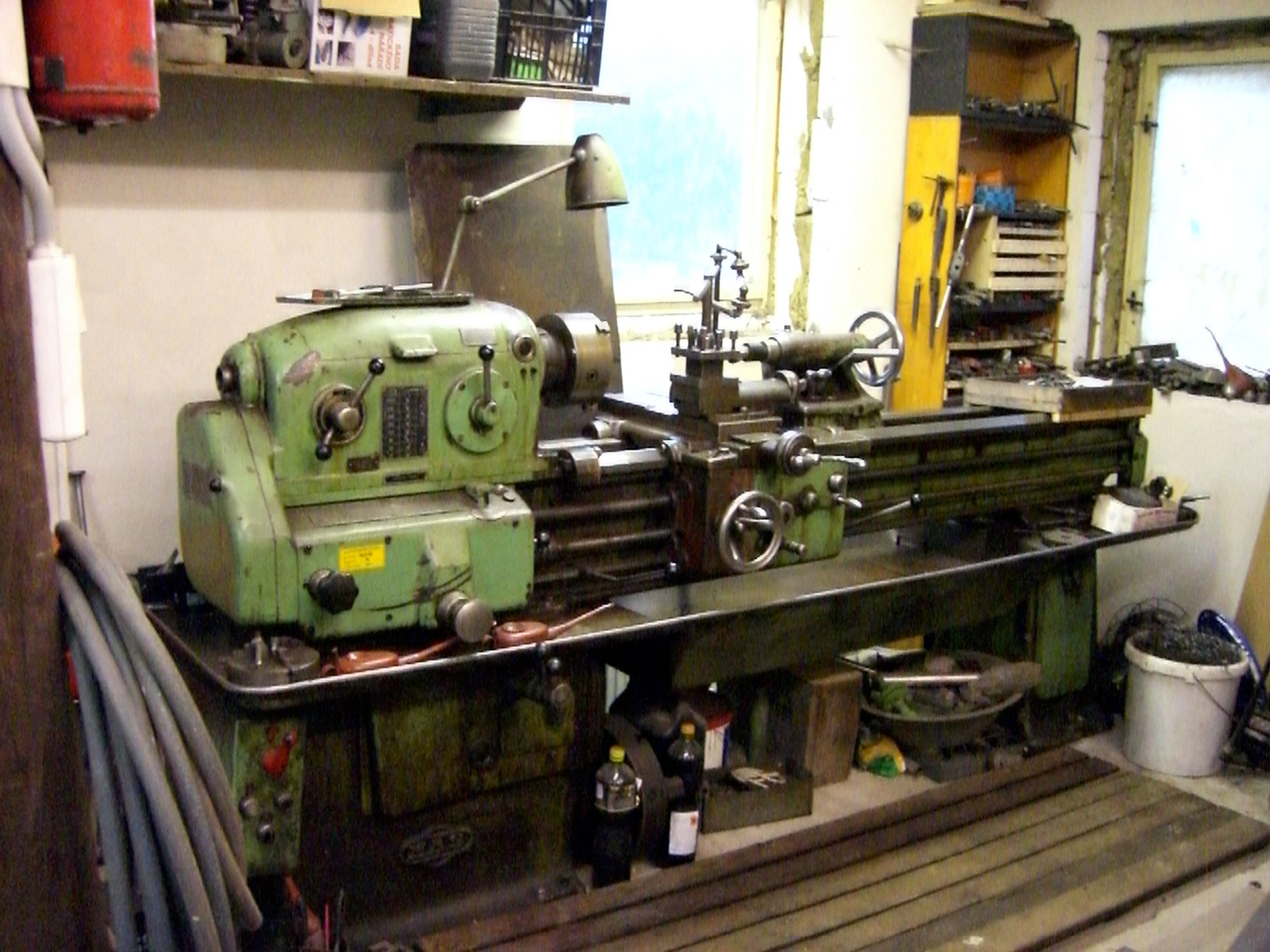
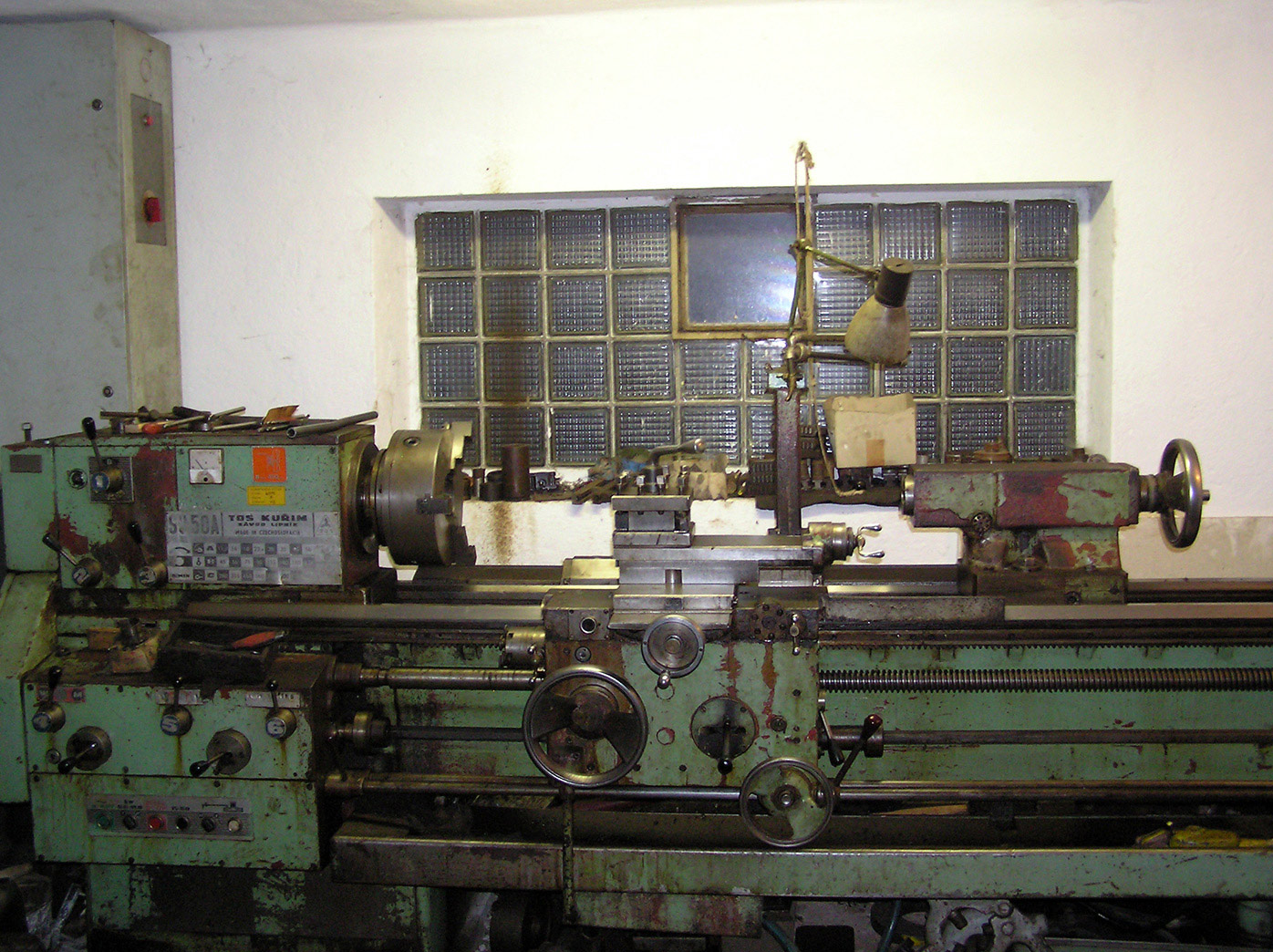
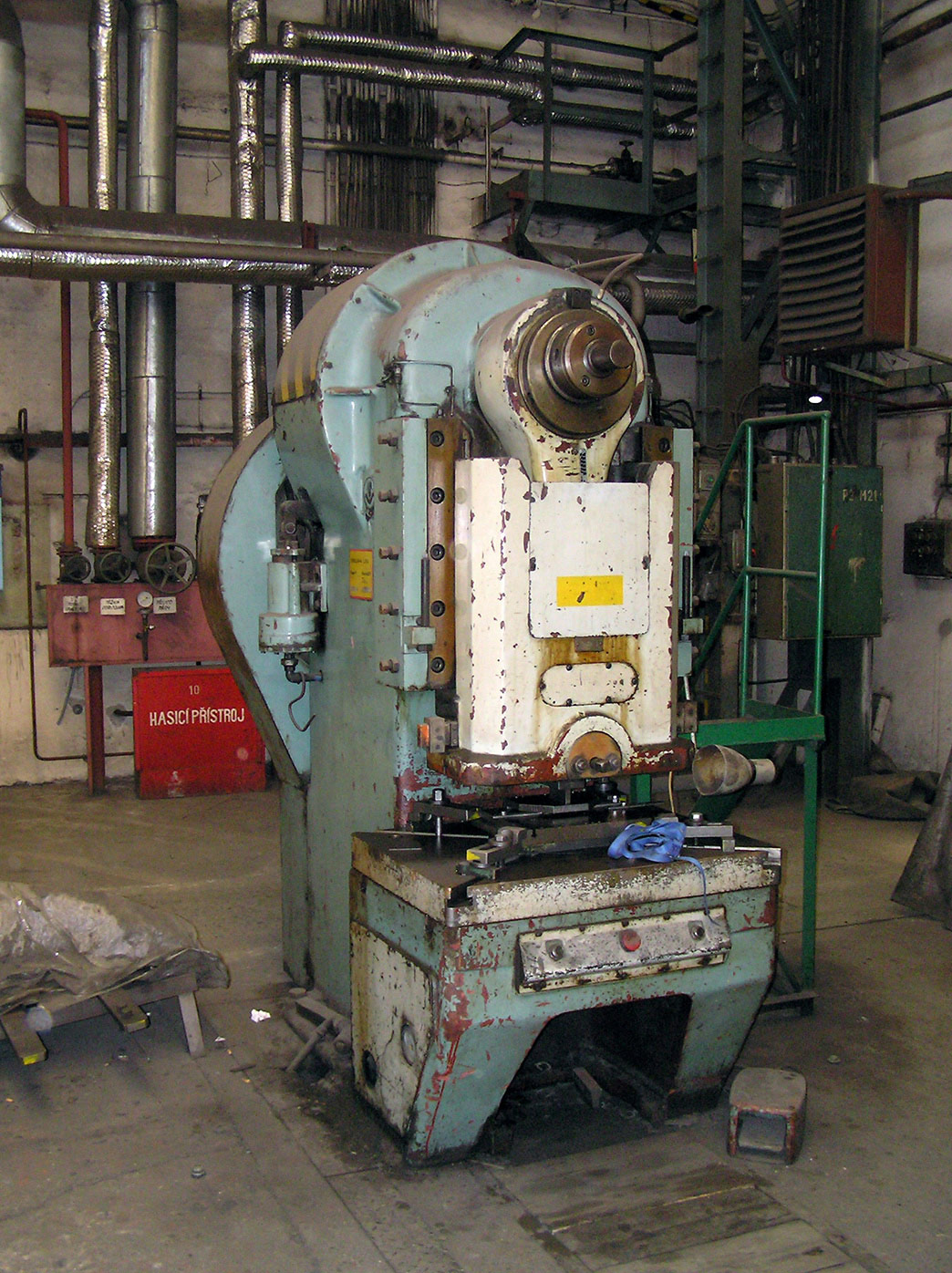
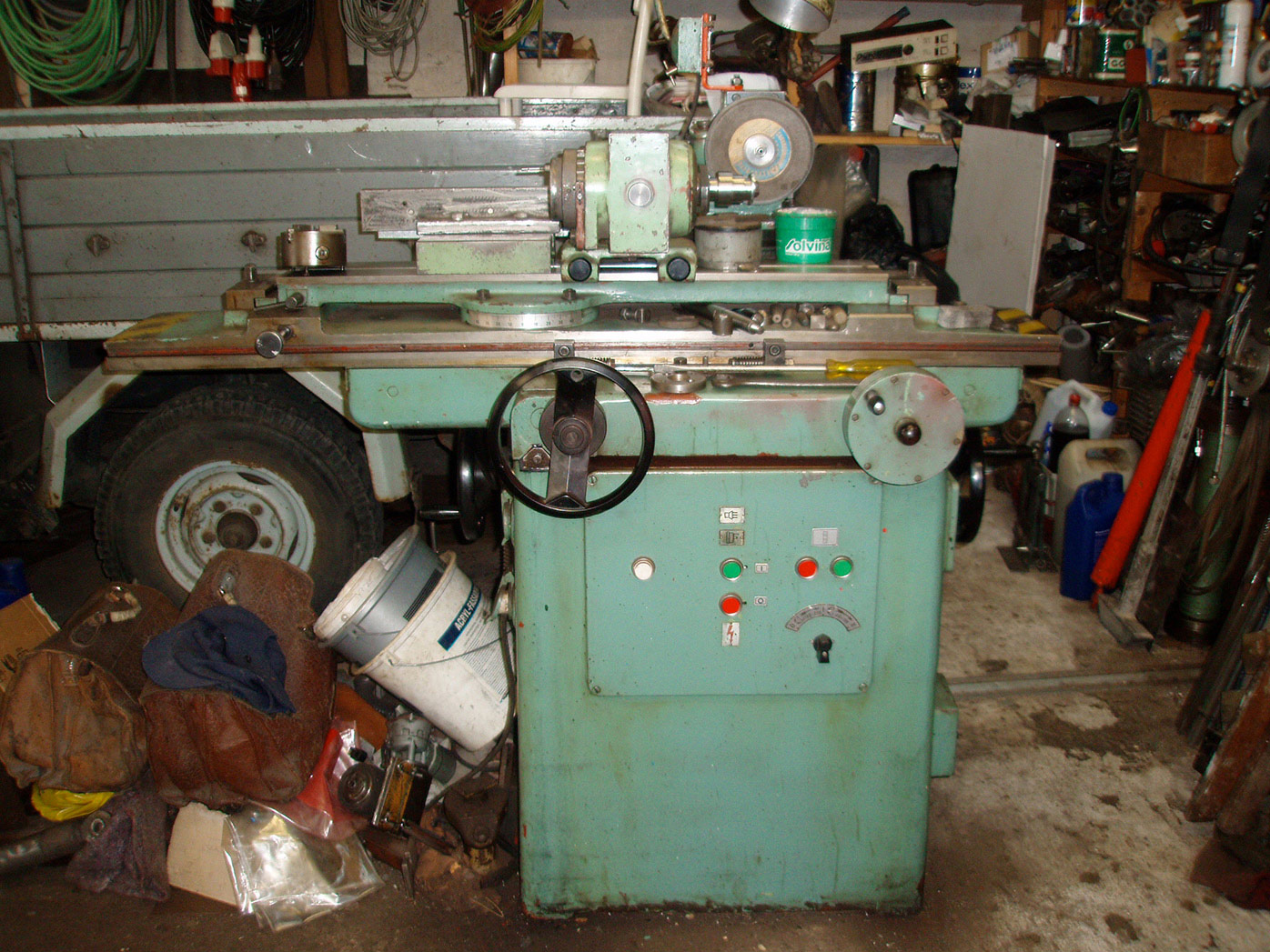
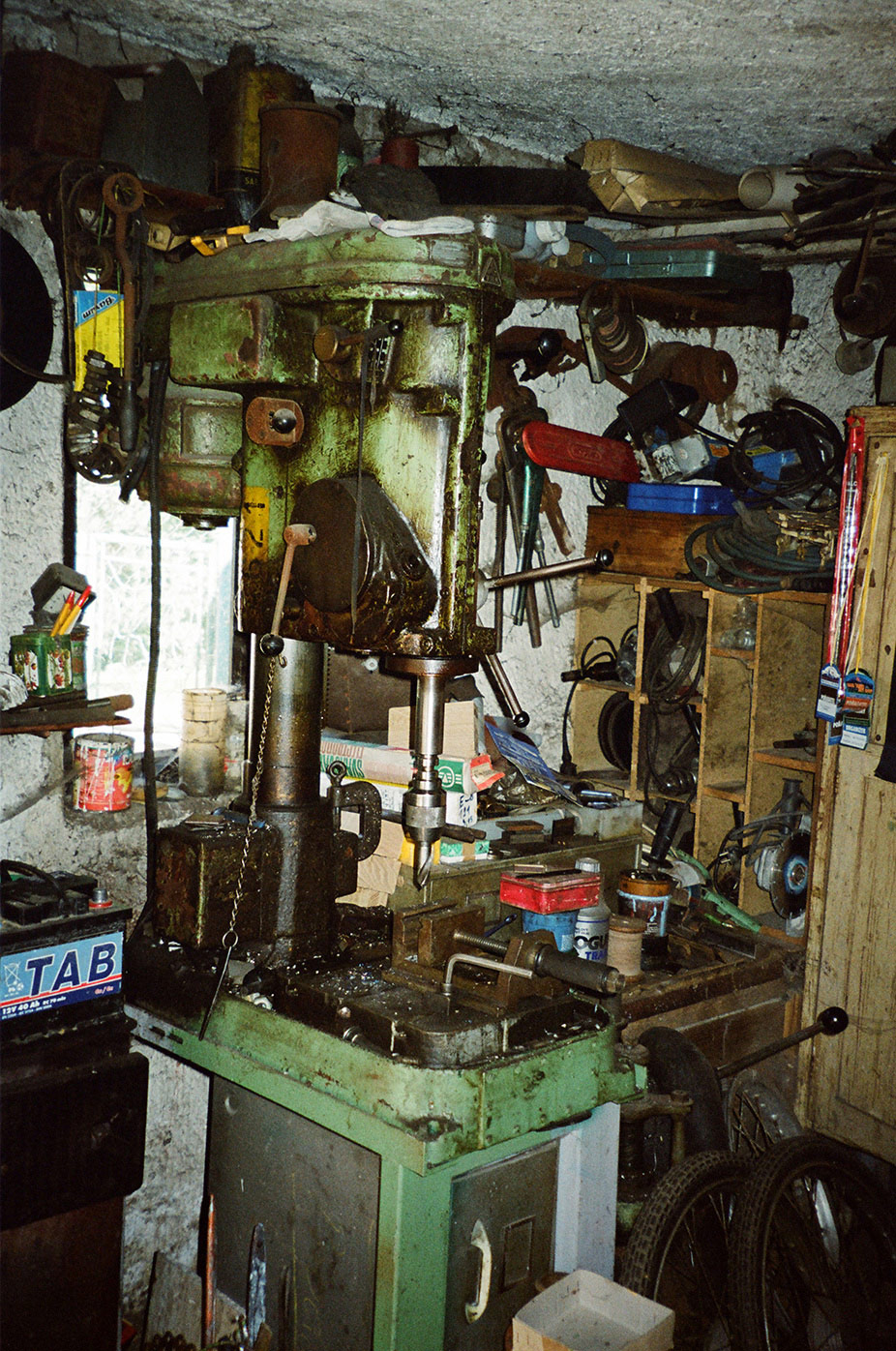
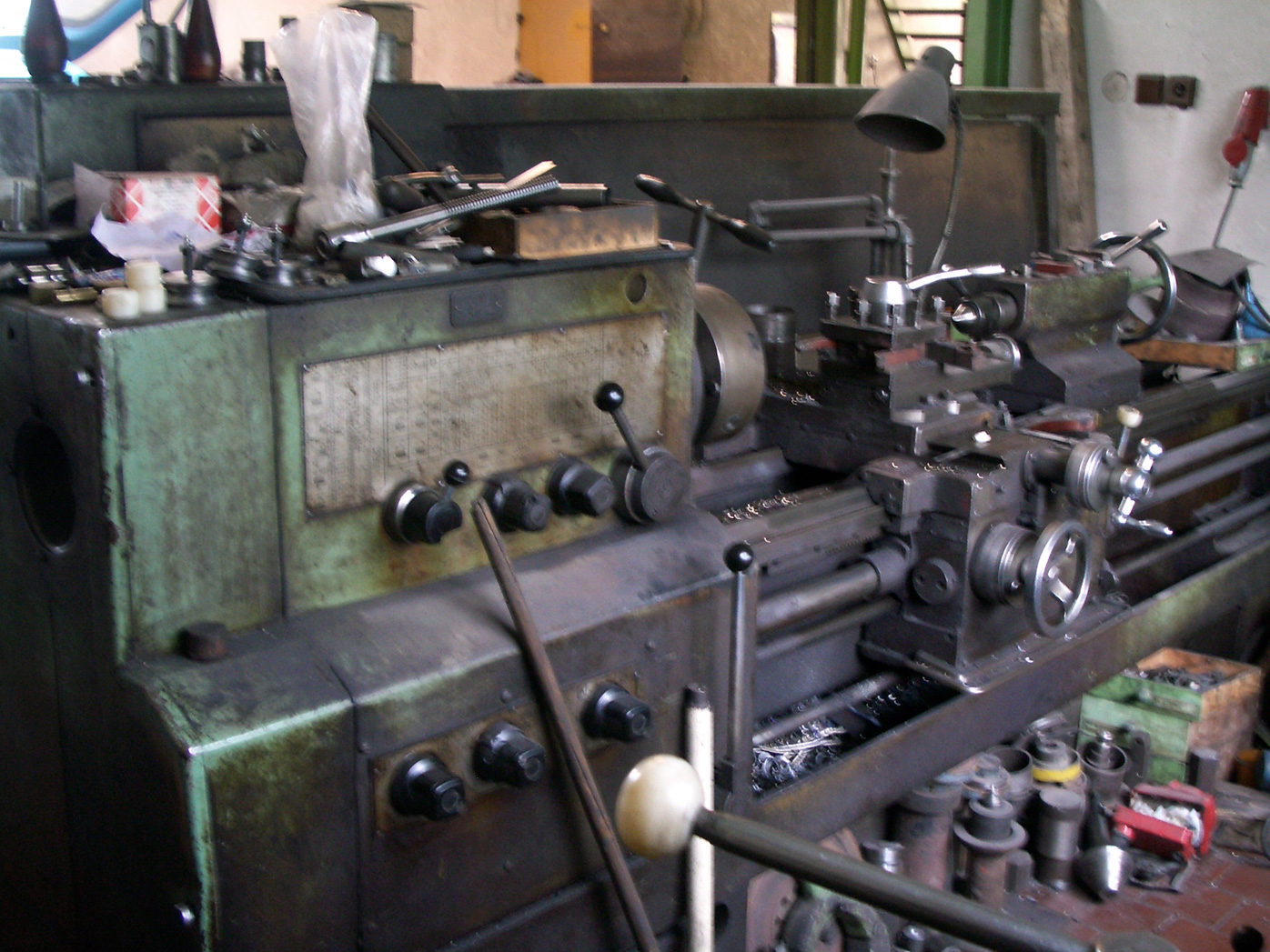
In 2001, as a present for her 50th birthday, my mother Jiřina Skálová was given the machine tool she had operated at the local factory for 22 years. The company had put the lathe up for sale because it was having difficulties paying off one of its bank loans. Even though the factory had survived the early economic transformation period of the 1990s, at the start of this century it was evidently going into decline. My father decided to secure his and his wife’s future by purchasing the lathe - it is the only tool the two of them can use to earn a decent salary. When I talked to my parents, it transpired that they were by far not the only people who’d bought the means of production they had operated for decades from the company on the verge of insolvency. I asked my mother to take a photograph of her lathe. I then put the same proposition to other former employees who had also opted to purchase their machines, relocating them from the factory floor to the private spaces of their garages and workshops.
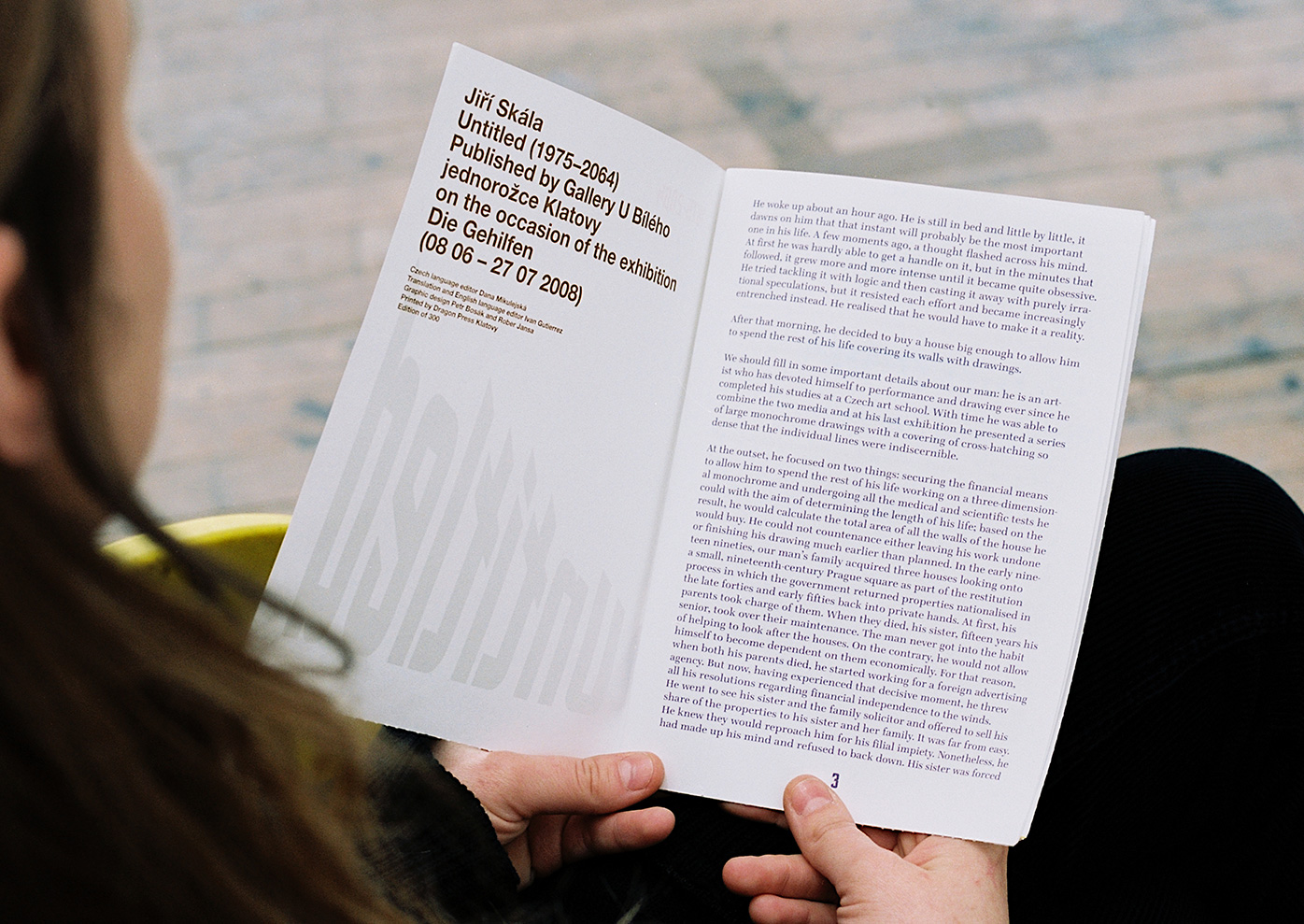
Untitled (1975–2064)
a short story2008
poster, A2 format, published by Pazmaker magazine, Mexico City and by Gallery u Bílého jednorožce, Klatovy as part of Die Gehilfen exhibition
This short story tells the tale of a man who decides to turn his life into an art PROJECT. Thanks to a family fortune, he doesn’t have any financial concerns and nothing stands in the way of putting his plan into action. To begin with, he goes to a specialised clinic where they calculate the approximate length of his life. Next he buys an apartment to suit his needs - he intends to spend the rest of his life covering its walls with a monochromatic painting. Every day until his death he will draw a single, dark blue, one centimetre square. As time passes, the man’s regular and habitual movements begin to have the following effect – he starts to vanish in the delimited space. Physically, as well as mentally. For all is predetermined. He has only one need, one necessity – to fill his life with mindless activity.
Messages in an Emergency
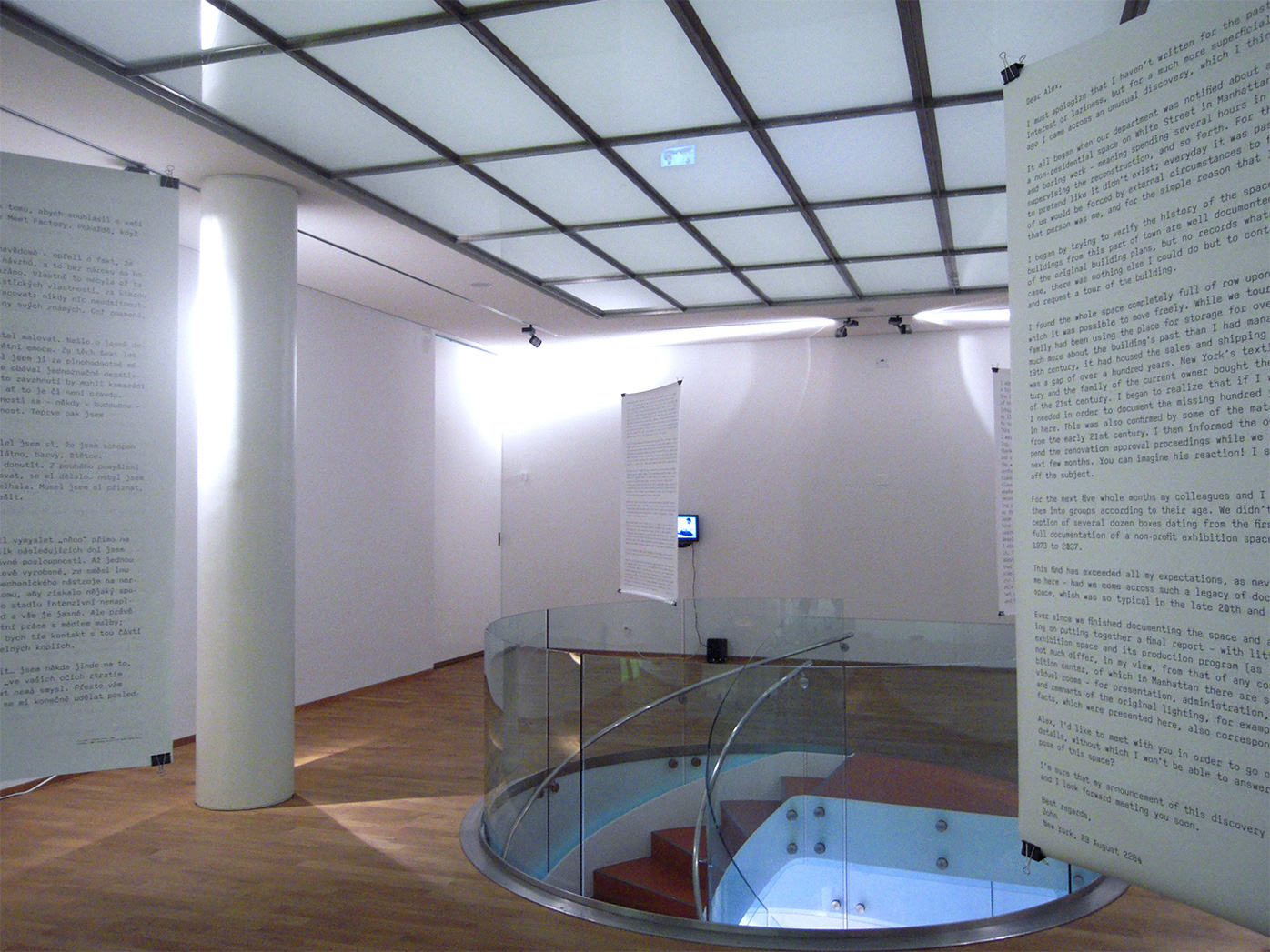
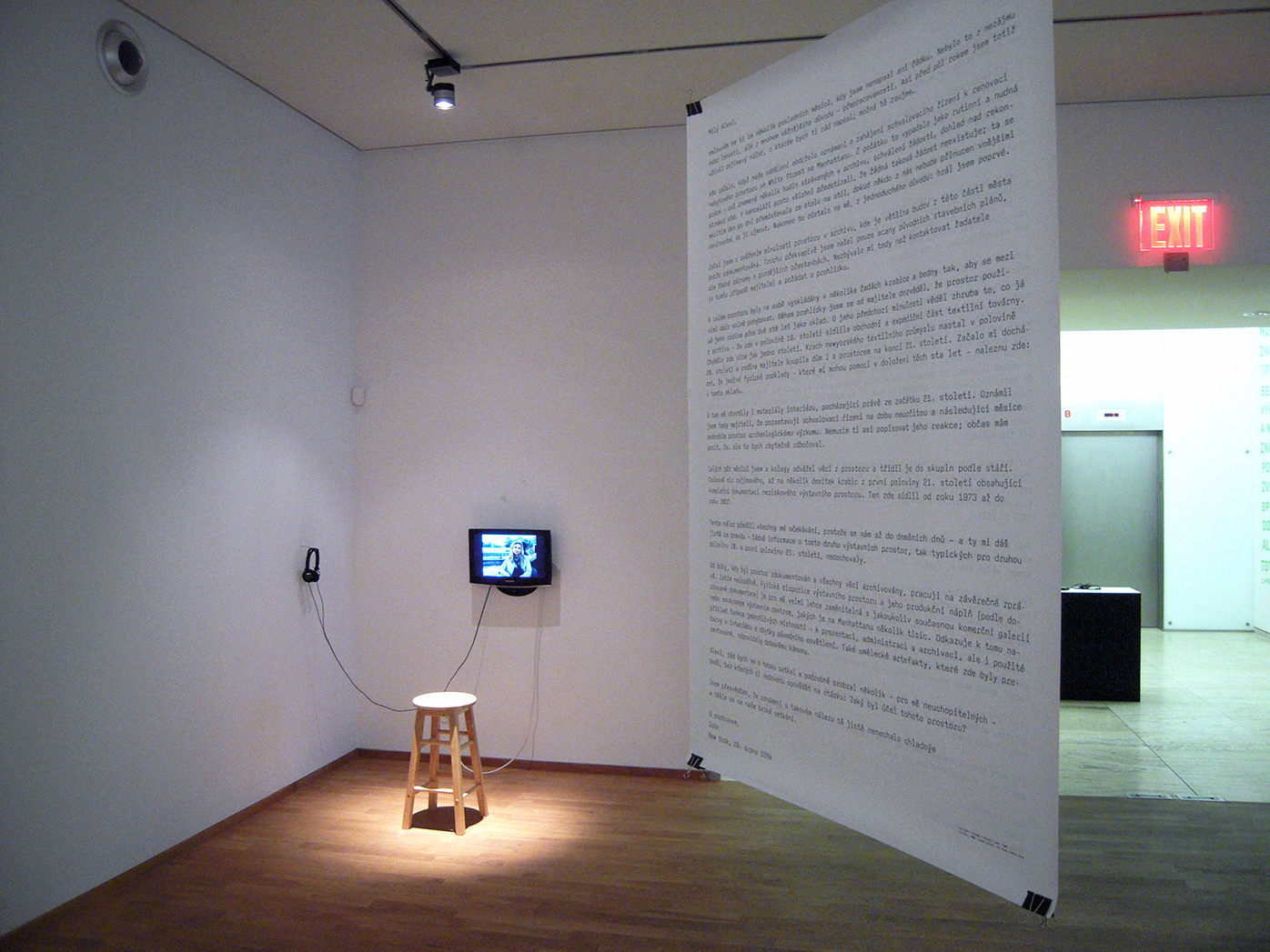
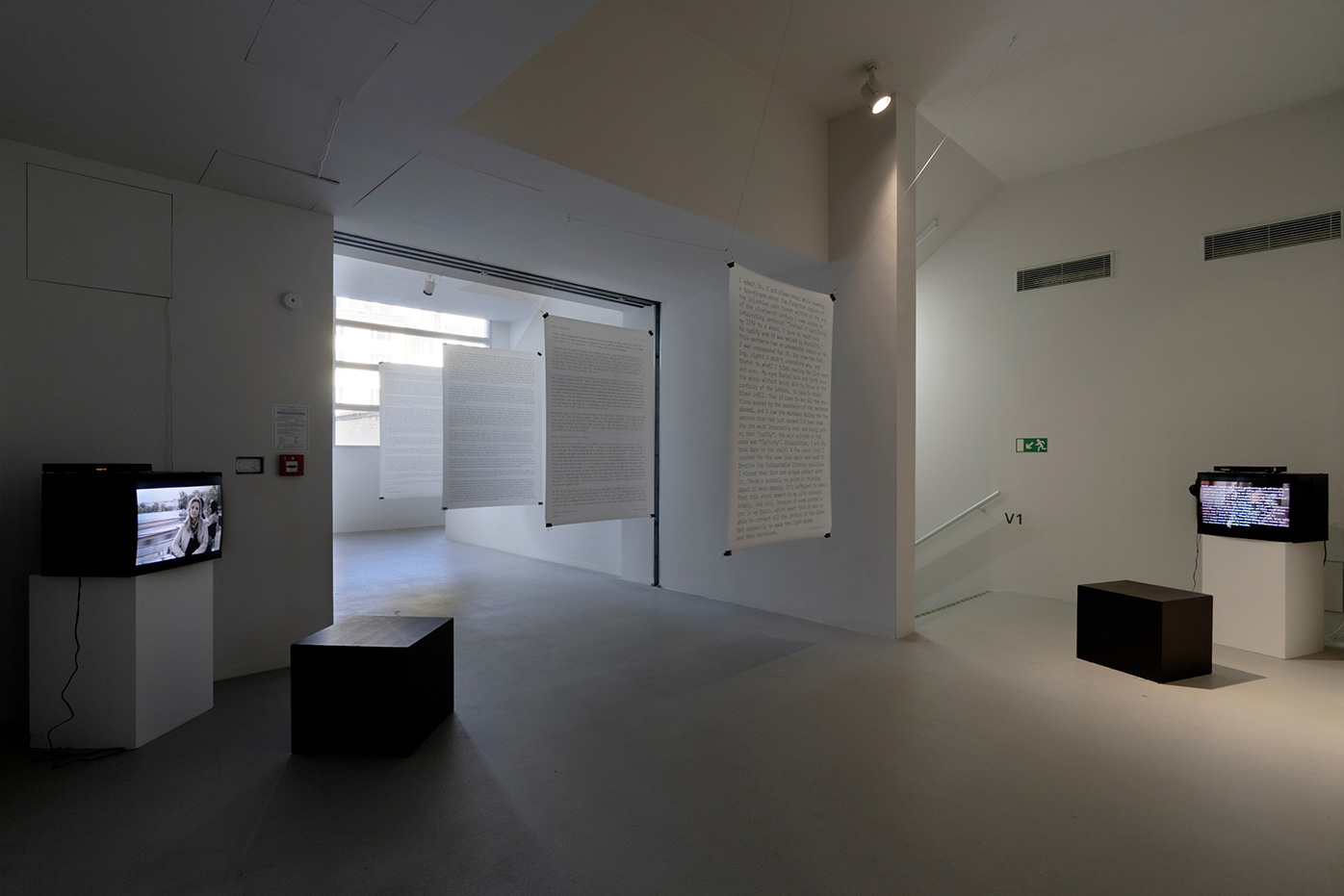
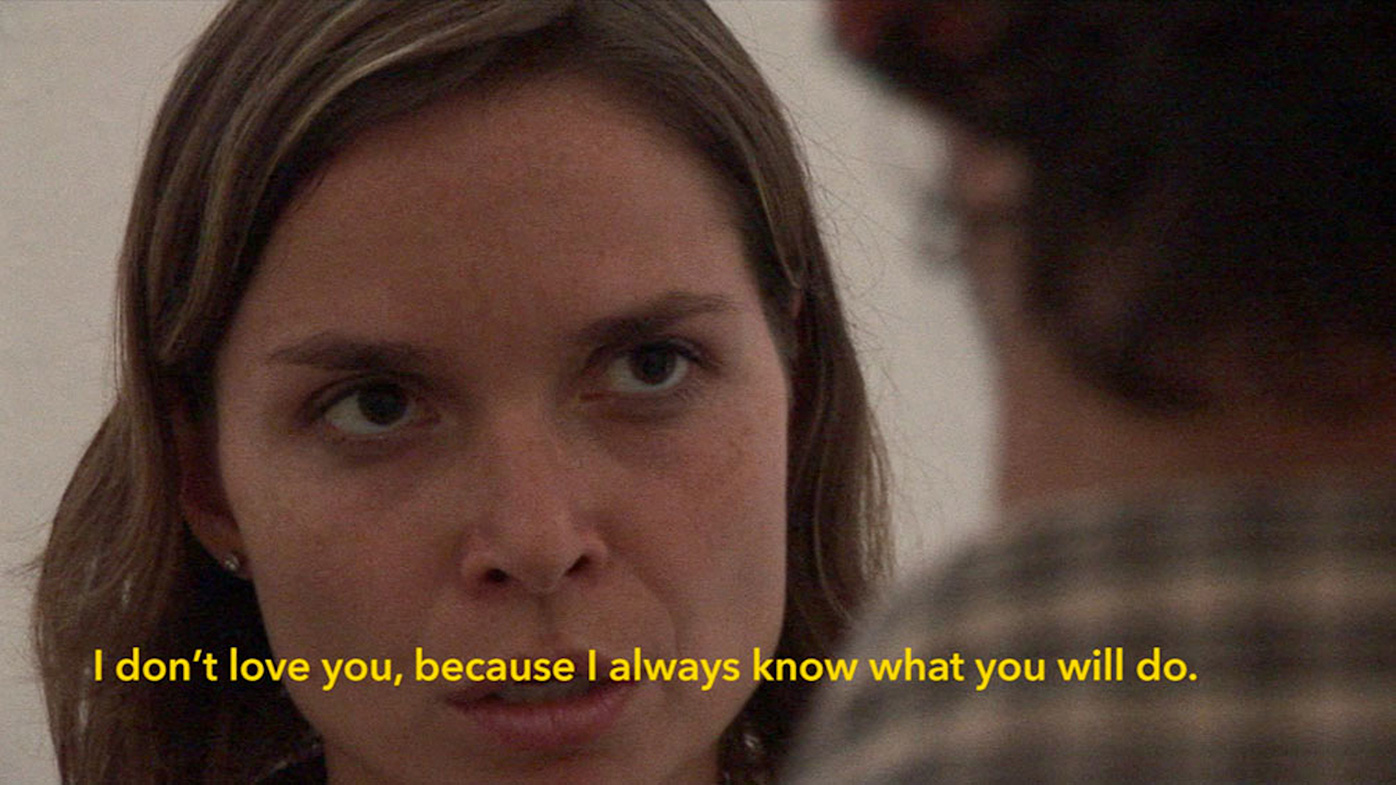
a collection of texts and videos from 2008 and 2009The messages may be divided into two parts - text and video. The texts consist of an essay, a short story and two letters. They are the size of the human body and hang in space. Their primary task is to confront readers with their own corporeality. Reading thus becomes not only a cryptographic process taking place in our minds, but above all a physical act. The second part of the work consists of one video-story and three video documentations of performances –Naming, Father’s Mouth and Čelechovský/Mrázek. In the last mentioned, I managed to arrive at a situation which I decide to call confrontational reading. Thanks to this video I found an answer as to how thematize language. Simply, through reading out loud. This allows me to achieve interesting situations confronting language with the physicality of the reader, the listener and my own. Hence the term confrontational reading. Since then I have endeavoured to organise all my live actions, performances and happenings exclusively according to this method, which I am developing and perfecting.
The Involuntary Archivist
a narrative machine2009
digital video, 4 min.
wood and metal construction 0.9 x 2.45 x 1.8 meters, projector, hard disk driver, HD media player, sound speakers, 2 headphones
made in collaboration with Zbyněk Baladrán
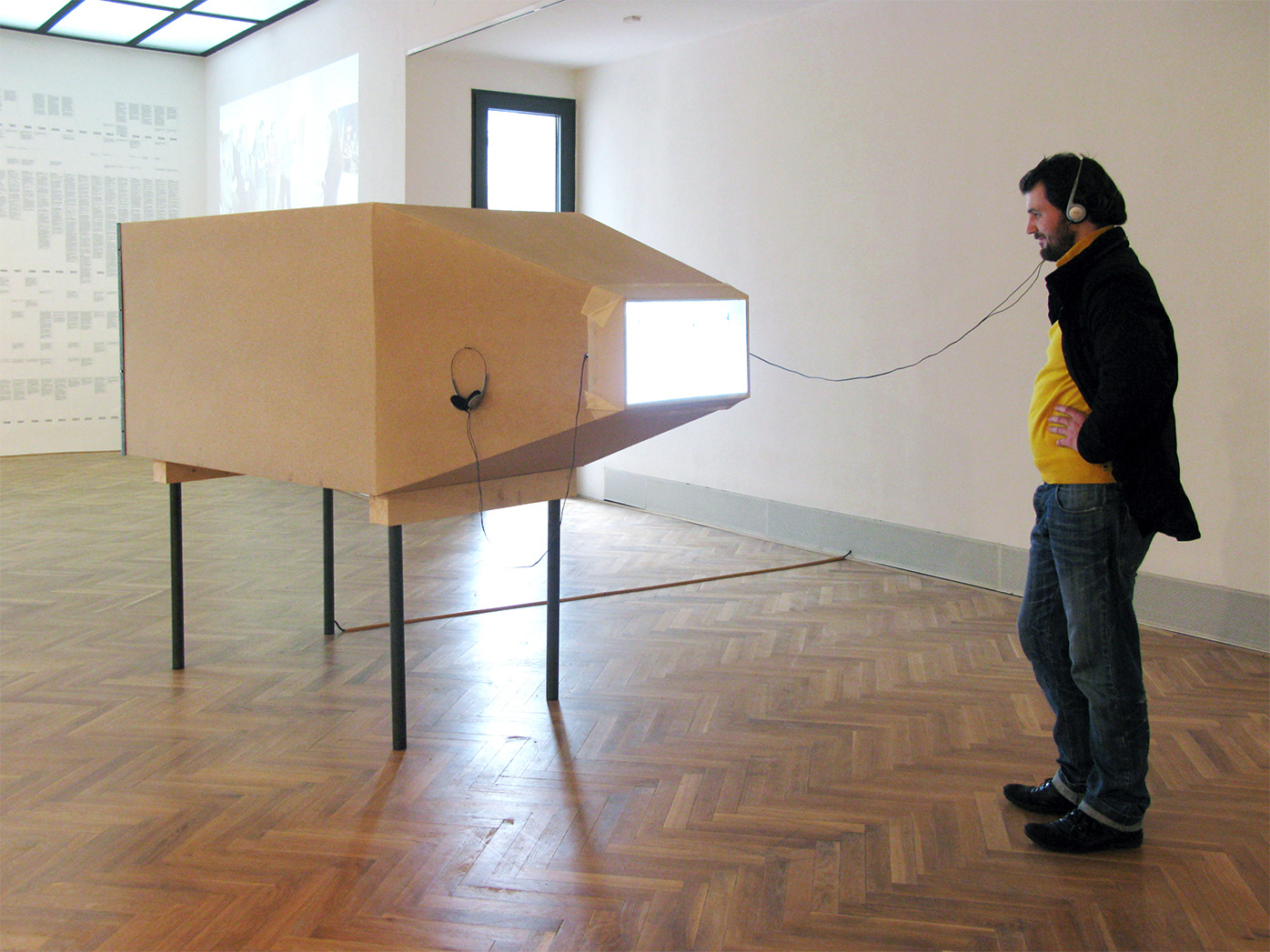
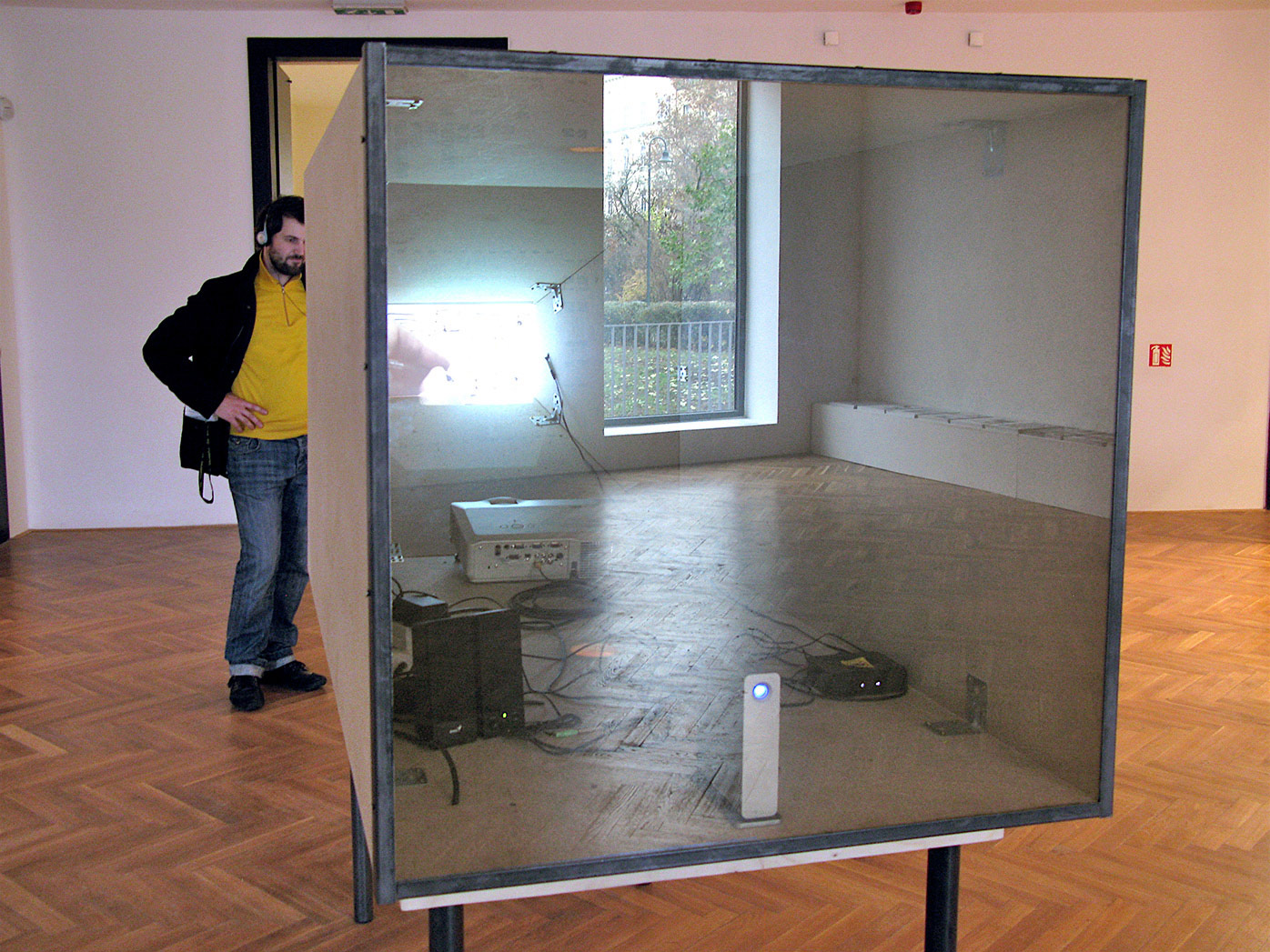
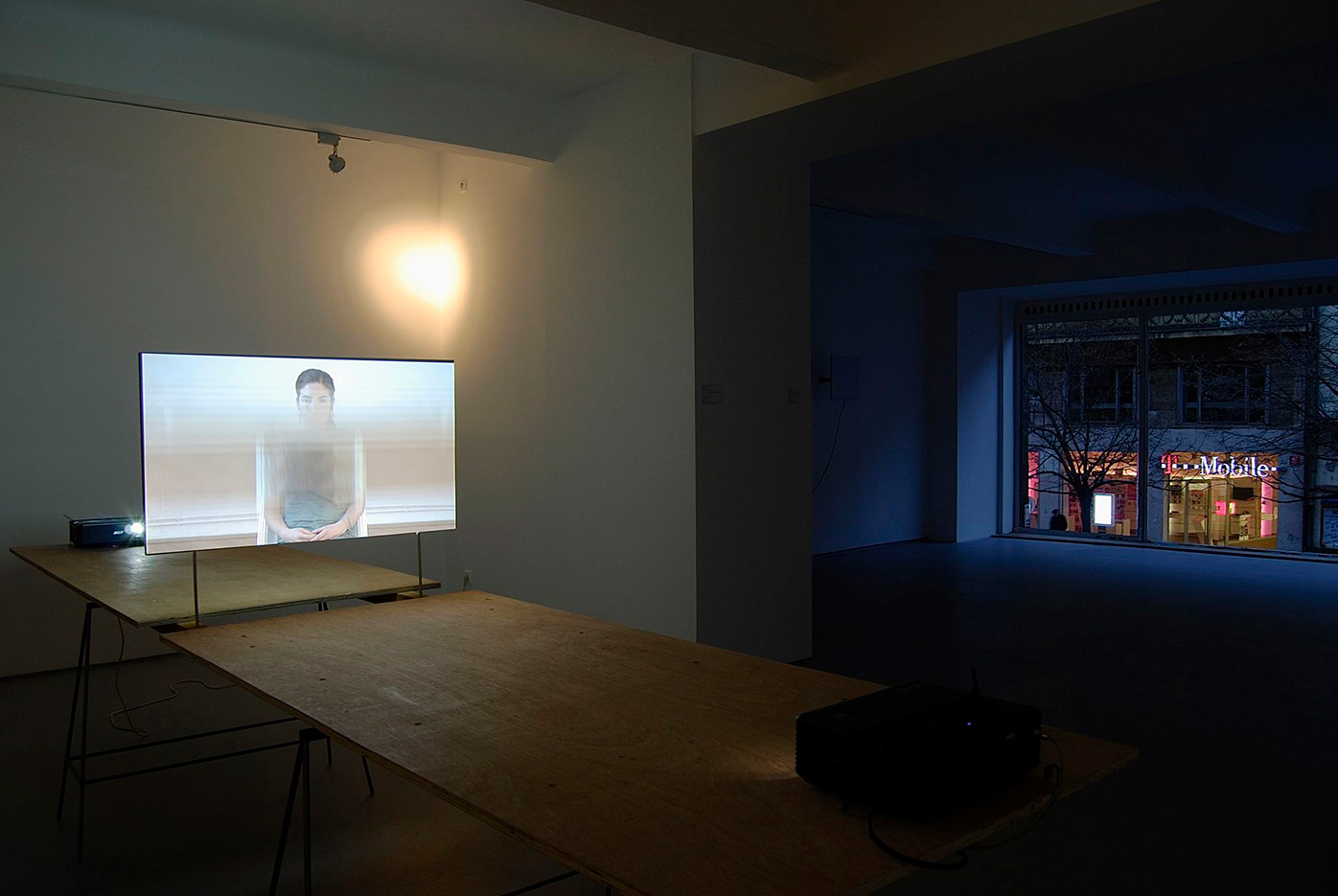
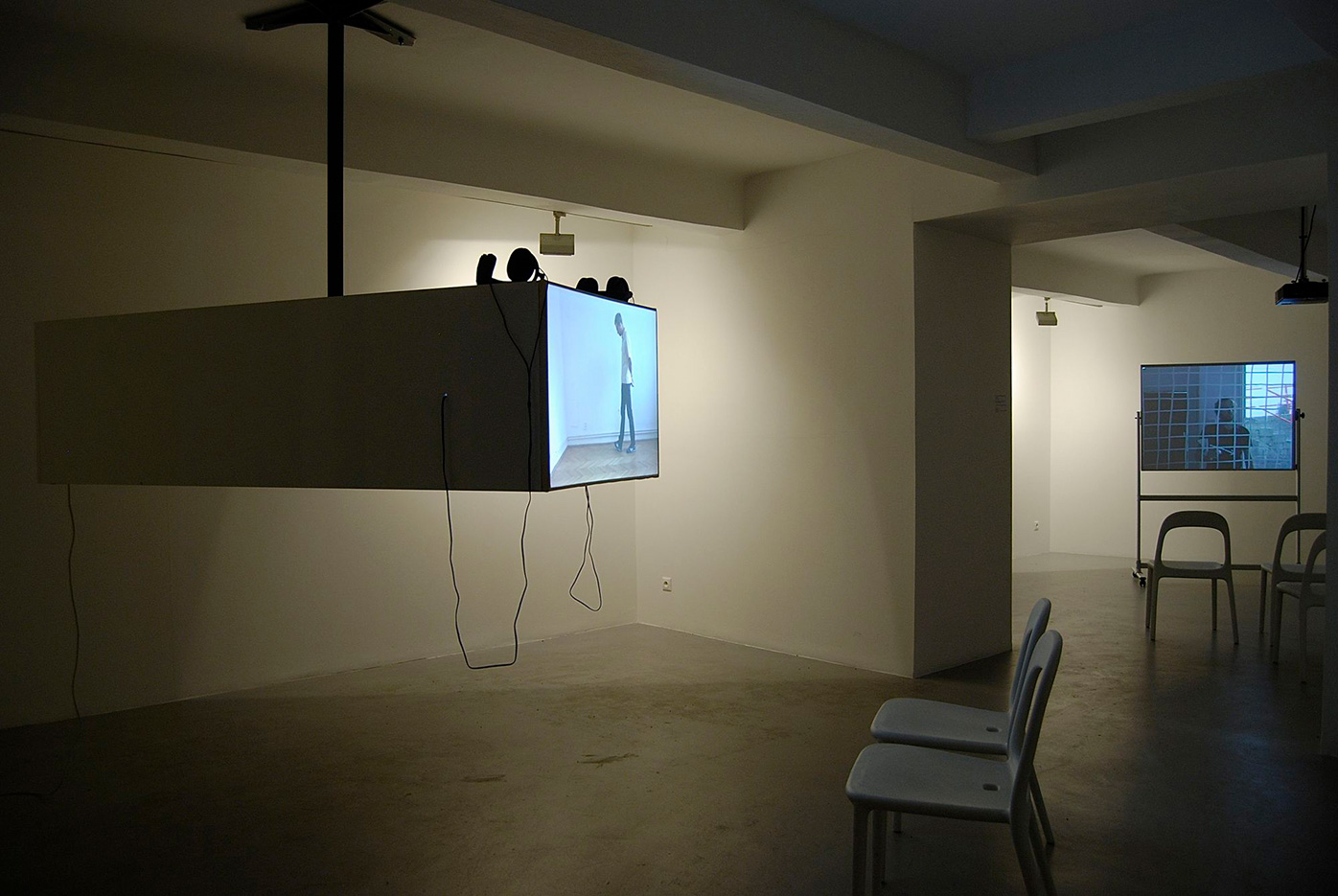
A wooden box rests on four metal legs, on one side there’s a video projection and on the other a glass panel revealing the innards of the box which consist of cables, a projector, an HD player and a hard drive. This belongs to a well-known Czech artist who earns his keep primarily by visually documenting the production of his colleagues. This box contains an unofficial archive of the Czech art scene over the last two decades. The front section of the display device shows a video explaining the reasons behind the archive and its physical form.
One Family of Objects
a book2010
A5 format, 1000 copies
published by JRP Ringier and tranzit.org
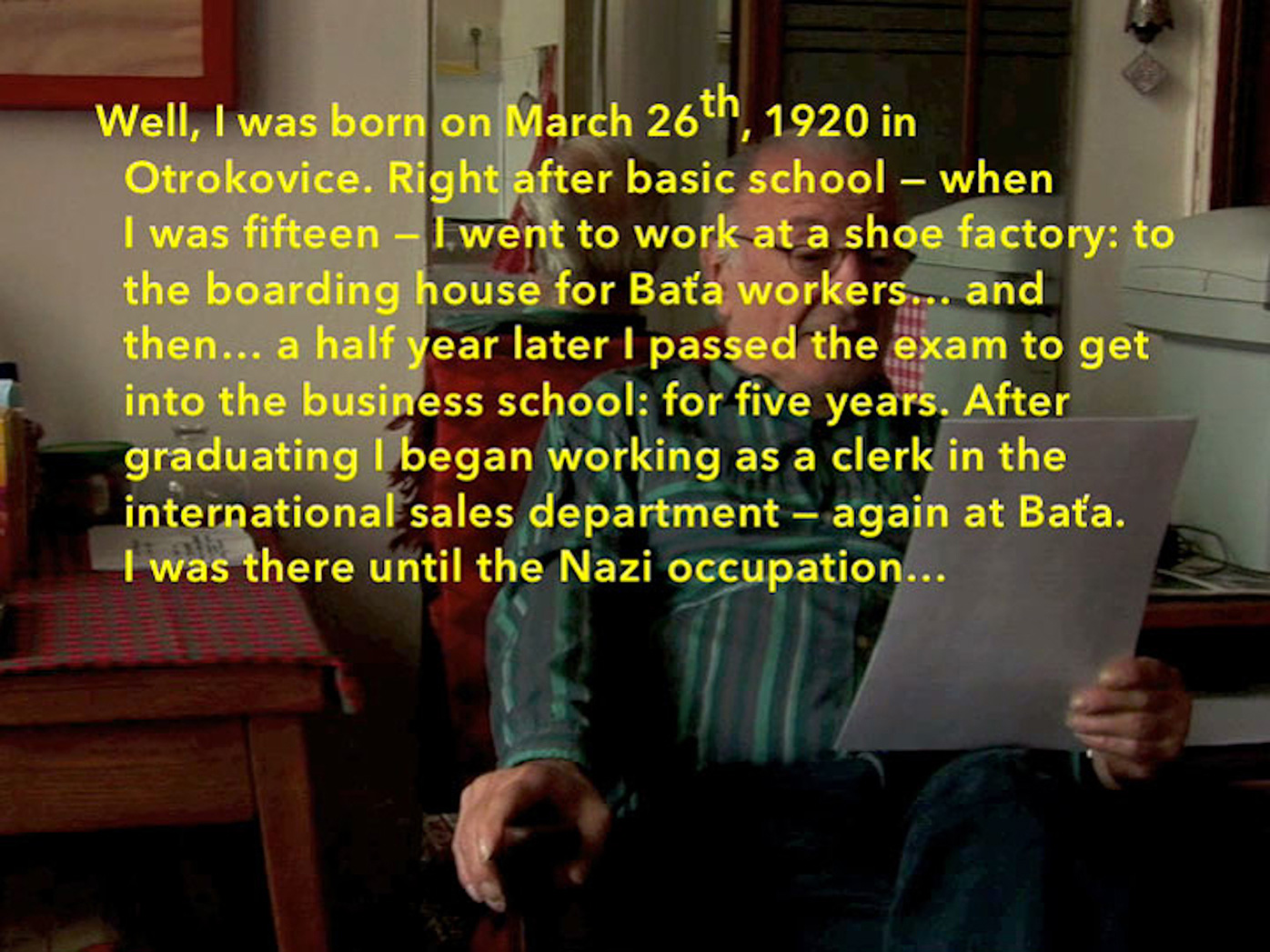
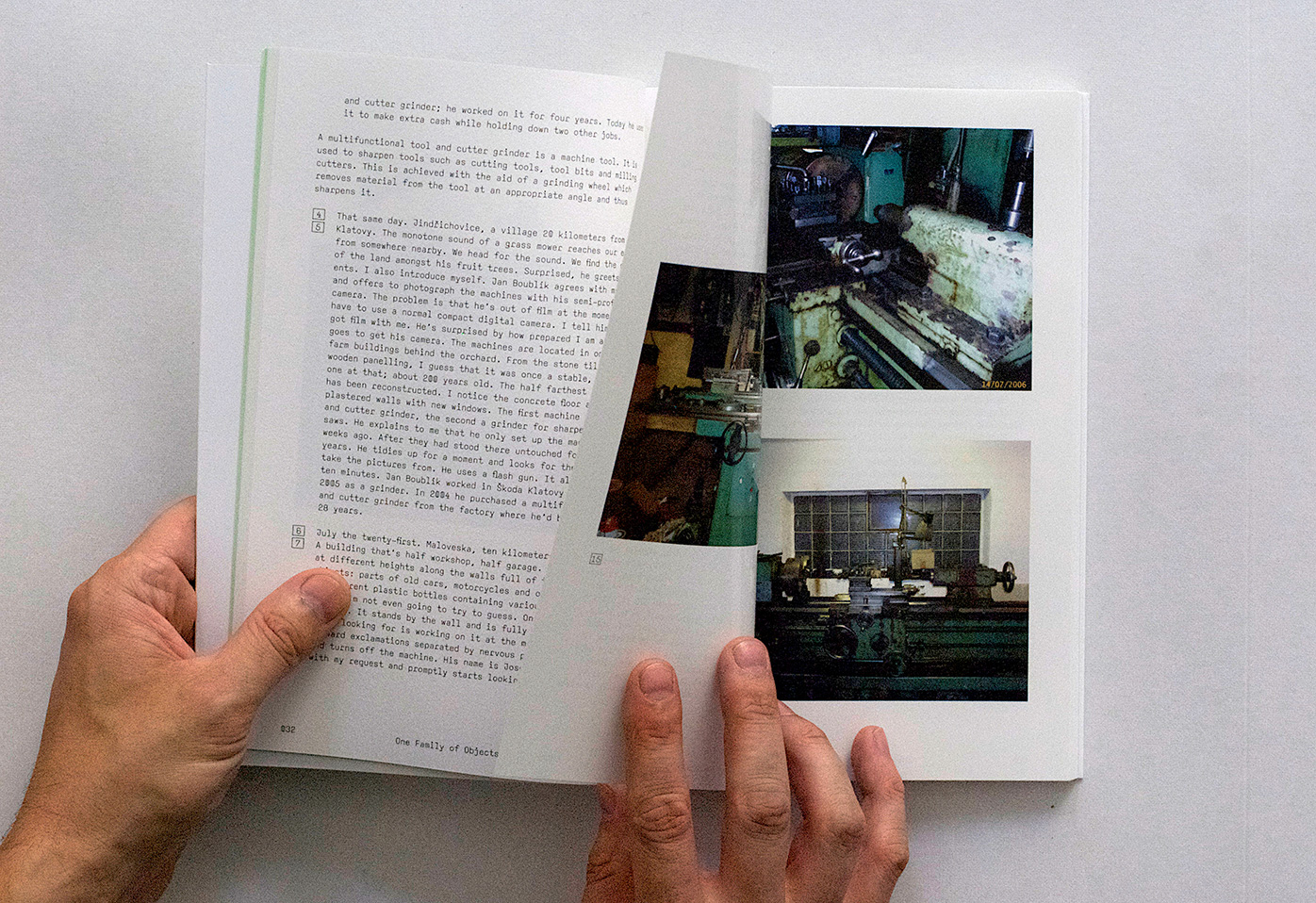
In 2005, the factory where I had completed my apprenticeship at the start of the 1990s, and where my parents had worked for several decades, definitively went bankrupt. Most of the machines were sold off to small-scale workers or large manufacturing complexes in India and Mexico. One of the steel colossi was also bought by my father and mother. I developed this part of the story in the work Two Families of Objects. Following its public presentation, I decided to search out all the machines and ask their new owners to take photographs of them. The material thus gathered became the basis for a work of reportage, accompanied by a photographic supplement, in which I tried to underscore the relationships between the new owners and these machines, whose aesthetics are characterised by green paint, the pungent smell of oil and steel shavings. The general social and economic reasons that led to the collapse of the company were sketched out on the backdrop of this micro-narrative of people and machines. Deliberations about these reasons provide an alternative view of the end of heavy industry in Central Europe.
You are the Object, I am the Impulse
a collection of narrative machines2010
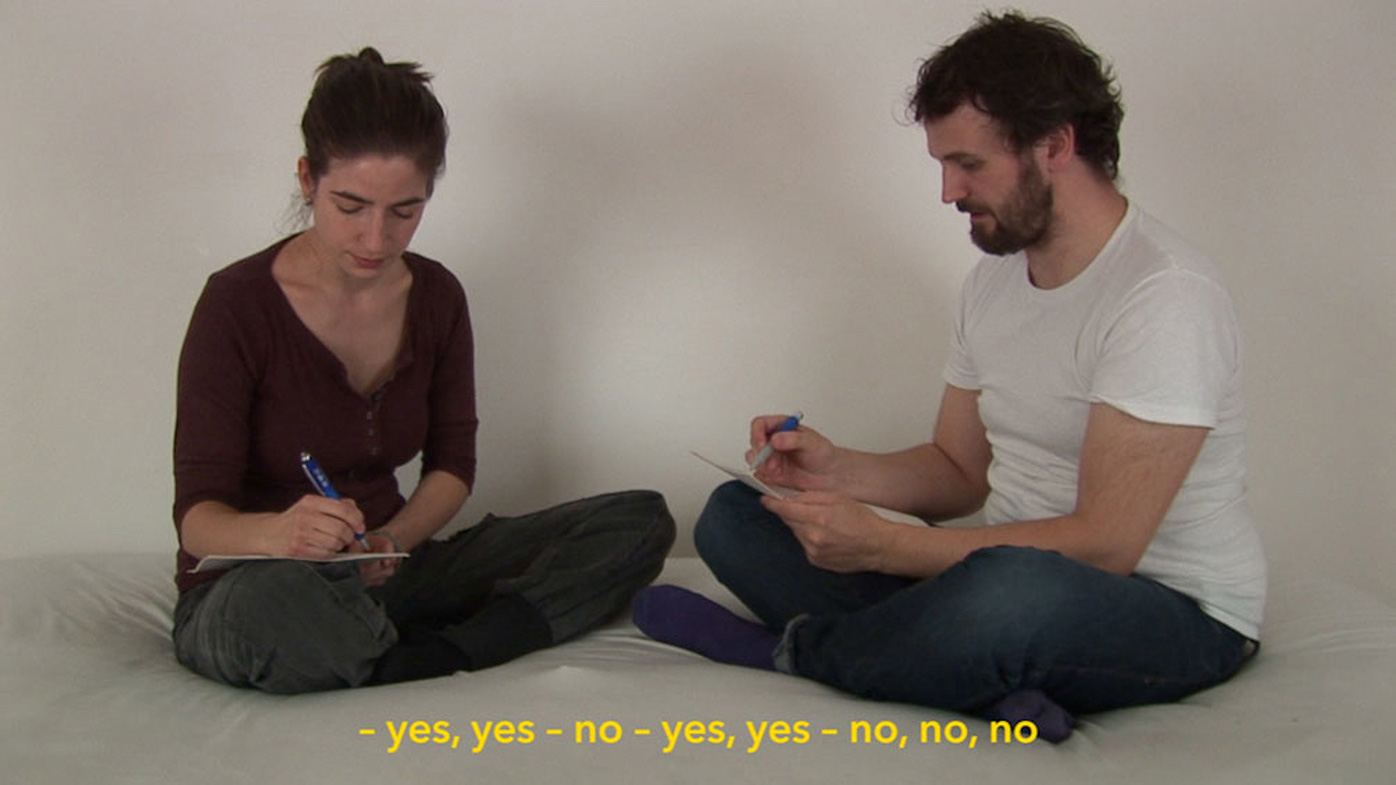
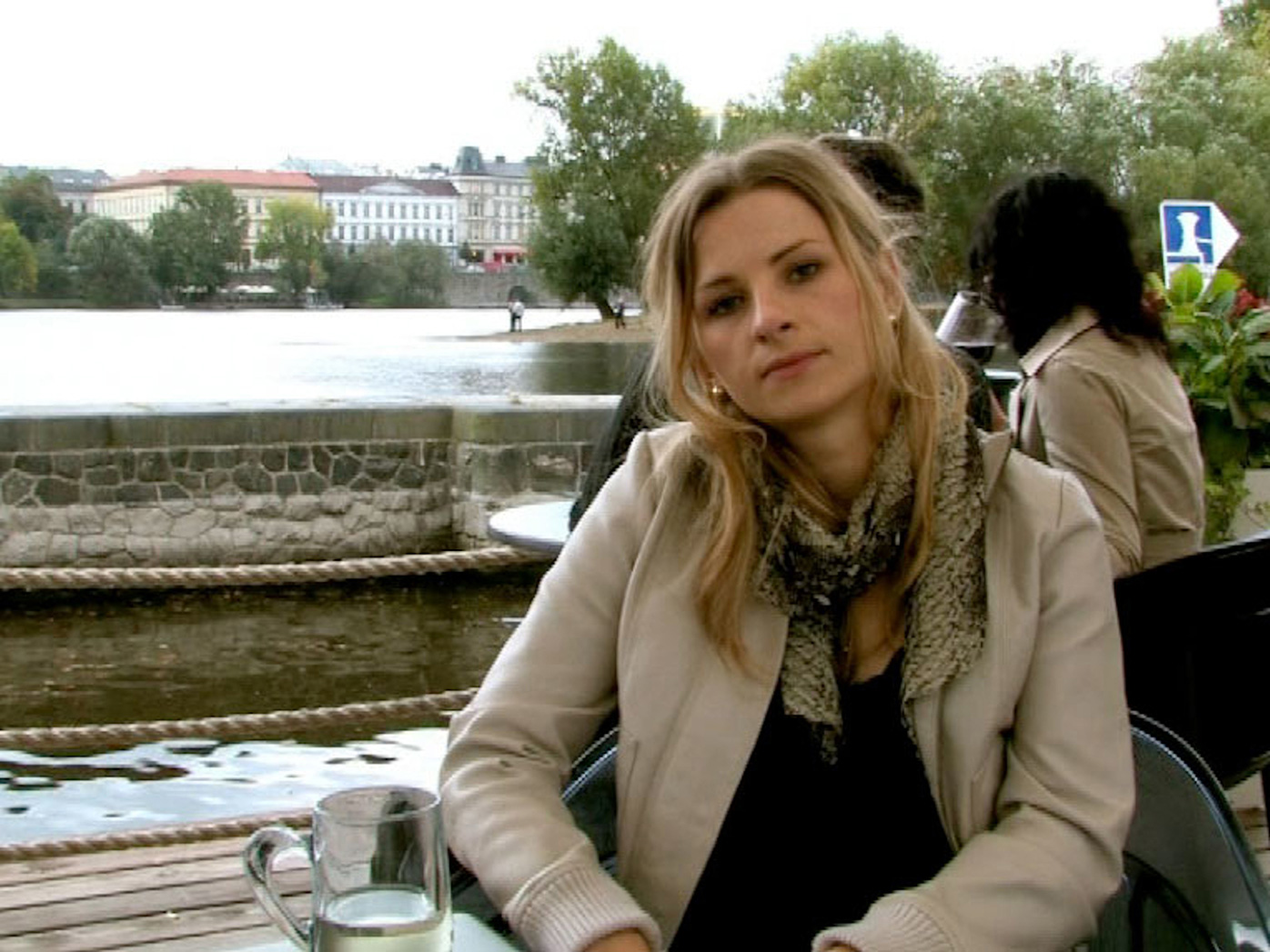
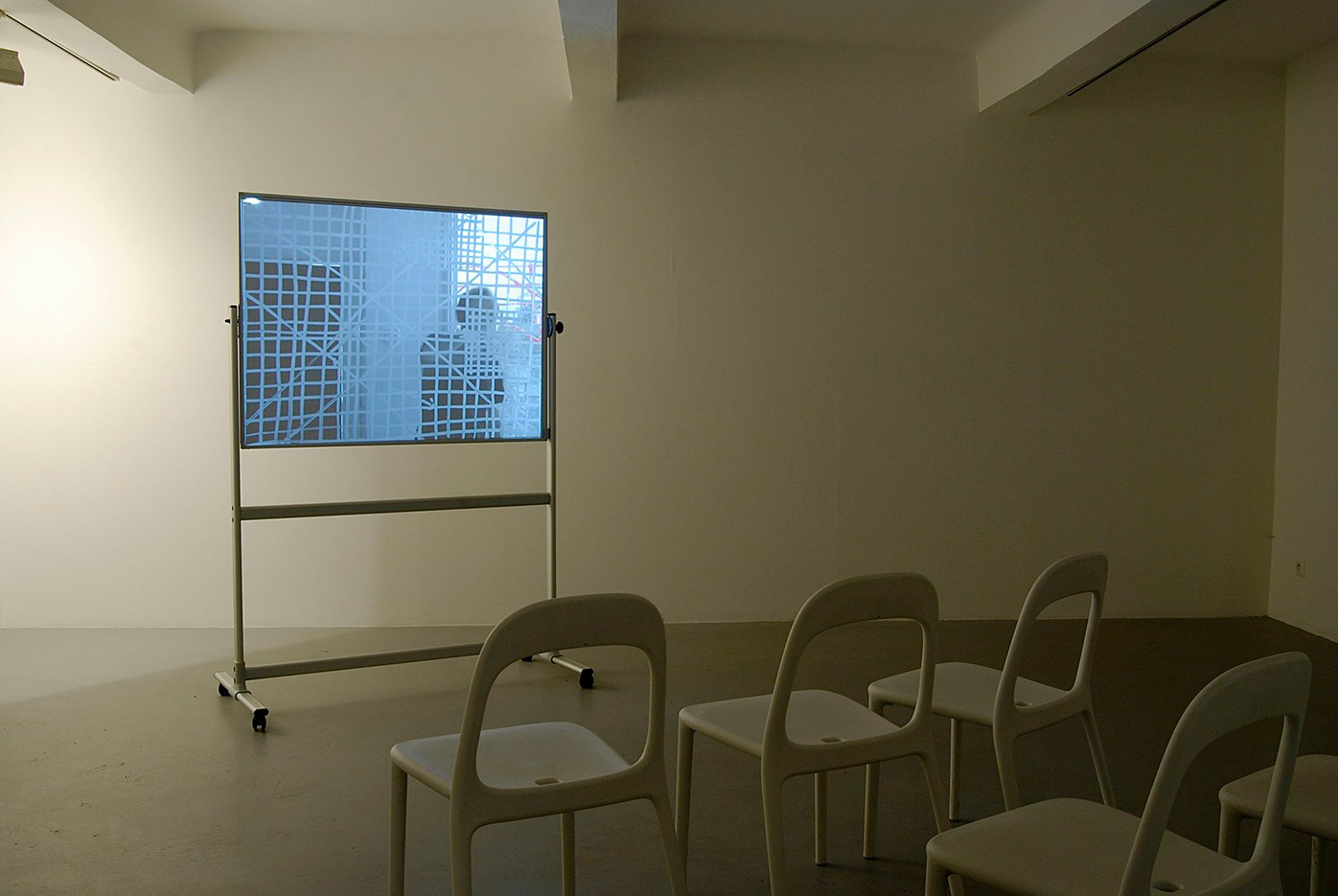
Four independent stories are narrated with the aid of separate visual display devices. Parallel Monologues investigate the conformity of language and the possible outcome of a conversation in which the dialogue between two people is reduced to uttering the word “yes”. Forced Monument visualises the effort most of us make to erase ourselves from this world, to delete ourselves from reality. The figures of a man and woman use their hands to wipe away their reflections from a mirror, but their efforts are futile. When the empty image is physically rotated, their figures reappear. Real Presence observes the way social networks are progressively replacing expensive and ineffective forms of monitoring. The final piece entitled You are the Object, I am the Impulse compares the conditions of physical work in two different social and economic systems – capitalism and real socialism.
Foreign Bodies
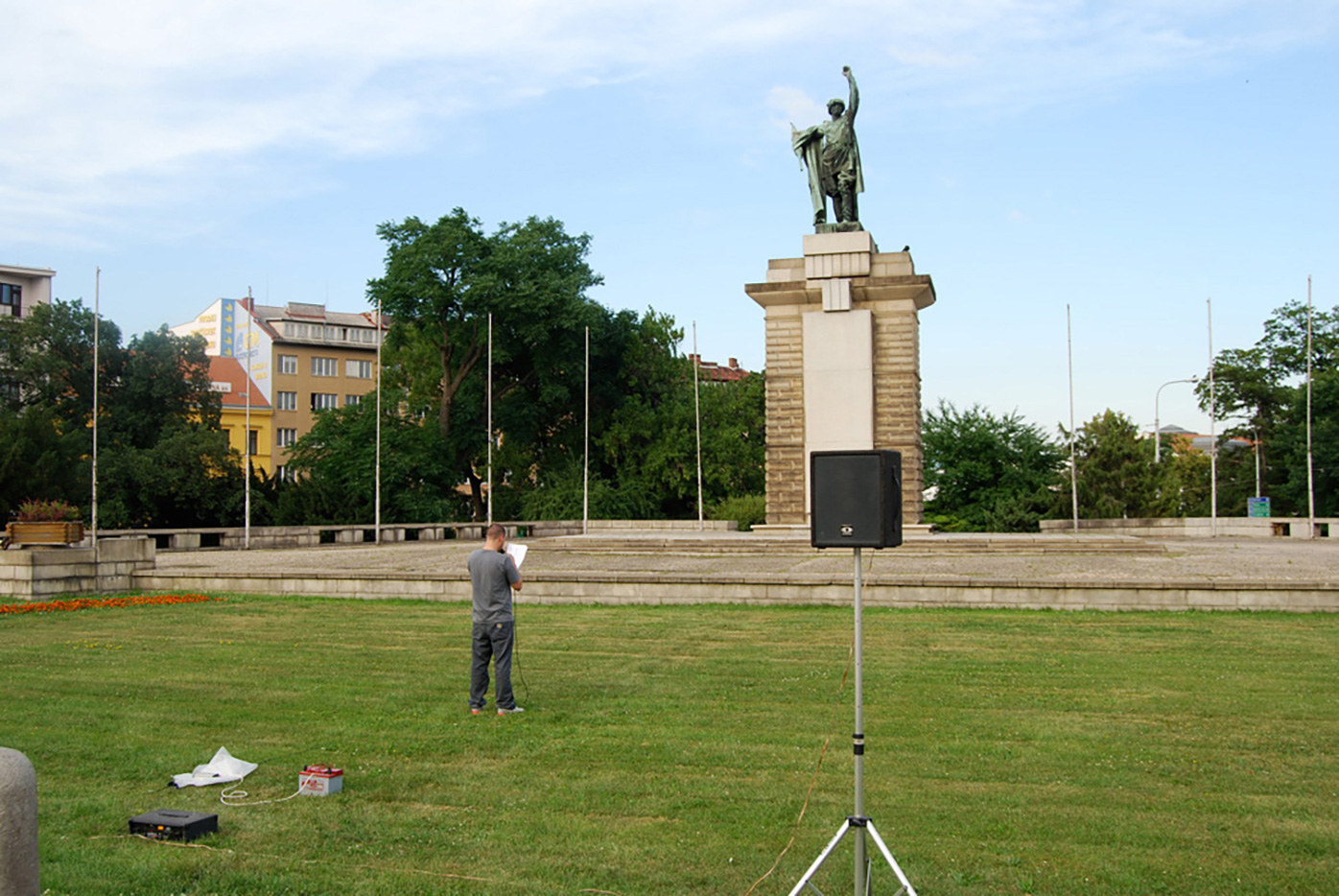
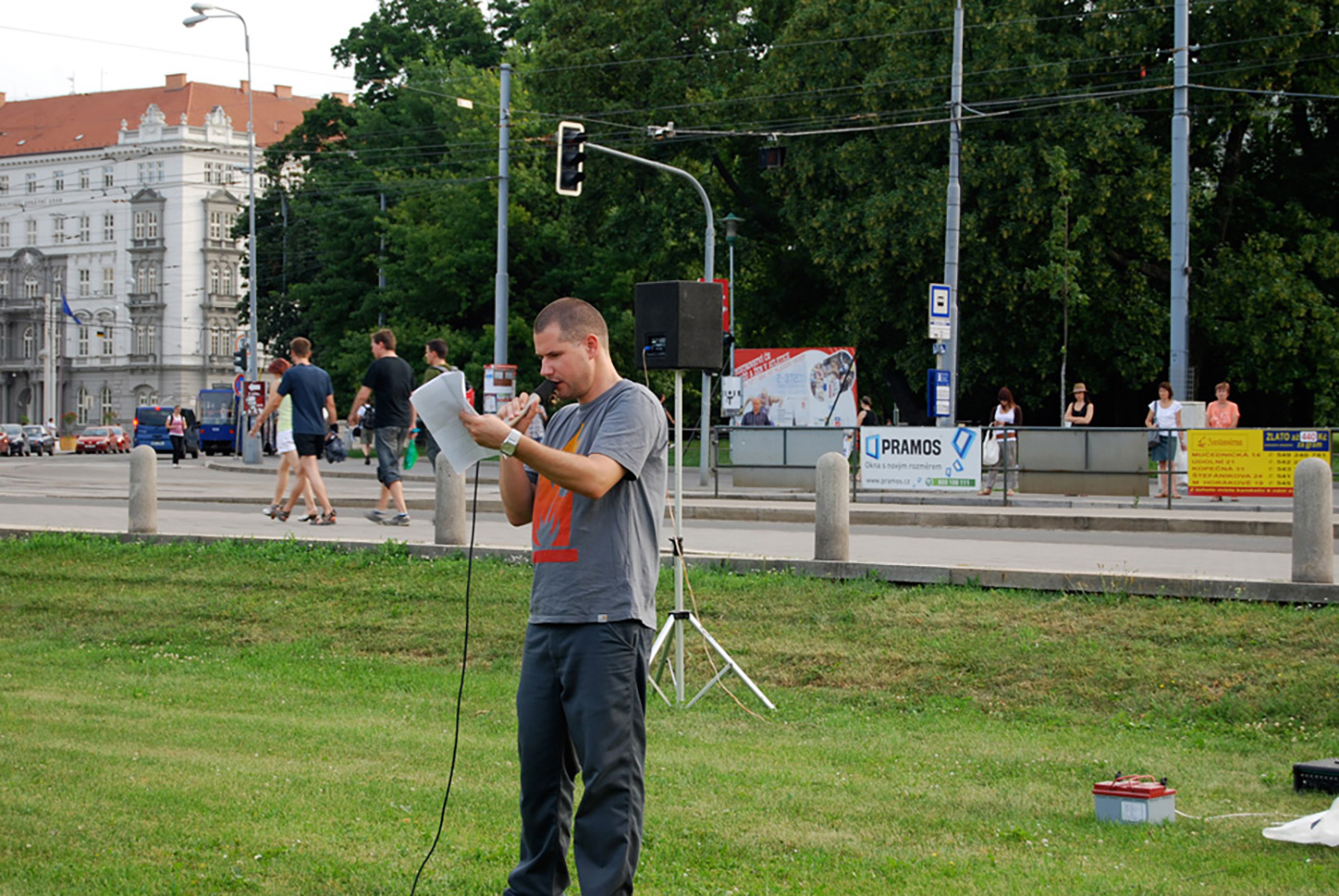
four confrontational readings in public space2011
documentary video
HD video, 8:26 min.
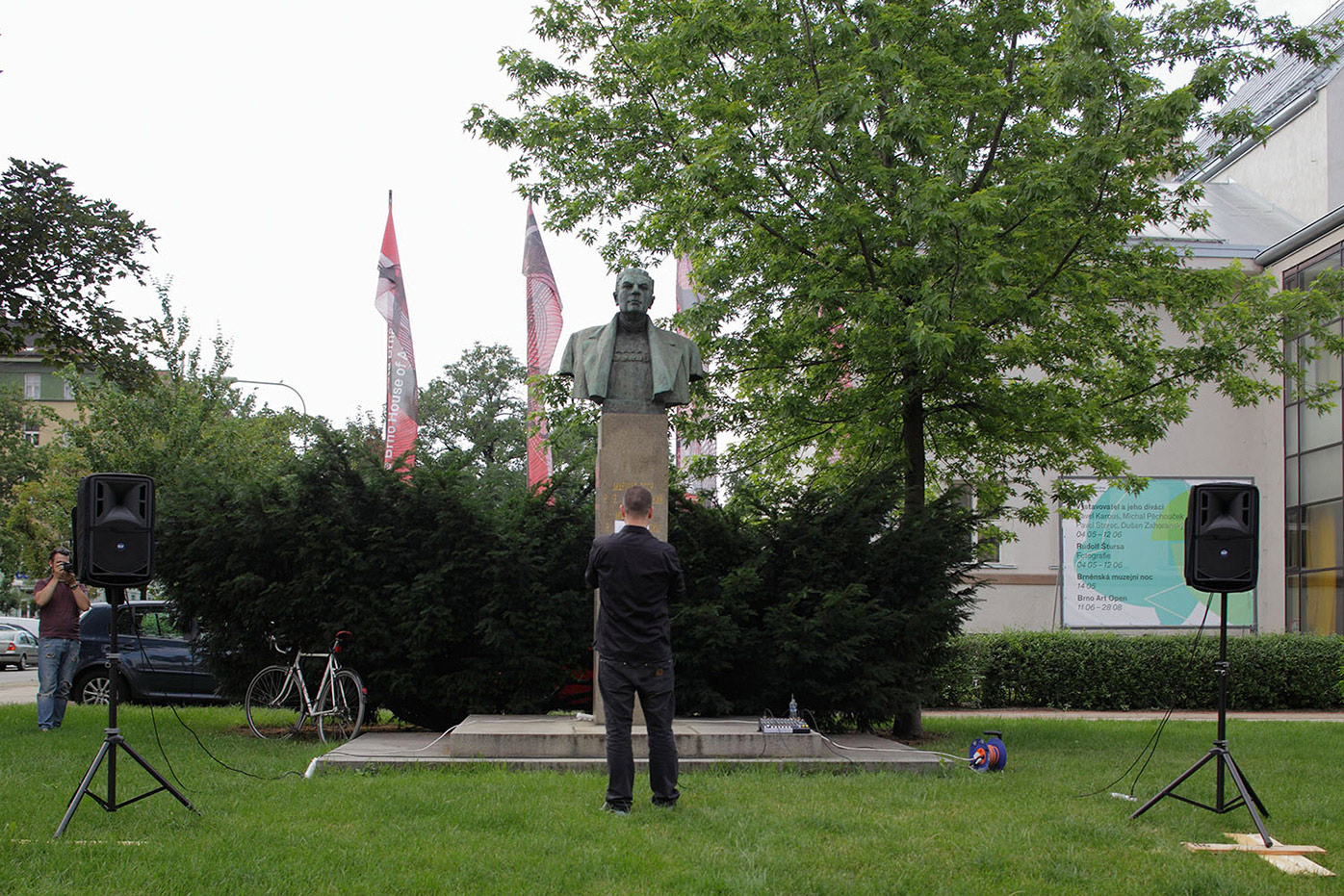
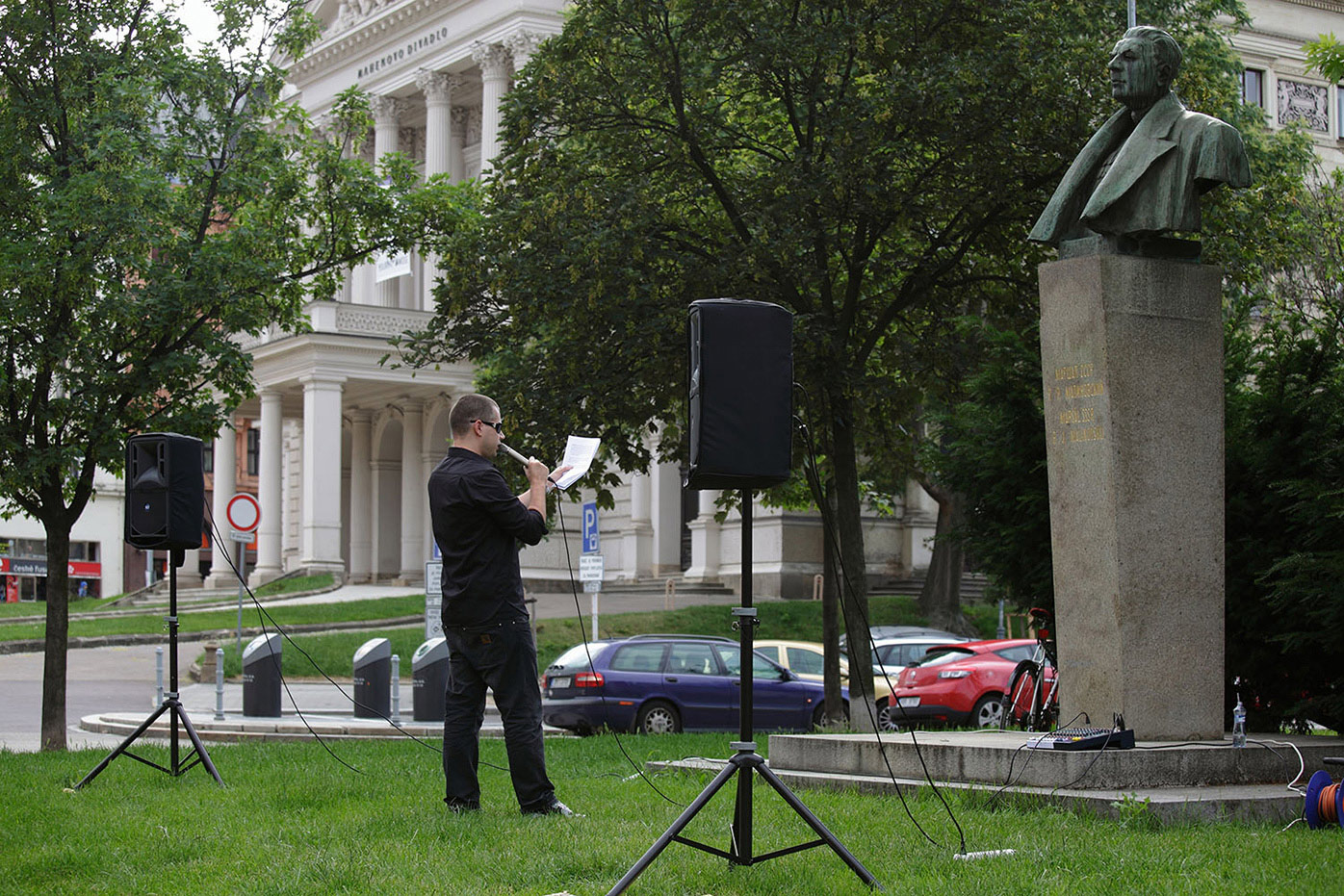
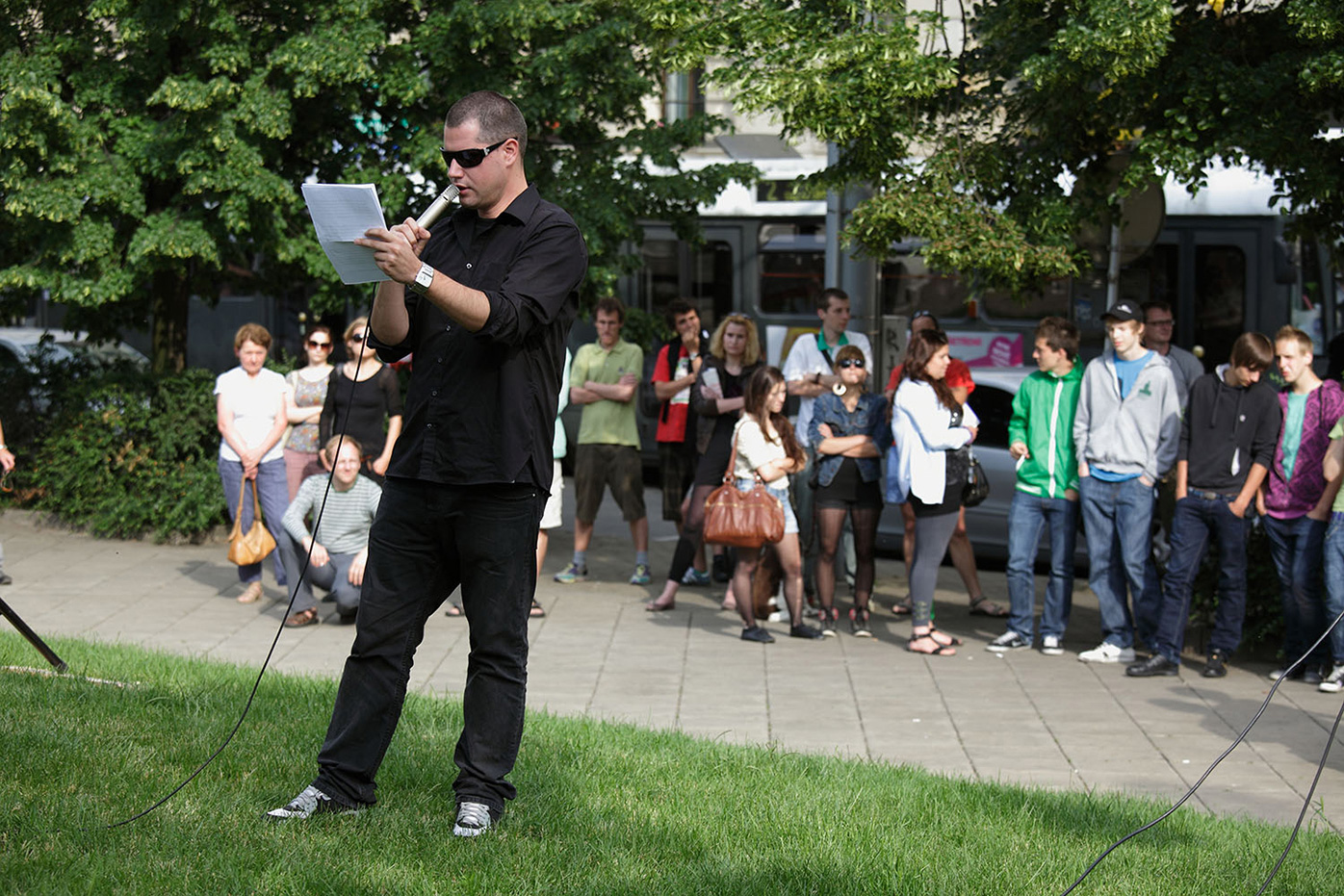
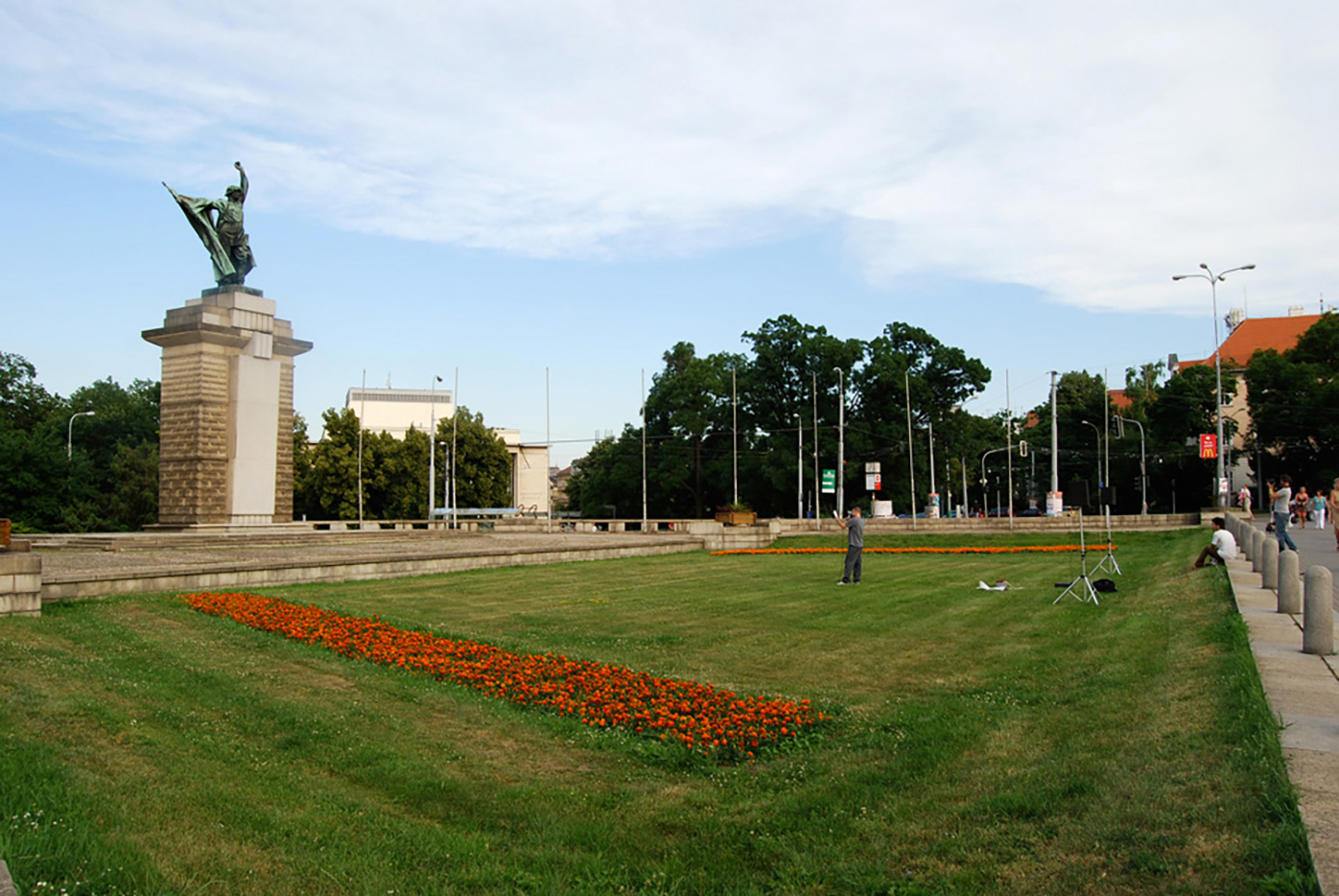
Four performances at four different monuments in Brno, during which a single performer read aloud a text entitled Foreign Bodies, recounting a tale of ordinary existence unencumbered by heroic pathos - the story of a civil servant who never knew pain and died peacefully and quietly.
Third Family of Objects
And Confrontational Reading
a photograph, a blog, a confrontational readings and a video documentation2011-2012
My computer screen is wallpapered with a photograph of the lathe that my mother worked on for 22 years. This image accompanies me while I’m working, or when I’m watching a film or surfing the net. These attributes distinguish my parents’ lathe from the computer. It is a machine that is used not only to secure a livelihood, but also for entertainment. Computers are thus not only a means of production, but also objects of desire and social status.
So I started to write about new internet phenomena that would help me to provide evidence of the way work has been transformed during the last ten, fifteen years. Initially I focused on the phenomenon of UNBOXING – videos documenting the unpacking of computers, desktop or laptop, as well as other electronic gadgets. In the main, the people who make them try to convince themselves, and others, about why buying a particular device was worthwhile, as their fingers tear away obsessively at everything that stands in the way of the object itself. Progressively, my interest turned to the unwrapping of other objects, such as Holly Bible or Birkin handbags. Going forward, I focused on other internet phenomena such as the DTA 1541A data converter, or the ostensibly endless cover-versions of the song Best Thing I Never Had by Beyoncé. I ended up examining trainspotting, the first historically documented form of geek entertainment. I then assembled thematic montages of selected videos, found texts and photographs, subsequently publishing them on the blog Third Family of Objects.
While working on the blog, I took the step of doing public presentations of the thematic montages published there. Step by step, I took the decision to adopt the method of Confrontational Reading. I then presented a comprehensive set of these readings at the Hunt Kastner gallery in September and October 2012 – this is also where I was able to develop a more precise method of Confrontational Reading. It allows me to mediate an acquired physical experience using both language and the immaterial space of the internet. Through this method, I attempted to place the relationship between the individual and cyberspace on an equal footing – by using collective reading aloud and montages assembled from youtube videos and texts and photographs found on the internet.
Montage 6 and Montage 7
two confrontational readings2013
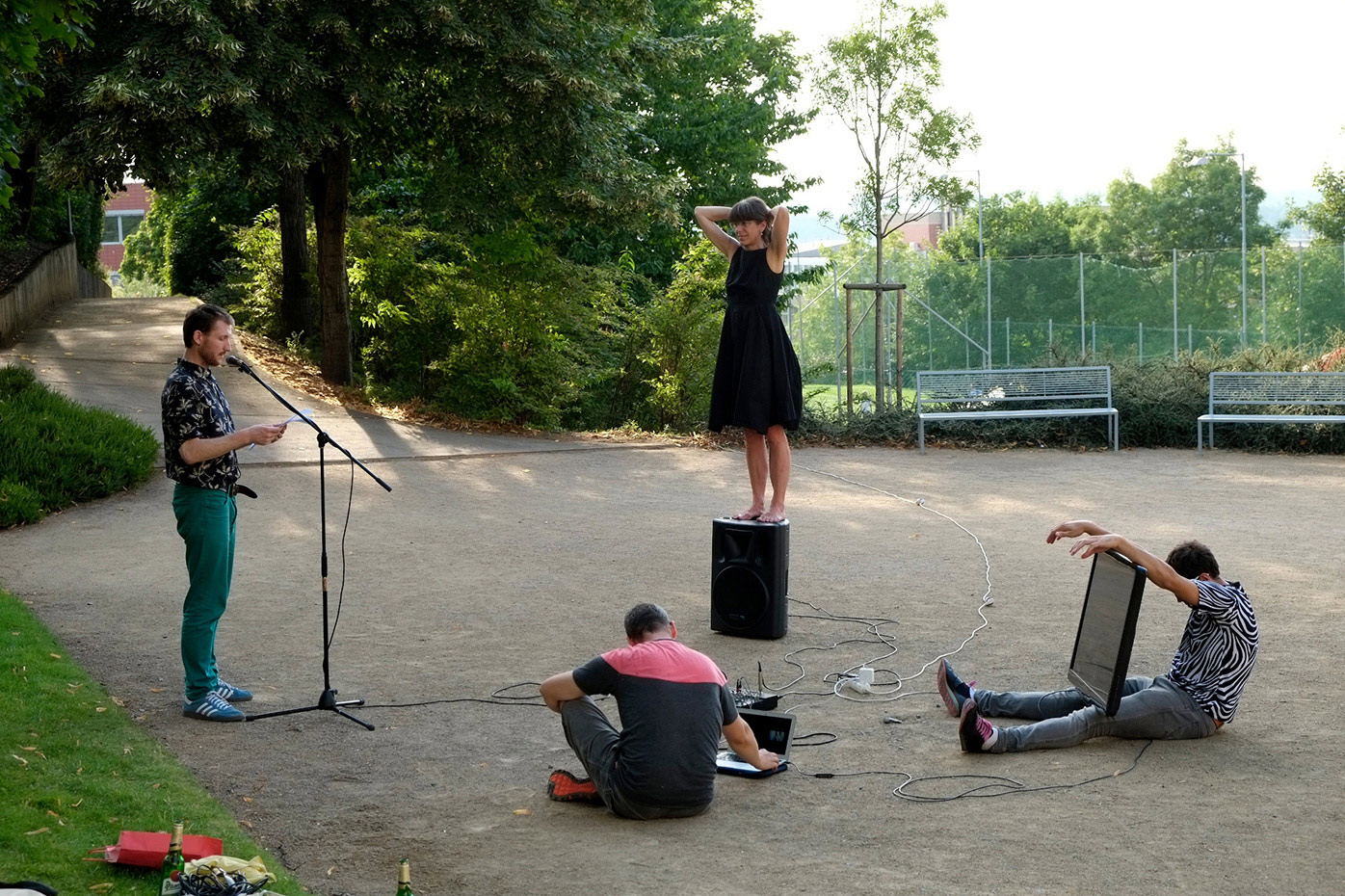
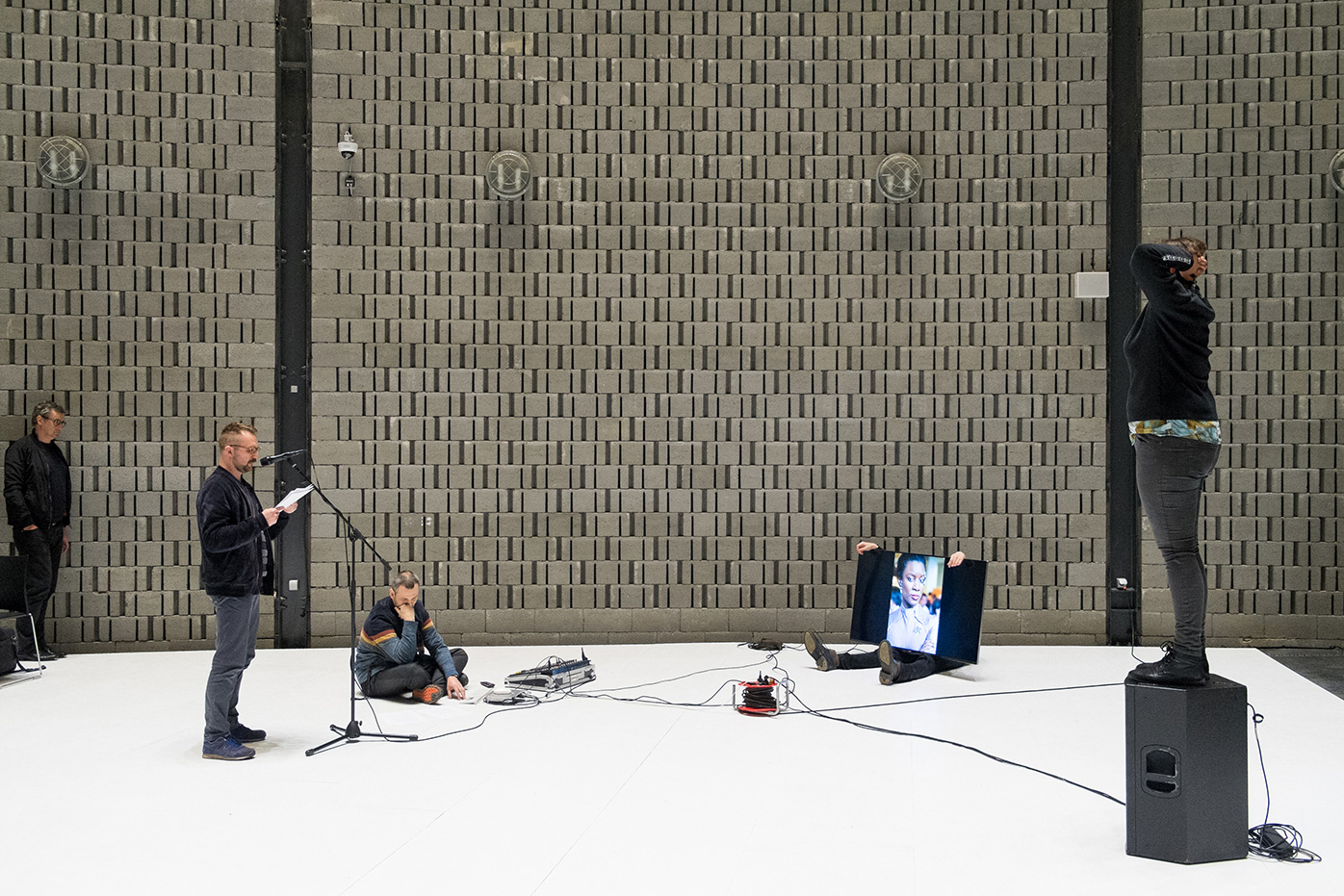
The Montage pieces follow on from the Confrontational Readings of 2012, but are not thematically related. The subject of Montage 6 is the transformation of the human body into a machine and the unwillingness of an android to surrender its technology for the benefit of its humanity. The second Montage looks at the current phenomenon of Laptopistanis, members of temporary work communities which spring up in an ad hoc fashion in cafes all over the world. The montages also share the theme of the perception of the female face and body within contemporary society. Over several renderings, the Montages took on a definite form: reader, operator and two participants, with one holding a television set and the other standing on a speaker.
Physical Exercises with
the Digital Image
2013-2017a participative work
This participative form of artistic exercise is based on the Situationist Dérive. Unlike the original model projects from the 1950s, I did not focus on discovering and mapping the metropolises leading to new psychogeographic maps, but rather on the servers of the company Google. I decided to explore the cyberspace of the internet service YouTube, providing its users with the opportunity to share videos for private or professional purposes.
So far, I have organised four virtual excursions. An initial gathering of several people watching YouTube has progressively developed into an elaborate exercise focused on both wandering through the online world, and the ability of the individual to grasp the global communication network through mental mapping. The direction of the journey is partly determined by a simple movement of the body, such as the click of a mouse when selecting a video.
The art action itself requires a room with a computer, a projector and a sound system. It begins with the introduction of four “compost makers” who prepare the fertile ground for the ensuing excursion. Each of them has at their disposal about half an hour to show their favourite YouTube videos. They all use a Google account set up directly for the purpose of the exercise. Thanks to this dedicated account and the “compost makers”, a new avatar is created inside the remote server that serves as guide through cyberspace for the next part of the action. This can go on for several hours, but also for as long as an entire day. This depends on the abilities of the organiser and the willingness of the participants themselves.
Then comes the most entertaining part of the day when each of the participants may take part in the action for several dozen minutes, as follows: at the end of each video a selection of ten to twelve videos – suggestions – pop up on the projection screen. Each participant uses them to find their bearings. They move the cursor onto one of them, launching them with a click of the mouse. With the aid of the avatar, they thus try to discover as many videos as possible with unforeseen content encoded in the servers of private corporations such as Google. With them they undertake a journey through virtual spaces supervised by powerful algorithms that are constantly modified to meet the needs of each user.
The task of the exercise is not liberation from hidden internet tools capitalising on our online presence. Its aim is to engender awareness of these dangers and search for functional strategies that would teach our senses and faculties of reason to work with these computational operations. This objective functions under certain conditions, but requires concentration on the part of the participants, the ability to remember the videos they have viewed and pay due attention to the large number of images and to which user published a given video. They should combine this information with their knowledge of Google algorithms, the way they qualify videos and the importance they attach to them on the basis of genre and number of views.
Jabberwocky
an interpretation of two emancipatory strategies2014
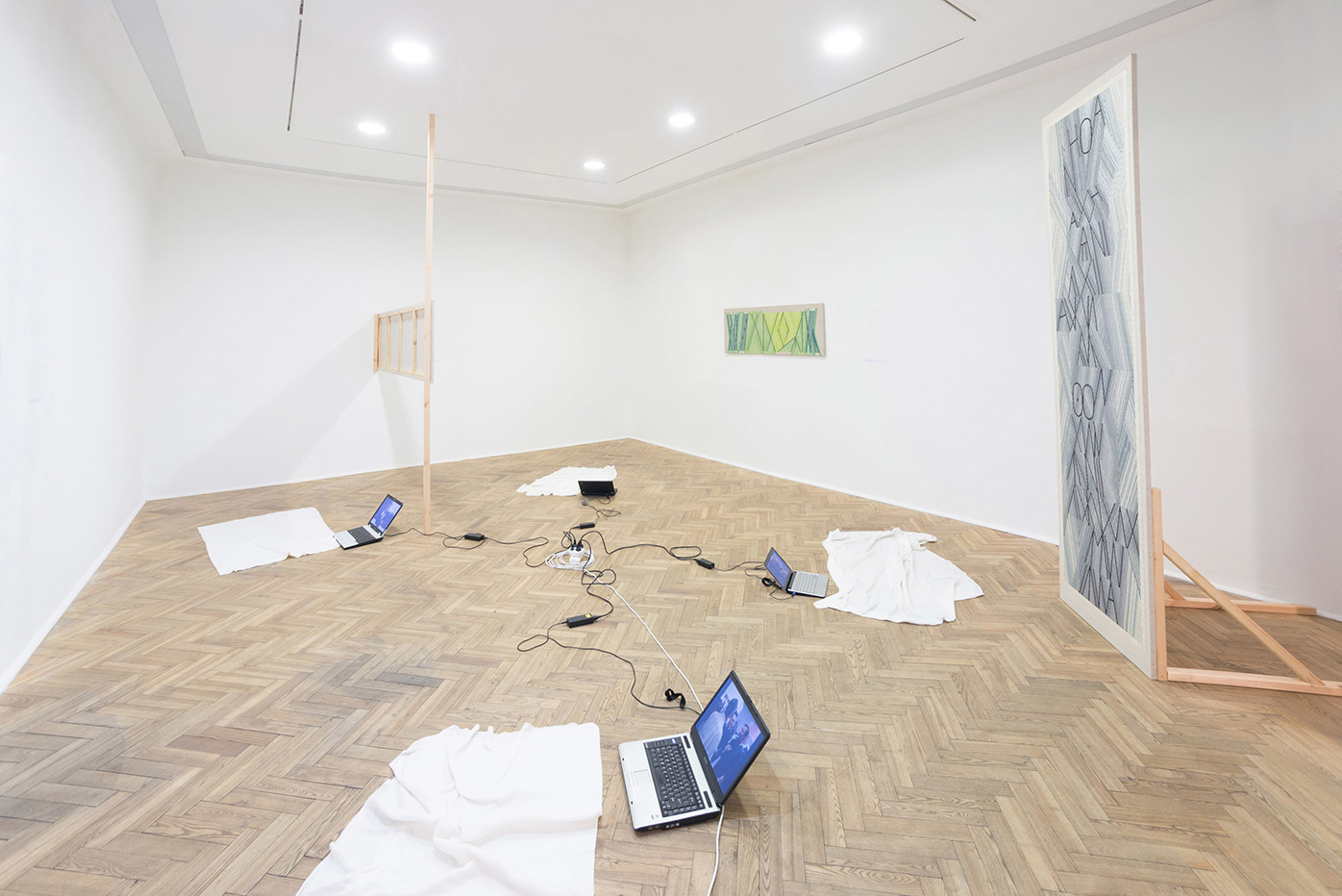
This exhibition comes in three parts - it is the meeting of two historically defined artistic strategies, and one contemporary, nascent strategy. All of them overlap, both in terms of installation and meaning; in addition, they all share the common theme of liberation, emancipation from industrial or post-industrial society through nonsensical action and the theme of sleep as a form of physical and spiritual repose.
The first strategy is represented by Bohdan Mrázek’s textile graphic series Jabberwocky. It is a precise illustration of the way textile artists endeavoured to use consistent artistic practice to break free of their dependence on industry during the period between 1950 and 1980. The name of the series is a reference to Lewis Carroll. In the Alice in Wonderland books, Jabberwocky is the title of a nonsense poem. This series of artworks is about a point in time at which the textile artist loses the reason behind his artistic practice. He no longer has the need to emancipate himself from industrial production. It has disappeared from his living space, having moved to China, or some country in southeast Asia. All that remains for the textile artist is a dream and an idea of his own production, unfettered by industrial manufacturing and consumerism.
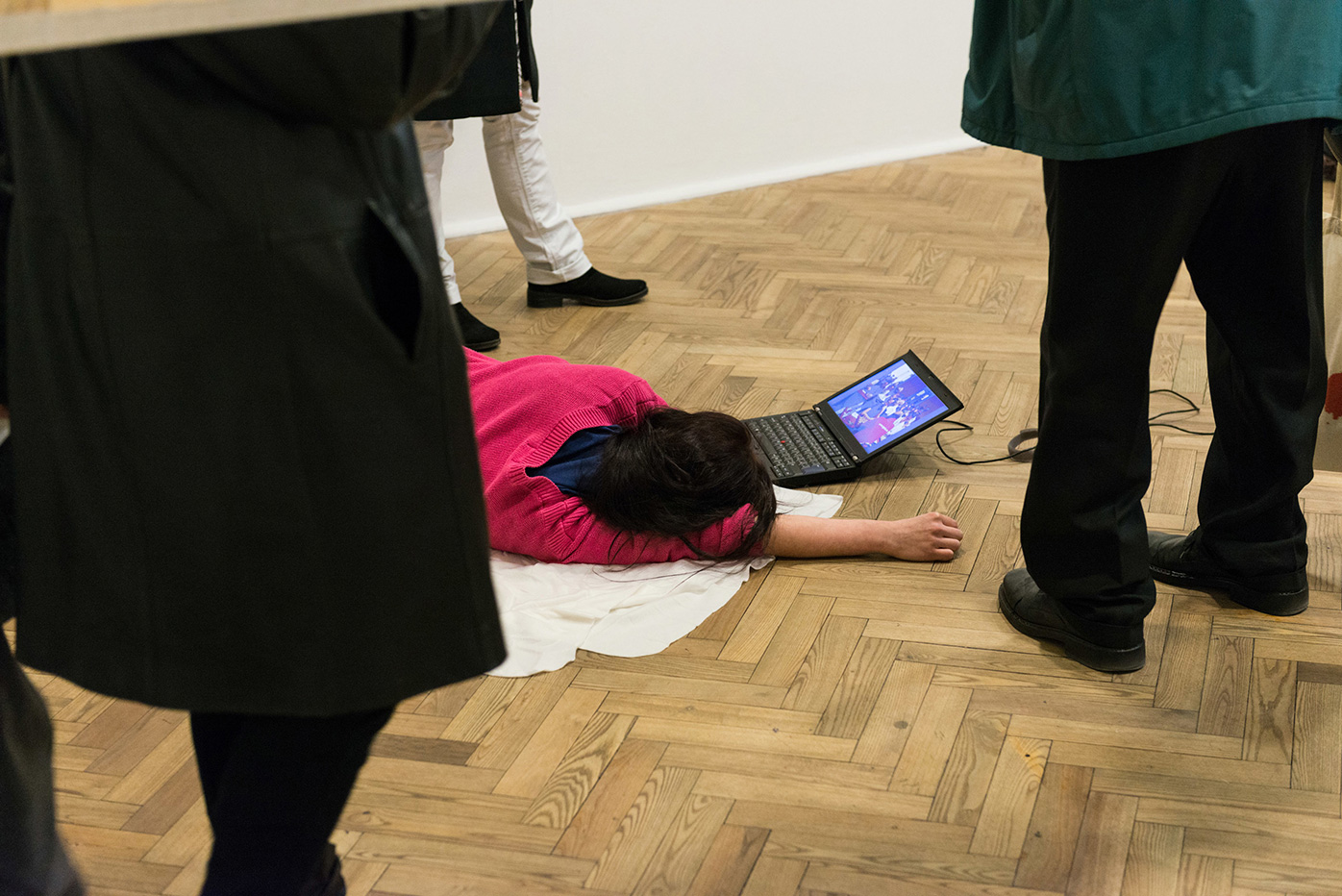
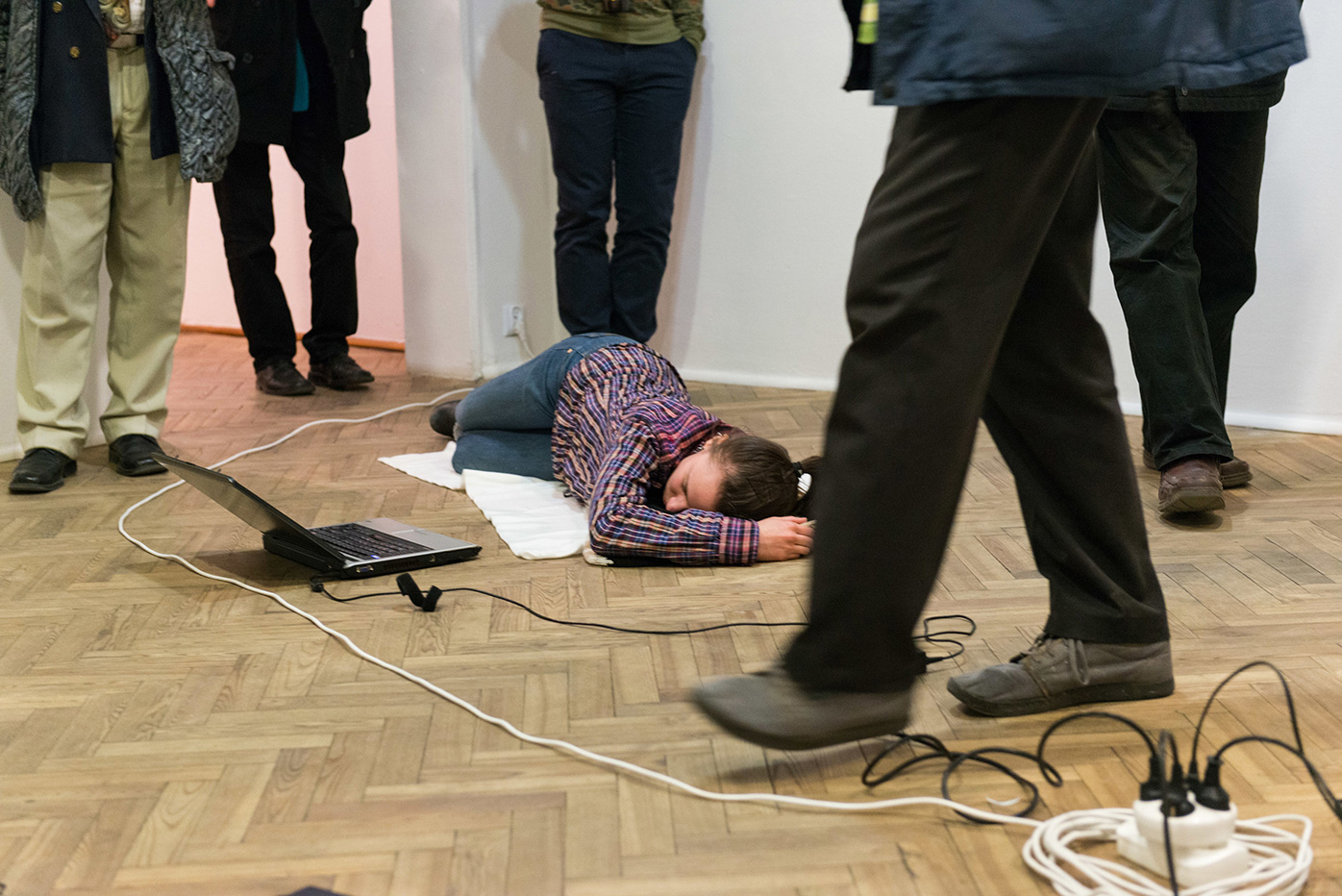
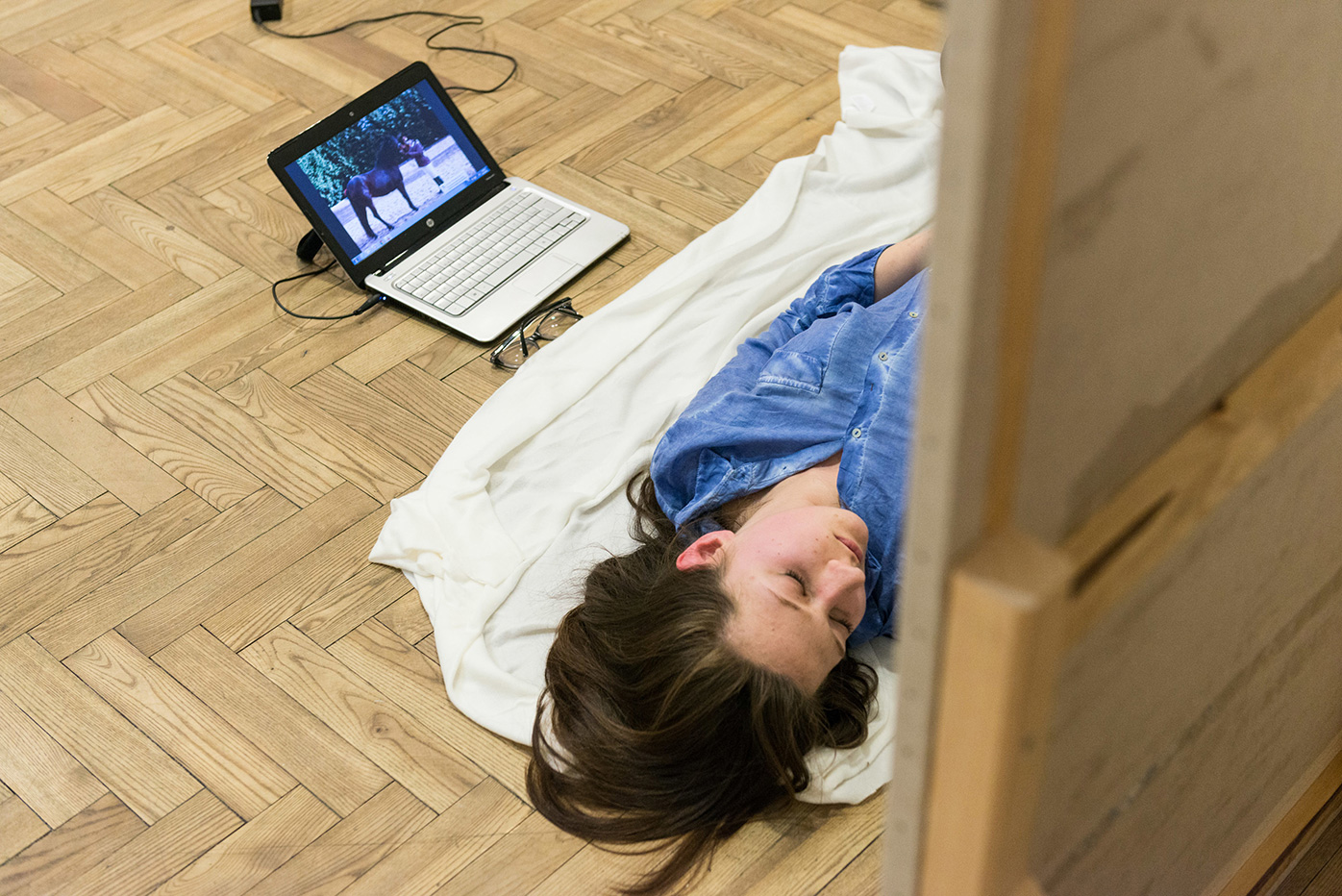
The second part of the exhibition consists of people sleeping. They are not reposing in the name of the productivist avantgarde, but rather in the name of the performative art of the 1960s; specifically, art actions such as Milan Knížák’s Difficult Ceremony and Lying-Down Ceremony. Both pieces were concerned with collective slumber or sleep as one possible means of liberating oneself from a milieu with a high level of competitive behaviour. This is how Claire Bishop writes about Knížák’s performances in her work Artificial Hells. Primarily, however, their intention was to create a community where a simple, but functional emancipative technique is put into practice, which is supposed to protect us from the intrusions of civilisation.
In addition, the exhibition includes four computers. Photographs downloaded from the web are presented on their monitors. They all have four designations in common: IMG_4405, IMG_4426, IMG_4432 and IMG_4433. These were assigned to them by the machines that created them: Canon cameras. These technical images are imprisoned in a framework defined by software and hardware. Even so, they were created and recorded by the touch of a human hand, pressing down on the shutter release and a computer keyboard. In their immateriality and multiplicity, they become a spectre and a dream at the same time. Inadvertently, they call on us to seek new emancipative strategies – ones that will be functional in our post-industrial society. Meanwhile, the first two parts of the exhibition hint at possible starting points.
PROJEKT 23 - COLUMN 2 CONTENT